
Diabetes Medications Australia — Metformin (Glucophage) and Rybelsus (Semaglutide)
RedstoneRX supplies TGA-compliant diabetes medications for Australians managing type 2 diabetes mellitus (T2DM). Approximately 1.3 million Australians have diagnosed type 2 diabetes, with an estimated additional 500,000 living with undiagnosed T2DM — making it one of Australia's most significant chronic disease burdens. Our diabetes category currently features Glucophage (Metformin HCl) — the established first-line oral antidiabetic — and Rybelsus (Semaglutide oral tablets) — the first oral GLP-1 receptor agonist approved in Australia. Both are Schedule 4 prescription-only medicines. Both are listed on the PBS.
Diabetes Medications at a Glance — Two Different Approaches
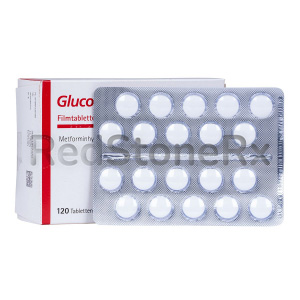
Glucophage — Metformin HCl
500mg / 850mg / 1000mg tablets
- Class: Biguanide — reduces hepatic glucose production
- Position: First-line T2DM — Australian guidelines
- Weight: Neutral or modest loss
- Hypoglycaemia risk: Very low when used alone
- PBS: Highly subsidised — decades of use
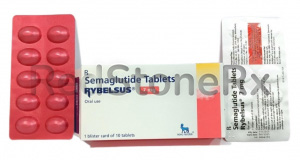
Rybelsus — Semaglutide (oral)
3mg / 7mg / 14mg tablets
- Class: GLP-1 receptor agonist — glucose-dependent insulin release
- Position: Add-on to metformin or monotherapy if metformin contraindicated
- Weight: Significant reduction (~3–5kg on 14mg)
- Hypoglycaemia risk: Low (glucose-dependent mechanism)
- PBS: Subsidised — see eligibility criteria
Glucophage — Metformin Hydrochloride for Type 2 Diabetes
What is Metformin / Glucophage?
Metformin is a biguanide antidiabetic — the most widely prescribed oral diabetes medicine in Australia and worldwide. It is the first-line pharmacological treatment recommended by the Australian Diabetes Society and the Royal Australian College of General Practitioners (RACGP) for type 2 diabetes after lifestyle modification alone is insufficient. Glucophage is the original brand-name formulation of metformin hydrochloride by Merck. Generic metformin is also available at significantly lower cost on the PBS.
Mechanism — How Metformin Works
Metformin works primarily by reducing hepatic glucose production (gluconeogenesis and glycogenolysis in the liver), which lowers fasting blood glucose. It also improves peripheral insulin sensitivity — increasing glucose uptake in skeletal muscle — and modestly reduces intestinal glucose absorption. Unlike sulfonylureas and insulin, metformin does not stimulate insulin secretion and therefore carries a very low risk of hypoglycaemia when used as monotherapy. It does not cause weight gain and is associated with modest weight loss in many patients.
| Strength | Typical indication | Dosing pattern | Notes |
|---|---|---|---|
| 500mg | Starting dose — minimise GI side effects | Once or twice daily with meals | Start low and titrate up over 2–4 weeks to reduce nausea and diarrhoea |
| 850mg | Standard maintenance dose | Twice daily with meals | Most common long-term dose in Australian practice |
| 1000mg | Higher dose when needed | Twice daily with meals | Maximum recommended daily dose: 3000mg (3× 1000mg or 3× 1000mg XR) |
Key advantages of Metformin in Australian practice
- First-line therapy in Australian T2DM guidelines — decades of safety data
- PBS-subsidised — among the most affordable diabetes medicines available
- Cardiovascular benefit — UKPDS demonstrated reduction in macrovascular events in overweight patients
- Weight neutral to modest weight-reducing — unlike sulfonylureas and insulin
- Very low hypoglycaemia risk as monotherapy
- Can be used in combination with virtually all other antidiabetic drug classes
Rybelsus — Oral Semaglutide for Type 2 Diabetes
What is Rybelsus?
Rybelsus is the brand name for oral semaglutide — the world's first oral GLP-1 receptor agonist. It contains the same active molecule as Ozempic (the weekly injectable) and Wegovy (the weight-loss injection), but is formulated as a daily oral tablet. Rybelsus was TGA-approved in Australia in October 2022 and is PBS-listed for eligible patients with type 2 diabetes. It is indicated for adults with insufficiently controlled T2DM as an adjunct to diet and exercise, either as monotherapy when metformin is inappropriate (intolerance or contraindication) or in combination with other diabetes medicines.
Mechanism — GLP-1 Receptor Agonist
Semaglutide is a glucagon-like peptide-1 (GLP-1) analogue with 94% sequence homology to human GLP-1. GLP-1 is a natural gut hormone released after eating that stimulates insulin secretion. Semaglutide mimics and amplifies this response by binding to and activating GLP-1 receptors throughout the body:
- Pancreas: Stimulates insulin secretion in a glucose-dependent manner (only when blood glucose is elevated — reducing hypoglycaemia risk). Suppresses glucagon secretion.
- Brain: Reduces appetite and food intake — leading to weight loss. Decreases food cravings and preference for high-fat foods.
- Stomach: Slows gastric emptying — reduces postprandial glucose spikes but also contributes to nausea side effects.
- Liver and other organs: Reduces insulin resistance, lowers systolic blood pressure, and has beneficial effects on plasma lipids.
- Take on an empty stomach — fasting for at least 6–8 hours beforehand is ideal; at minimum, no food or drink in the stomach at time of dosing
- Swallow with no more than 120 mL (half a cup) of plain water — larger volumes of water dilute the absorption-enhancing SNAC carrier and significantly reduce absorption
- Wait at least 30 minutes before eating, drinking anything other than plain water, or taking any other oral medication
- Take first thing in the morning before any food, coffee, tea, juice or other medication
- Swallow whole — do not crush, chew or split tablets
The SNAC (sodium N-(8-[2-hydroxybenzoyl]amino)caprylate) formulation technology in Rybelsus protects semaglutide from gastric acid and facilitates absorption across the gastric mucosa. Any food, large volumes of liquid, or other medications interfere with this process.
Rybelsus Dose Titration Schedule
| Phase | Dose | Duration | Purpose |
|---|---|---|---|
| Initiation | 3mg once daily | First 30 days | GI adaptation — reduce nausea and vomiting. 3mg has limited glycaemic effect; this is primarily a tolerability phase |
| Therapeutic dose | 7mg once daily | Minimum 30 days | First glycaemically effective dose. Continue if HbA1c target is met and tolerated |
| Maximum dose | 14mg once daily | If 7mg insufficient | Produces greater HbA1c reduction and weight loss than 7mg. Escalate if glycaemic target not achieved after 30+ days on 7mg |
Rybelsus vs Ozempic — Same Molecule, Different Route
| Parameter | Rybelsus (oral) | Ozempic (injectable) |
|---|---|---|
| Active ingredient | Semaglutide | Semaglutide |
| Route | Oral tablet — daily | Subcutaneous injection — weekly |
| Available doses (AU) | 3mg, 7mg, 14mg | 0.25mg, 0.5mg, 1mg, 2mg |
| HbA1c reduction | ~1.0–1.4% (14mg) | ~1.5–1.8% (1mg) |
| Weight loss (average) | ~3–5 kg (14mg) | ~4–6 kg (1mg) |
| Administration burden | Daily tablet — no injections | Weekly injection — needle required |
| Special administration | Fasting, 120mL water, 30 min before food | Inject anytime, with or without food |
| PBS indication (AU) | T2DM — see PBS criteria | T2DM — see PBS criteria |
Metformin vs Rybelsus — When Is Each Used?
| Parameter | Metformin (Glucophage) | Rybelsus (Semaglutide) |
|---|---|---|
| Position in T2DM treatment | First-line — start here after lifestyle | Second-line add-on or monotherapy if metformin contraindicated |
| Weight effect | Neutral to modest loss | Significant reduction (3–5kg on 14mg) |
| Hypoglycaemia risk (alone) | Very low | Very low (glucose-dependent) |
| GI side effects | Common initially — nausea, diarrhoea (improve over weeks) | Common during titration — nausea, vomiting (usually transient) |
| Renal impairment | Contraindicated eGFR <30; reduce dose 30–45 | No dose adjustment needed |
| Cardiovascular benefit | Established (UKPDS — macrovascular) | Demonstrated (PIONEER-6 — MACE reduction) |
| PBS cost (with Rx, general) | ~A$6–12/month (highly subsidised) | ~A$31.60/month (standard PBS co-payment) |
| Administration | Tablets with food 2–3× daily | Fasting, 120mL water, daily — 30 min before food |
From Dr. Sarah Collins, MPharm, AHPRA #PHY0012345: The two most commonly missed clinical points in practice are: first, the Rybelsus administration requirement — I regularly see patients taking Rybelsus with breakfast or with a large glass of water, which can reduce its bioavailability by up to 90% compared to correct fasting administration with 120mL. This dramatically impacts efficacy. The 30-minute fasting window before eating is non-negotiable from a pharmacokinetic standpoint. Second, metformin and vitamin B12 — patients on long-term metformin who develop peripheral neuropathy symptoms (tingling, numbness in hands or feet) should have B12 levels checked, as metformin-induced B12 deficiency is common and easily treated. Both of these points are frequently overlooked in busy GP consultations.
Diabetes in Australia — Key Facts
- Approximately 1.3 million Australians have diagnosed type 2 diabetes — around 5% of the population
- An estimated additional 500,000 Australians have undiagnosed T2DM
- Type 2 diabetes accounts for approximately 85–90% of all diabetes cases in Australia
- Aboriginal and Torres Strait Islander Australians are 3× more likely to have T2DM than non-Indigenous Australians
- T2DM is the leading cause of kidney failure requiring dialysis and a major cause of blindness and lower-limb amputation in Australia
- Annual diabetes cost to the Australian health system exceeds A$3.4 billion
- The NDSS (National Diabetes Services Scheme) provides subsidised diabetes supplies to registered Australians — register through your GP or diabetes educator
Getting a Prescription in Australia
Frequently Asked Questions — Diabetes Medications Australia
Is metformin the same as Glucophage?
Glucophage is the original brand name for metformin hydrochloride by Merck. Generic metformin contains the same active ingredient at the same dose and is TGA bioequivalent. Both are equally effective; the choice between brand and generic is usually a cost consideration. With PBS subsidy, both are available at the standard co-payment from any Australian pharmacy with a valid prescription.
What is the difference between Rybelsus and Ozempic?
Both contain semaglutide — the same active ingredient — but in different forms for different routes of administration. Rybelsus is a daily oral tablet (3mg, 7mg, 14mg). Ozempic is a weekly subcutaneous injection (0.25mg, 0.5mg, 1mg, 2mg). Ozempic generally produces slightly greater HbA1c reduction and weight loss at comparable doses due to higher bioavailability from the injectable route. Rybelsus is preferred by patients who cannot or prefer not to self-inject. Both are TGA-approved and PBS-listed for T2DM in Australia.
Why does Rybelsus need to be taken 30 minutes before eating?
Rybelsus uses a unique SNAC (sodium N-(8-[2-hydroxybenzoyl]amino)caprylate) technology to allow oral absorption of semaglutide — a large peptide that would normally be destroyed by stomach acid. SNAC temporarily raises the local pH around the tablet in the stomach, enabling semaglutide to be absorbed through the gastric mucosa. Food significantly disrupts this process — eating before or soon after Rybelsus dramatically reduces absorption. The 30-minute window, along with the restriction to no more than 120mL of water, is a pharmacokinetic requirement — not merely a recommendation.
Can I take metformin if I have kidney problems?
Metformin requires dose adjustment or discontinuation in renal impairment. It is generally contraindicated when eGFR falls below 30 mL/min/1.73m², and dose reduction is recommended when eGFR is 30–45 mL/min. Your GP will check your kidney function (eGFR) at diagnosis and at regular intervals. If you are having an imaging procedure using iodinated contrast dye (CT scan, angiogram), metformin should be held for 48 hours before and after — discuss with your GP or the medical team organising the procedure.
Do diabetes medications cause hypoglycaemia?
Both metformin and Rybelsus (semaglutide) have very low risk of hypoglycaemia when used alone. Metformin does not stimulate insulin secretion. Semaglutide stimulates insulin only in a glucose-dependent manner — when blood glucose is already elevated — reducing the risk of glucose dropping too low. The diabetes medicines most associated with hypoglycaemia risk are sulfonylureas (glibenclamide, glipizide, gliclazide) and insulin. If you take these in combination with metformin or Rybelsus, hypoglycaemia risk increases. Call 000 if you or someone around you has a severe hypoglycaemic episode and cannot swallow safely.
This category page was reviewed by Dr. Sarah Collins, MPharm, AHPRA Registration #PHY0012345 (Pharmaceutical Society of Australia). Information is for general educational purposes only and does not replace personalised medical advice. Both metformin and Rybelsus are Schedule 4 Prescription Only Medicines in Australia — a valid prescription is required. Diabetes management requires regular GP review, monitoring of HbA1c, renal function and other parameters. In a hypoglycaemic emergency, call 000. RedstoneRX complies with all TGA and Poisons Standard requirements for the supply of Schedule 4 medicines in Australia.