


<
What Is Lasix? — Furosemide Australia
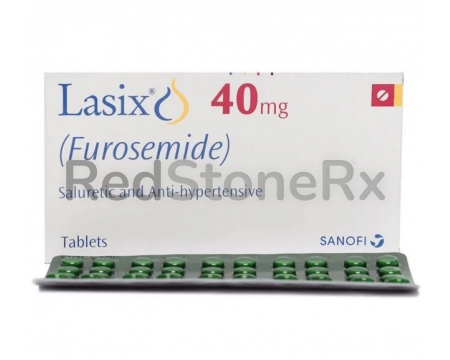
Lasix is the brand name for furosemide — a potent loop diuretic ("water tablet") used to treat fluid retention (oedema) and hypertension. Lasix generic name is furosemide — the INN (International Nonproprietary Name) used by all generic manufacturers. Furosemide Lasix and Lasix furosemide refer to the same drug.
Lasix medication works by inhibiting the Na⁺/K⁺/2Cl⁻ cotransporter (NKCC2) in the thick ascending limb of the Loop of Henle in the kidney — preventing reabsorption of sodium, chloride, and water, and dramatically increasing urine output. This is why it is called a loop diuretic.
Lasix uses — what is Lasix used for?
- Oedema (fluid retention) — associated with congestive heart failure, liver cirrhosis, renal disease, nephrotic syndrome
- Hypertension — as an adjunct antihypertensive
- Acute pulmonary oedema — IV furosemide is first-line emergency treatment
- Hypercalcaemia — IV furosemide promotes calcium excretion
- Renal impairment — in chronic kidney disease to manage fluid overload

Lasix Generic Name, Drug Class and Available Formats
Lasix generic name: Furosemide (INN). Lasix drug class: Loop diuretic — Na⁺/K⁺/2Cl⁻ cotransporter inhibitor.
Generic Lasix — all Australian generic furosemide products contain the same active ingredient at the same doses. Brand names in Australia include Lasix (Sanofi), Frusemide generic brands, and various generic furosemide tablets.
Formats available in Australia:
- Lasix tablets — 20mg and 40mg tablets. Lasix 40mg tablet is the most commonly prescribed strength for oedema and hypertension.
- Lasix liquid / Lasix oral solution — Furosemide 10mg/mL oral solution available for patients unable to swallow tablets. Usually prescribed for paediatric use or patients with swallowing difficulties. Ask your pharmacist or compounding pharmacy if needed.
- Lasix injection — IV/IM formulation used in hospital settings for acute conditions. Not for home self-administration.
When Does Lasix Start Working? — Pharmacokinetics
| Parameter | Oral Lasix | IV Lasix (hospital) |
|---|---|---|
| When does Lasix start working? | 30–60 minutes | 5 minutes |
| Peak diuretic effect | 1–2 hours post-dose | 30 minutes |
| Duration of action | 6–8 hours | 2 hours |
| Bioavailability | ~50–70% (variable with food) | 100% |
| Half-life | ~2 hours (longer in renal impairment) | ~2 hours |
| Renal excretion | ~88% unchanged in urine | ~88% unchanged |
Lasix Dosage — Including Maximum Dose of Lasix in 24 Hours
| Indication | Starting dose | Maintenance | Maximum dose per 24 hours |
|---|---|---|---|
| Oedema (heart failure, renal, hepatic) | 20–40mg once daily | 40–80mg once or twice daily | 400mg/day (oral, outpatient) |
| Hypertension | 20–40mg twice daily | 40–80mg/day | 80–160mg/day |
| Acute pulmonary oedema (hospital IV) | 40mg IV | 80–120mg IV over 1h | 1500mg IV (specialist-supervised only) |
| Paediatric (weight-based) | 1–2mg/kg | 1–3mg/kg/day | 6mg/kg/day maximum |
| Elderly patients | 20mg (start lower) | 20–40mg | Reduce maximum; fall risk |
Lasix Side Effects — Complete Guide
Common Side Effects of Lasix
- Increased urination (diuresis) — intended effect; can be disruptive. Take in the morning to minimise night-time impact.
- Hypokalemia (low potassium) — the most clinically significant side effect of Lasix. Furosemide causes significant potassium loss in urine. Symptoms of low potassium include muscle weakness, cramps, fatigue, palpitations, and constipation. Regular electrolyte monitoring is essential on ongoing therapy. Many patients require potassium supplements or concurrent prescription of a potassium-sparing diuretic (spironolactone, amiloride).
- Hyponatraemia (low sodium) — especially in elderly patients
- Dizziness and lightheadedness — related to blood pressure reduction and dehydration
- Muscle cramps — from electrolyte depletion
- Nausea and GI disturbance — reduce by taking with food
- Increased blood glucose — of relevance in diabetes
- Gout — furosemide increases uric acid levels; may precipitate gout attacks
Serious Side Effects — Seek Urgent Medical Attention
- Ototoxicity (hearing loss/tinnitus) — dose-dependent and more likely with IV dosing, high doses, rapid injection, or concurrent use of other ototoxic drugs (aminoglycosides). Permanent hearing damage can occur. Report any hearing changes immediately.
- Severe electrolyte disturbance — confusion, severe muscle weakness, cardiac arrhythmias from hypokalemia or hyponatraemia
- Severe dehydration — decreased urine output, extreme thirst, very dry mouth, rapid heart rate
- Severe hypotension — fainting, sudden dizziness on standing
- Allergic reaction — facial swelling, breathing difficulty
- Renal failure — reduced urine output despite taking Lasix
Best Way to Take Lasix — Practical Guide
- Morning dosing — take in the morning with water. This ensures peak diuresis occurs during the day rather than disrupting sleep with night-time urination
- Twice-daily dosing — if prescribed twice daily, take the second dose no later than 5pm to avoid nocturnal diuresis
- With food or without? — Lasix can be taken with or without food. Food slightly slows absorption but reduces stomach upset. Take with food if you experience nausea.
- Monitor fluid intake — staying reasonably hydrated is important. Do not attempt to counteract Lasix by excessive drinking — but do not restrict fluids to the point of dehydration
- Weigh yourself daily — for patients with heart failure or oedema, daily morning weights help monitor fluid status. Report sudden weight increase (>2kg/day) to your GP
- Regular blood tests — electrolytes (particularly potassium, sodium), renal function, and uric acid should be monitored periodically on ongoing Lasix therapy
- Do not crush extended-release formulations if prescribed — standard Lasix tablets can be halved along the breakline if needed
Maximum Dose of Lasix in 24 Hours — Clinical Reference
The maximum dose of Lasix in 24 hours varies significantly by clinical context:
- Outpatient oral therapy (oedema): Maximum 400mg/day in divided doses — this is the standard upper limit for ambulatory outpatients
- Resistant oedema (hospital): IV doses up to 1500mg/24 hours have been used under close specialist supervision with continuous monitoring — this is not a routine outpatient dose
- Hypertension: Maximum typically 80–160mg/day — higher doses rarely add benefit for BP control
- Never self-increase dose beyond what your GP has prescribed. Exceeding recommended doses dramatically increases risk of electrolyte depletion, dehydration, and renal failure.
Lasix vs Bumetanide — Loop Diuretic Comparison
| Parameter | Lasix (Furosemide) | Bumetanide |
|---|---|---|
| Drug class | Loop diuretic — NKCC2 inhibitor | Loop diuretic — NKCC2 inhibitor |
| Relative potency | Standard reference | ~40× more potent weight-for-weight (1mg bumetanide ≈ 40mg furosemide) |
| Oral bioavailability | ~50–70% (variable) | ~80–90% (more consistent) |
| Duration of action | 6–8 hours | 4–6 hours (shorter) |
| Availability in Australia | Widely available — PBS-listed | Limited — not widely stocked; compounding or specialist sourcing |
| When preferred | First-line loop diuretic for most Australian patients | Furosemide-refractory oedema; GI malabsorption affecting furosemide bioavailability; specialist use |
| Side effect profile | Hypokalemia, dehydration, ototoxicity | Similar; slightly less ototoxicity risk |
In Australian clinical practice, furosemide (Lasix) is overwhelmingly the first-choice loop diuretic due to PBS availability, long safety record, and clinical familiarity. Bumetanide is used primarily in specialist/hospital settings for patients unresponsive to furosemide or with specific absorption issues.
Lasix for Humans vs Animals — Furosemide in Veterinary Medicine
Lasix for humans is furosemide formulated and tested for human use. Furosemide is also widely used in veterinary medicine — particularly in dogs (heart failure, pulmonary oedema) and horses (common performance use in racehorses). The active molecule is identical, but human and veterinary formulations differ in:
- Excipients and additives — some veterinary formulations contain ingredients not suitable for human consumption
- Concentration — veterinary oral solutions may differ from human preparations
- Regulatory oversight — human pharmaceutical-grade Lasix is produced under stricter GMP standards
Lasix Surgery — LASIX vs LASIK: Clearing Up the Confusion
The search terms "Lasix surgery" and "Vision LASIX 2U" are examples of a very common confusion between two completely different things:
| Lasix (this page) | LASIK (not this page) | |
|---|---|---|
| What it is | Furosemide — a diuretic drug for fluid retention | Laser-Assisted In Situ Keratomileusis — laser eye surgery |
| Used for | Oedema, heart failure, hypertension | Myopia, hyperopia, astigmatism correction |
| Pronunciation | LAY-six | LAY-sik (same sound — hence confusion) |
| "Vision LASIX 2U" | Not related | This is a LASIK eye surgery provider in Australia — nothing to do with furosemide |
| Is it a surgery? | No — Lasix is an oral tablet and injection | Yes — LASIK is a surgical procedure performed by ophthalmologists |
If you are searching for laser eye surgery, vision correction, or LASIK providers in Australia — you have landed on the wrong page. Redirect your search to "LASIK surgery Australia" or "laser eye surgery Australia." Vision LASIX 2U (also written as "2U Laser Vision") is an Australian LASIK provider — contact them directly for eye surgery enquiries.
Drug Interactions — Lasix (Furosemide)
| Drug | Interaction | Action |
|---|---|---|
| Digoxin | Furosemide-induced hypokalemia dramatically increases digoxin toxicity risk — potentially fatal | Monitor electrolytes closely; supplement potassium; monitor digoxin levels |
| Lithium | Furosemide reduces renal lithium clearance — lithium toxicity | Monitor lithium levels closely; dose adjustment likely required |
| Aminoglycosides (gentamicin, tobramycin) | Additive ototoxicity — permanent hearing loss risk | Avoid concurrent use; use alternative antibiotic if possible |
| NSAIDs (ibuprofen, naproxen) | NSAIDs reduce furosemide efficacy and can cause acute kidney injury | Avoid regular NSAID use with furosemide; monitor renal function |
| ACE inhibitors / ARBs | Additive blood pressure lowering; first-dose hypotension risk | Start at low dose; monitor BP closely when combining |
| Phenytoin | Phenytoin reduces furosemide intestinal absorption — reduced efficacy | Dose adjustment may be needed; monitor diuretic response |
| Sucralfate (Carafate) | Reduces furosemide absorption | Separate doses by at least 2 hours |
| Alcohol | Additive hypotension and dehydration | Limit alcohol intake during furosemide therapy |
Lasix Cost and Availability in Australia
Buy Lasix online Australia: Furosemide is a Schedule 4 medicine — a valid prescription is required for any Australian pharmacy, online or physical. RedstoneRX provides generic furosemide for personal supply under the TGA Personal Importation Scheme with discreet delivery to all Australian states in 4–9 business days. A prescription or pharmacist consultation is required before supply.
Contraindications — Who Should Not Take Lasix
- Anuria (no urine production) — Lasix is ineffective and potentially harmful without adequate renal function
- Known allergy to furosemide or sulfonamides
- Severe hypokalemia or hyponatraemia — correct electrolytes before starting
- Hepatic encephalopathy — caution; risk of electrolyte-triggered coma
- Dehydrated or hypovolemic states — correct volume status first
- First trimester of pregnancy — use with caution under specialist guidance
Frequently Asked Questions — Lasix (Furosemide) Australia
What is Lasix (Lasix medicine)?
Lasix is the brand name for furosemide — a potent loop diuretic that increases urine production, removing excess fluid from the body. It is used for oedema associated with heart failure, liver disease and renal disease, and for hypertension. Generic Lasix (furosemide) is PBS-listed in Australia.
When does Lasix start working?
Oral Lasix starts working within 30–60 minutes of ingestion. Peak diuretic effect occurs at 1–2 hours. The diuretic effect lasts 6–8 hours after an oral dose.
What is the maximum dose of Lasix in 24 hours?
For outpatient oral therapy, the standard maximum dose of Lasix in 24 hours is 400mg/day. Higher doses (up to 1500mg IV) are used in hospital settings under close specialist supervision. Never exceed your prescribed dose without GP guidance.
Is Lasix available at Chemist Warehouse in Australia?
Yes — furosemide (generic Lasix) is available at Chemist Warehouse and all Australian pharmacies with a valid prescription. It is PBS-listed, making it significantly more affordable than private pricing.
"Lasix surgery" — what does this mean?
If you searched "Lasix surgery" looking for laser eye surgery, you have found the medication (furosemide). The eye surgery you are looking for is LASIK (spelled with a K) — laser-assisted in situ keratomileusis. Vision LASIK 2U is an Australian LASIK eye surgery provider. Lasix (the drug) has nothing to do with eye surgery.
This product page was reviewed by Dr. Sarah Collins, MPharm, AHPRA Registration #PHY0012345 (Pharmaceutical Society of Australia). Furosemide (Lasix) is a Schedule 4 Prescription Only Medicine — prescription required. Monitor electrolytes regularly. Report hearing changes immediately. For medical emergencies call 000. RedstoneRX complies with all TGA requirements for medicine supply in Australia.