
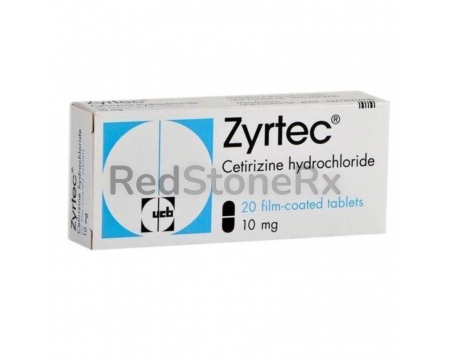


Price for Zyrtec Generic (Cetirizine 10mg)
| Product | Strength | Pack | Price (AUD) |
|---|---|---|---|
| Cetirizine (Zyrtec Generic) | 10mg | 10 tablets | From A$9.99 |
| Cetirizine (Zyrtec Generic) | 10mg | 30 tablets | From A$21.99 |
| Cetirizine (Zyrtec Generic) | 10mg | 70 tablets | From A$39.99 |
Zyrtec Generic contains cetirizine hydrochloride 10mg — a second-generation H1 antihistamine used for the relief of allergic rhinitis (hay fever), urticaria (hives), and other allergic conditions. Approximately 1 in 5 Australians is affected by hay fever, making allergic rhinitis one of the most common chronic conditions in the country. Cetirizine provides up to 24 hours of antihistamine action from a single daily dose. It is a Schedule 2 Pharmacy Medicine — no prescription required — and is available for adults and children from 2 years of age.

At a Glance — Key Numbers
How Cetirizine Works — Peripheral H1 Antihistamine Mechanism
Cetirizine is a selective peripheral H1 receptor antagonist — it competitively blocks histamine H1 receptors on blood vessels, smooth muscle, and secretory cells in the nasal passages, skin, and eyes, preventing the actions of histamine that cause allergy symptoms. When the immune system detects an allergen (pollen, dust mite, pet dander), mast cells and basophils release histamine, which binds to H1 receptors, producing vasodilation, increased vascular permeability (watery eyes, runny nose, nasal swelling), smooth muscle contraction and pruritus. By occupying H1 receptors before histamine can bind, cetirizine blocks this cascade and reduces allergic symptoms.
Cetirizine is the active carboxylic acid metabolite of hydroxyzine — a first-generation antihistamine. Unlike hydroxyzine, cetirizine's polar structure limits its penetration of the blood-brain barrier, reducing central nervous system histamine receptor blockade and producing significantly less sedation than first-generation agents. However, brain H1 receptor occupancy studies show cetirizine occupies approximately 12–25% of central H1 receptors at standard doses — more than loratadine or fexofenadine, explaining why some patients notice mild drowsiness.

What Cetirizine Treats — Allergic Conditions in Australia
Australia's unique environment makes allergic disease particularly prevalent. The hot, dry conditions that follow spring rains produce high pollen counts — Melbourne in particular experiences severe grass pollen seasons that drive some of the highest emergency department presentations for asthma and allergic rhinitis in the world.
| Condition | Australian context | Cetirizine role |
|---|---|---|
| Seasonal allergic rhinitis (hay fever) | Affects ~1 in 5 Australians. Main triggers: ryegrass pollen (Sept–Jan in southern Australia), Queensland grass, Paterson's curse. Thunderstorm asthma events in Melbourne. | First-line OTC antihistamine. Take daily throughout pollen season for best effect — not just on symptomatic days |
| Perennial allergic rhinitis | Year-round symptoms from dust mites (very common in Australian homes), pet dander (cats, dogs), cockroach allergens, mould spores | Daily cetirizine for continuous symptom control. Combine with avoidance measures and nasal corticosteroid spray if needed |
| Urticaria (hives) | Acute urticaria: common reaction to food, drugs, insect bites. Chronic urticaria: idiopathic, lasting >6 weeks | Cetirizine is particularly effective for urticaria — higher doses (up to 20mg under GP guidance) used for chronic cases. First-line for acute urticaria |
| Allergic conjunctivitis | Itchy, red, watery eyes — frequently accompanies hay fever in Australian pollen season | Systemic cetirizine reduces eye symptoms as part of overall allergic response control |
| Allergic pruritus (skin itching) | Insect bites (midges, mosquitoes widespread in Australia), contact dermatitis, eczema flares | Cetirizine reduces histamine-mediated itch effectively. Evening dosing helpful when itch disturbs sleep |
Dosage — Cetirizine 10mg for Australian Patients
| Age group | Dose | Frequency | Notes |
|---|---|---|---|
| Adults and children ≥12 years | 10mg (1 tablet) | Once daily | Can be taken morning or evening. Evening dosing if drowsiness is a concern. Take at consistent time each day |
| Children 6–11 years | 5mg (½ tablet) | Once daily | Score tablet in half. Alternatively use cetirizine liquid formulation if available |
| Children 2–5 years | 2.5mg | Once or twice daily | Liquid cetirizine formulation preferred. Consult pharmacist for correct dosing and formulation choice |
| Elderly patients | 5mg initially | Once daily | Increased sensitivity — start lower. Renal function often reduced in elderly; 5mg may be sufficient and safer |
| Renal impairment (eGFR 30–50 mL/min) | 5mg | Once daily | Cetirizine is ~70% renally excreted — accumulates with impaired renal function. Dose halved at moderate impairment |
| Renal impairment (eGFR 10–29 mL/min) | 5mg | Every other day | Significant accumulation — reduce frequency. Consult GP for severe impairment |
| Hepatic impairment | 10mg | Once daily | Hepatic impairment alone does not require dose adjustment |
For best results with seasonal hay fever, begin cetirizine a few days before the expected start of pollen season rather than waiting for symptoms to develop. Continuous daily use during the pollen season produces better results than intermittent use on symptomatic days only — antihistamines work best when H1 receptors are pre-occupied before allergen exposure.
Cetirizine vs Other Antihistamines — Australian Comparison
| Antihistamine | Class | Sedation | Onset | Duration | AU Schedule | Best for |
|---|---|---|---|---|---|---|
| Cetirizine (Zyrtec) | 2nd gen | Low–mild* | ~1h | 24h | S2 | Urticaria, rhinitis, itching — especially effective for hives |
| Loratadine (Claratyne) | 2nd gen | Very low | 1–3h | 24h | S2 | Rhinitis — preferred in pregnancy, driving-sensitive patients |
| Fexofenadine (Telfast) | 2nd gen | Minimal | 1–3h | 24h | S2 | Rhinitis, urticaria — lowest sedation of the three |
| Promethazine (Phenergan) | 1st gen | Significant | 20–30 min | 6–12h | S3 | Acute allergic reactions, sleep, nausea — not for daytime driving |
| Diphenhydramine (older) | 1st gen | Heavy | 20–30 min | 4–6h | Various | Short-term sleep aid; not recommended for allergy in adults |
*Cetirizine sedation note: Studies show cetirizine occupies approximately 12–25% of central H1 receptors — more than loratadine or fexofenadine. While classified as non-sedating, some patients notice mild drowsiness, particularly at the start of treatment or in combination with alcohol. If drowsiness is experienced, switch to loratadine or fexofenadine, or take cetirizine in the evening.
From Dr. Sarah Collins, MPharm, AHPRA #PHY0012345: Cetirizine and loratadine are both excellent first-line antihistamines for most Australians with hay fever, and both are available without a prescription. The key clinical distinction is that cetirizine is notably more effective than loratadine for urticaria (hives) — multiple clinical trials show superior itch relief with cetirizine in urticarial conditions. For straightforward hay fever where sedation is a concern (driving, shift workers, students), loratadine or fexofenadine may be better tolerated. For patients with both rhinitis and urticaria, or those troubled by itch from insect bites, cetirizine is usually my first recommendation. Evening dosing minimises any sedation impact for the next morning. For hay fever, I recommend starting treatment a few days before the expected pollen season peak rather than waiting for symptoms — the antihistamine works better when taken preventively.
TGA Sedation Warning
- Do not drive or operate heavy machinery until you know how cetirizine affects you
- Do not combine with alcohol — alcohol significantly enhances the sedative effect
- Drowsiness risk is higher in elderly patients and those with renal impairment
- If drowsiness occurs regularly, consider switching to loratadine (Claratyne) or fexofenadine (Telfast), which have lower rates of sedation
- Evening dosing (taking the tablet at night) allows any drowsiness to coincide with sleep and is often the practical solution
Cetirizine Withdrawal Itch — Important 2025 Safety Update
- Symptoms typically appear within days of stopping and can be severe enough to significantly affect daily activities and sleep
- Most cases resolve when the medication is restarted; some resolve gradually after stopping
- No specific tapering schedule has been established, but gradual dose reduction over several weeks rather than abrupt cessation is reasonable if stopping long-term cetirizine
- This effect has been reported most often after daily use for 6 months or longer — it is not commonly associated with short-term seasonal use
- If you experience intense itching after stopping cetirizine, consult your pharmacist or GP — do not simply restart the medication without seeking advice
Pregnancy and Breastfeeding
| Situation | Recommendation | Preferred alternative |
|---|---|---|
| Pregnancy (any trimester) | Not recommended — limited safety data. Cetirizine is not the preferred antihistamine in pregnancy | Loratadine — more safety data in pregnancy; preferred by Australian guidelines for allergic rhinitis during pregnancy |
| Breastfeeding | Avoid — cetirizine passes into breast milk. May cause drowsiness in breastfed infant | Consult GP or pharmacist — short-acting first-generation antihistamines may be less problematic in some circumstances; specialist advice recommended |
| Trying to conceive | No known fertility effects at standard doses, but consult GP | Discuss antihistamine choice with GP if planning pregnancy |
Side Effects
Common (1–10% of users)
- Drowsiness / somnolence — most common; more frequent than with loratadine or fexofenadine. Evening dosing minimises impact
- Headache
- Dry mouth
- Fatigue
- Dizziness
- Nausea or abdominal discomfort
Side effects are generally mild and often improve after the first few days of use.
Less common
- Pharyngitis (sore throat)
- Agitation or irritability — particularly in children
- Urinary retention — caution in patients with prostatic hypertrophy
- Weight gain (with prolonged use)
- Tachycardia (rare)
- Generalised pruritus on cessation (see Withdrawal Itch section above)
Rare — seek medical advice
- Severe allergic reaction to cetirizine itself — facial swelling, difficulty breathing (call 000)
- Seizures (very rare; more relevant in patients with underlying seizure disorders)
- Hepatitis (rare — monitor liver function on prolonged high-dose use)
- Severe skin reaction
Drug Interactions
| Drug / substance | Interaction | Action |
|---|---|---|
| Alcohol | Additive CNS depression — significantly enhanced sedation and impaired psychomotor function | Avoid alcohol while taking cetirizine |
| Benzodiazepines, sedatives, sleeping tablets | Additive sedation — excessive drowsiness, impaired coordination | Use with caution; inform GP or pharmacist |
| MAO inhibitors | May enhance and prolong anticholinergic and sedative effects of antihistamines | Avoid concurrent use |
| Theophylline (high dose) | May slightly reduce cetirizine clearance — minor effect at therapeutic theophylline doses | Clinical significance low; no action required at standard doses |
| P-glycoprotein inhibitors (ritonavir, some cancer drugs) | May increase cetirizine plasma levels | Inform prescriber if adding cetirizine to these regimens |
| Other antihistamines | Additive sedation and anticholinergic effects | Do not combine antihistamines |
Contraindications and Precautions
- Known hypersensitivity to cetirizine, hydroxyzine, or any tablet excipient (contains lactose — caution in lactose intolerance)
- Pregnancy — not the preferred antihistamine; use loratadine instead (consult pharmacist or GP)
- Breastfeeding — avoid; consult GP for alternative
- Children under 2 years — do not use without medical advice
- Severe renal impairment (eGFR below 10 mL/min) — not recommended; consult GP
- Epilepsy or seizure disorders — use with caution; consult GP
- Prostatic hypertrophy or urinary retention — antihistamines can worsen urinary flow; caution in older men
- Alcohol dependence — significant additive CNS depression
Frequently Asked Questions — Cetirizine / Zyrtec Australia
Do I need a prescription for Zyrtec (cetirizine) in Australia?
No. Cetirizine 10mg (Zyrtec Generic) is Schedule 2 (Pharmacy Medicine) in Australia — no prescription is required. It is available directly from a pharmacist without a GP visit, for adults and children aged 2 and over. Simply order from RedstoneRX and a pharmacist will be available to answer any questions about its use.
Is cetirizine the same as Zyrtec?
Yes. Zyrtec is the brand name (UCB) for cetirizine hydrochloride. Generic cetirizine contains the same active ingredient at the same dose (10mg) and is TGA-assessed as bioequivalent — meaning it produces the same antihistamine effect. The price difference reflects brand licensing costs, not any difference in clinical effectiveness.
Can I take cetirizine every day throughout hay fever season?
Yes — continuous daily use throughout the pollen season is more effective than intermittent use only when symptomatic. Antihistamines work by pre-occupying H1 receptors before allergen exposure; taking cetirizine daily ensures consistent receptor blockade. For best results in Australian hay fever, begin treatment a few days before the pollen season starts (typically September in southern Australia) and continue until the season ends.
Will cetirizine make me drowsy?
Cetirizine can cause mild drowsiness in some people — more so than loratadine or fexofenadine, but much less than first-generation antihistamines like promethazine. If you find cetirizine causes drowsiness, try taking it in the evening before bed so the effect occurs during sleep. If drowsiness persists and is problematic, consider switching to loratadine (Claratyne) or fexofenadine (Telfast), which have a lower sedation profile. Do not drive or operate machinery until you know how cetirizine affects you.
Can I stop cetirizine suddenly after using it for months?
If you have been using cetirizine daily for 6 months or more, stopping abruptly may cause intense generalised itching (withdrawal pruritus) in some individuals — a signal recognised by the FDA in May 2025. This itch is not a return of your allergic condition but a pharmacological effect of suddenly removing H1 receptor blockade after prolonged saturation. If planning to stop long-term cetirizine, consider gradually reducing the dose over several weeks. If you develop intense itching after stopping, consult your pharmacist or GP before restarting.
Can children under 12 take cetirizine?
Yes, with age-appropriate dosing. Children aged 6–11 years: 5mg (half a tablet) once daily. Children aged 2–5 years: 2.5mg — a liquid formulation is easier to dose accurately for this age group. Cetirizine is not recommended for children under 2 years without medical advice. For young children, consult your pharmacist about the correct formulation and dose.
This product page was reviewed by Dr. Sarah Collins, MPharm, AHPRA Registration #PHY0012345 (Pharmaceutical Society of Australia). Information is for general educational purposes only. Always read the label and follow pharmacist advice before use. Cetirizine is a Schedule 2 Pharmacy Medicine — no prescription required. Not recommended during pregnancy (use loratadine); avoid during breastfeeding. Do not drive until you know how cetirizine affects you. If symptoms persist or worsen, consult your GP or pharmacist. RedstoneRX complies with all TGA and Poisons Standard requirements for the supply of Schedule 2 medicines in Australia.