
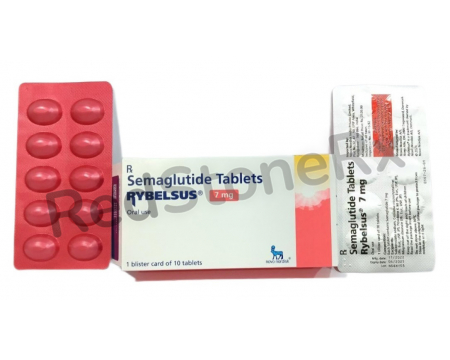
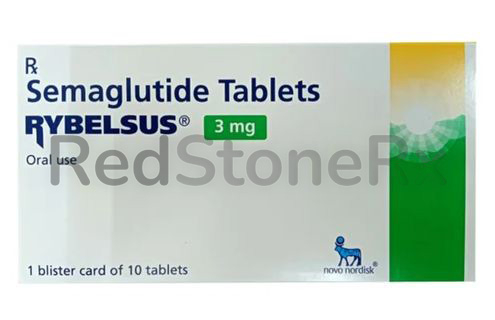
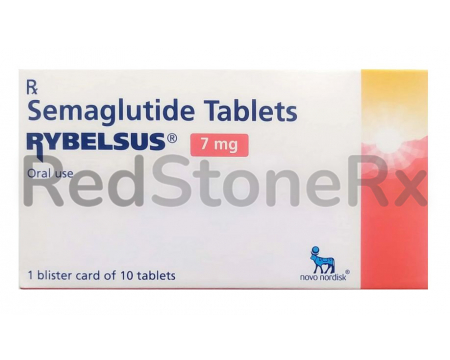
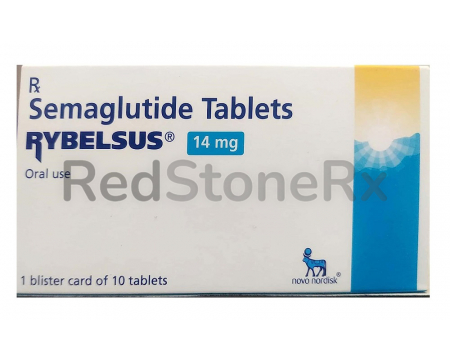


Price for Rybelsus (Oral Semaglutide)
| Product | Strength | Pack | Price (AUD) |
|---|---|---|---|
| Rybelsus | 3mg (initiation only) | 30 tablets | From A$89.99 |
| Rybelsus | 7mg (first therapeutic) | 30 tablets | From A$99.99 |
| Rybelsus | 14mg (maximum dose) | 30 tablets | From A$109.99 |
Rybelsus is the world's first oral GLP-1 receptor agonist tablet, containing semaglutide — the same active molecule as Ozempic (weekly injection for T2DM) and Wegovy (weekly injection for weight management), formulated in a daily oral tablet using a unique SNAC absorption technology. TGA-approved in Australia in October 2022, Rybelsus is indicated for adults with insufficiently controlled type 2 diabetes as an adjunct to diet and exercise — either as monotherapy when metformin is contraindicated or not tolerated, or in combination with other antidiabetics. It is PBS-listed for eligible patients and represents a significant advance for patients who prefer an oral medicine over weekly injections.

At a Glance — Key Numbers
How Rybelsus Works — GLP-1 Receptor Agonist Mechanism
Semaglutide is a GLP-1 (glucagon-like peptide-1) receptor agonist with 94% sequence homology to human GLP-1 — a natural gut hormone released after meals. Semaglutide binds to and activates GLP-1 receptors throughout the body, producing coordinated effects that improve blood glucose control and reduce body weight through multiple complementary pathways:

The SNAC Administration Requirement — The Most Important Instruction
Semaglutide is a large peptide molecule that would normally be destroyed by stomach acid and digestive enzymes. Rybelsus overcomes this by co-formulating semaglutide with SNAC (sodium N-(8-[2-hydroxybenzoyl]amino)caprylate) — a small molecule that locally and transiently raises the pH immediately around the dissolving tablet in the stomach and facilitates semaglutide absorption through the gastric mucosa.
This mechanism is exquisitely sensitive to the gastric environment. Any food, large volumes of liquid, or other oral medications present in the stomach at the time of dosing will disrupt SNAC's action and dramatically reduce semaglutide absorption. Clinical pharmacology studies show that food can reduce Rybelsus bioavailability by up to 90%, and water volumes above 120mL reduce it by approximately 30–40%.
Why this matters: Food or beverages reduce Rybelsus absorption by up to 90%. Large volumes of water dilute SNAC and reduce absorption by ~30–40%. Other oral medications taken within 30 minutes may have their own absorption affected by semaglutide's gastric effects. These are not optional guidelines — they are pharmacokinetic requirements for the medicine to work.
Dose Titration Schedule — 3mg → 7mg → 14mg
| Phase | Dose | Duration | Purpose and clinical notes |
|---|---|---|---|
| Initiation | 3mg once daily | First 30 days only | GI tolerability phase. Not glycaemically effective. Allows GI tract to adapt to GLP-1 effects (nausea, reduced gastric emptying). Do not extend beyond 30 days — escalate to 7mg |
| Therapeutic dose | 7mg once daily | Minimum 30 days; ongoing if HbA1c target met | First dose with meaningful glycaemic effect. Reduces HbA1c by approximately 1.0–1.2%. Produces moderate weight loss. Continue if tolerated and target achieved |
| Maximum dose | 14mg once daily | Ongoing if HbA1c target not met on 7mg | Escalate after 30+ days on 7mg if HbA1c not at target. Reduces HbA1c by approximately 1.3–1.4%. Greater weight loss (~3–5kg mean). Maximum approved dose |
Managing Nausea During Dose Escalation
Nausea is the most common side effect of Rybelsus, particularly during the 3mg initiation phase and when escalating to 7mg or 14mg. It is driven by GLP-1's effect on gastric motility and central appetite centres. For most patients, nausea is worst in the first 2–4 weeks after each dose increase and then gradually subsides. Practical strategies to manage it:
- Eat smaller meals more frequently — large meals are harder to tolerate when gastric emptying is slowed
- Avoid high-fat, spicy or rich foods — these are the most nauseating in combination with GLP-1 effects
- Eat slowly and stop eating when full — satiety comes earlier with semaglutide
- Stay hydrated — sip fluids throughout the day; dehydration worsens nausea
- Do not escalate dose early — wait the full 30 days at each dose level before increasing
- If nausea is severe and persistent beyond 4 weeks at a given dose, discuss with your GP — dose reduction may be appropriate before re-escalating more slowly
The Semaglutide Family — Rybelsus vs Ozempic vs Wegovy
Semaglutide is the active molecule in three different TGA-approved products in Australia. Understanding the differences is important for patients and prescribers navigating treatment options.
| Product | Route | Doses (AU) | Frequency | TGA indication | PBS (AU) |
|---|---|---|---|---|---|
| Rybelsus | Oral tablet | 3mg, 7mg, 14mg | Once daily | Type 2 diabetes | Yes — T2DM |
| Ozempic | Subcutaneous injection (pen) | 0.25mg, 0.5mg, 1mg, 2mg | Once weekly | Type 2 diabetes | Yes — T2DM |
| Wegovy | Subcutaneous injection (pen) | 0.25mg → 2.4mg | Once weekly | Chronic weight management | No (as of Jan 2026) — weight indication not subsidised |
Ozempic generally achieves greater HbA1c reduction and weight loss than Rybelsus at comparable effective doses, due to the higher bioavailability of the injectable route (~89% vs ~0.4–1% for oral). However, Rybelsus is preferred by patients who cannot or prefer not to self-inject. Both are TGA-approved and PBS-listed for T2DM.
Critical Safety Warnings
- Personal or family history of medullary thyroid carcinoma (MTC)
- Multiple Endocrine Neoplasia syndrome type 2 (MEN 2)
Report any neck lump, persistent hoarseness, difficulty swallowing, or swollen lymph nodes in the neck to your GP promptly while taking Rybelsus. Do not ignore these symptoms.
- Severe, persistent abdominal pain — particularly in the upper abdomen or radiating to the back
- Nausea and vomiting that is severe or different from the usual GI side effects
- Pain that is worse after eating
- Fever with abdominal pain
Stop Rybelsus and contact your GP immediately if you experience these symptoms. Pancreatitis requires urgent medical assessment. Do not restart semaglutide after confirmed pancreatitis.
Side Effects
Very common — GI effects (improve over time)
- Nausea — most common; worst during initiation and dose increases. Usually improves after 4–8 weeks
- Diarrhoea
- Vomiting — more common during dose escalation
- Abdominal discomfort and bloating
- Decreased appetite — often welcome in overweight patients
- Constipation — can alternate with diarrhoea
GI side effects are the primary reason for discontinuation. Slow titration and dietary adjustments (smaller portions, lower fat meals) significantly improve tolerability.
Less common
- Hypoglycaemia — low risk with semaglutide alone. Higher risk when combined with insulin or sulfonylurea. Treat with fast-acting glucose (glucose tablets or juice)
- Fatigue
- Headache
- Burping or regurgitation
- Gastro-oesophageal reflux (heartburn)
- Increased resting heart rate (mild tachycardia)
Stop immediately — seek urgent care — call 000
- Pancreatitis — severe persistent upper abdominal pain, especially radiating to back. Medical emergency
- Neck lump, hoarseness, difficulty swallowing (possible thyroid tumour)
- Severe vision changes (possible retinopathy worsening)
- Severe allergic reaction — facial swelling, breathing difficulty, anaphylaxis
- Severe hypoglycaemia with loss of consciousness (if also on insulin)
Drug Interactions — Rybelsus
| Drug / class | Interaction | Action required |
|---|---|---|
| Other oral medications generally | Delayed gastric emptying can slow absorption of many oral drugs taken around the same time. The 30-minute administration window also means other oral drugs must be delayed | Take all other oral medications at least 30 minutes after Rybelsus. Drugs with a narrow therapeutic window (e.g., levothyroxine, warfarin, certain antibiotics) may require monitoring |
| Insulin and sulfonylureas (gliclazide, glipizide) | Additive glucose-lowering — significantly increased hypoglycaemia risk when combined with these agents | GP will often reduce insulin or sulfonylurea dose when adding Rybelsus. Monitor blood glucose closely |
| Levothyroxine (Eutroxsig, Oroxine) | Gastric emptying delay may reduce absorption if taken too close to Rybelsus | Take levothyroxine at least 30 minutes after Rybelsus — or use a different timing approach under GP supervision |
| Warfarin | Blood glucose lowering may affect vitamin K metabolism; delayed gastric emptying may affect warfarin absorption | Monitor INR more closely when initiating Rybelsus; inform anticoagulation clinic |
| Oral contraceptives | Delayed gastric emptying may theoretically reduce contraceptive pill absorption | Take OCP at least 30 minutes after Rybelsus or at a different time of day |
| Cyclosporin | Narrow therapeutic index; gastric emptying delay may affect absorption | Monitor cyclosporin levels closely when initiating semaglutide |
Contraindications
- Personal or family history of medullary thyroid carcinoma (MTC)
- Multiple Endocrine Neoplasia syndrome type 2 (MEN 2)
- Known hypersensitivity to semaglutide or any excipient
- History of pancreatitis — particularly chronic pancreatitis or prior acute pancreatitis episode related to GLP-1 therapy
- Type 1 diabetes mellitus — not indicated; use insulin
- Diabetic ketoacidosis — requires insulin management
- Pregnancy and breastfeeding — semaglutide should not be used in pregnancy; women of childbearing age should use contraception while taking Rybelsus and for 2 months after stopping
- Severe gastrointestinal disease — inflammatory bowel disease, gastroparesis, prior GI surgery (may worsen symptoms)
From Dr. Sarah Collins, MPharm, AHPRA #PHY0012345: In my clinical practice, the single most common reason Rybelsus fails to produce adequate glycaemic response is incorrect administration. Patients take it with breakfast, or with a large glass of water, or with their morning coffee — and then wonder why their HbA1c is not improving. The 120mL water restriction and 30-minute fasting window are not optional lifestyle preferences; they are pharmacokinetically mandatory for the SNAC absorption system to function. I also emphasise the surgical consideration — semaglutide's significant effect on gastric motility means patients should inform their anaesthetist before any elective procedure. Serious aspiration events have occurred in patients who did not withhold GLP-1 agonists before surgery. Ask your GP how far in advance to stop Rybelsus before any planned surgery.
Getting a Prescription in Australia
Frequently Asked Questions — Rybelsus Australia
Why do I need to take Rybelsus 30 minutes before food?
Oral semaglutide would be destroyed by stomach acid without special protection. Rybelsus uses SNAC (sodium N-(8-[2-hydroxybenzoyl]amino)caprylate) technology — a carrier that temporarily raises the local pH around the dissolving tablet in the stomach, allowing semaglutide to be absorbed through the gastric wall. Any food in the stomach completely disrupts this mechanism, reducing semaglutide absorption by up to 90%. Water volumes above 120mL dilute SNAC's effect, reducing absorption by 30–40%. This is not a preference or guideline — it is a pharmacokinetic requirement for Rybelsus to work.
Is 3mg Rybelsus effective for blood sugar control?
No — the 3mg dose is an initiation dose intended solely for gastrointestinal tolerability during the first 30 days. At 3mg, semaglutide has minimal glycaemic effect. Patients who remain on 3mg long-term should not expect meaningful blood glucose improvement from this dose. The 7mg dose is the first therapeutically effective dose. Your GP should escalate to 7mg after the first 30 days if the 3mg was well tolerated.
What is the difference between Rybelsus and Ozempic?
Both contain semaglutide — the same active ingredient. Rybelsus is a daily oral tablet; Ozempic is a weekly subcutaneous injection. Ozempic achieves higher bioavailability (~89% vs <1% for oral) and generally produces greater HbA1c reduction and weight loss at comparable effective doses. Rybelsus is preferred by patients who prefer not to self-inject. Both are TGA-approved and PBS-listed for type 2 diabetes in Australia.
Do I need to stop Rybelsus before surgery?
Yes — you should inform your GP and surgical team that you are taking Rybelsus well before any planned surgery. Semaglutide significantly slows gastric emptying, which increases the risk of food or liquid remaining in the stomach during anaesthesia (aspiration risk). Most anaesthesia guidelines now recommend withholding GLP-1 agonists before elective surgery. The exact timing (typically 1 week for weekly injectables; discuss for daily oral) will be determined by your GP and anaesthetist. Do not assume this is automatically managed — proactively inform your surgical team.
Can I take my other medications at the same time as Rybelsus?
No — all other oral medications should be taken at least 30 minutes after Rybelsus. The 30-minute post-dose window is required for Rybelsus to be absorbed before anything else enters the stomach. Additionally, semaglutide's slowing of gastric emptying can affect the absorption of medications taken around the same time. Drugs with a narrow therapeutic window (levothyroxine, warfarin, cyclosporin, certain antibiotics) require particular attention. Discuss the timing of all your medications with your pharmacist or GP when starting Rybelsus.
This product page was reviewed by Dr. Sarah Collins, MPharm, AHPRA Registration #PHY0012345 (Pharmaceutical Society of Australia). Information is for general educational purposes only. Rybelsus is a Schedule 4 Prescription Only Medicine in Australia — a valid prescription is required. Rybelsus carries the TGA Black Triangle (▼) — report all suspected side effects. Absolute contraindication in personal or family history of medullary thyroid carcinoma or MEN 2. If you experience severe abdominal pain, stop Rybelsus and seek urgent medical care — call 000 if severe. Inform your surgical/anaesthesia team before any procedure. RedstoneRX complies with all TGA and Poisons Standard requirements for the supply of Schedule 4 medicines in Australia.