
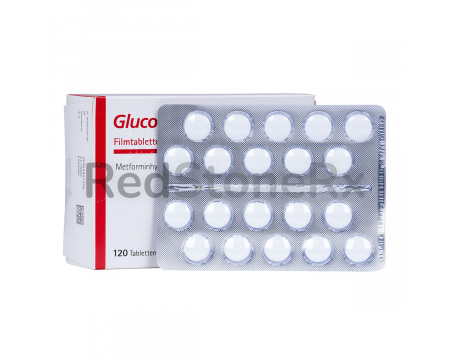
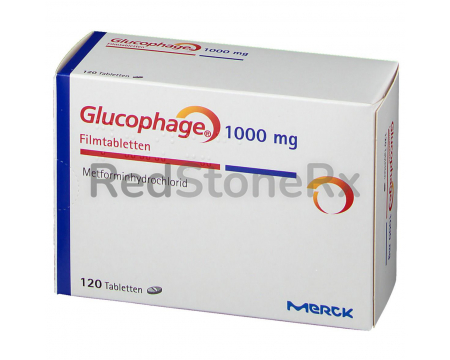
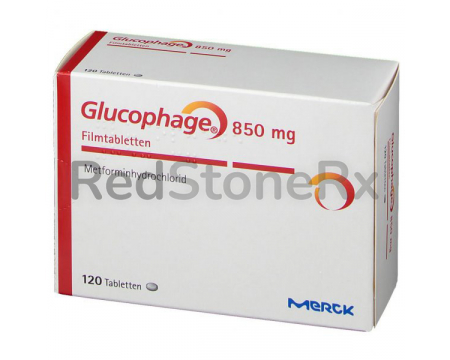
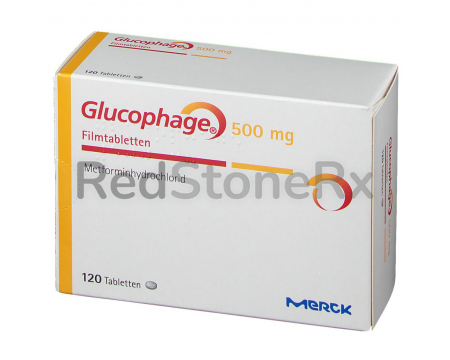


Price for Glucophage (Metformin Hydrochloride)
| Product | Strength | Pack | Price (AUD) |
|---|---|---|---|
| Glucophage | 500mg | 60 tablets | From A$18.99 |
| Glucophage | 850mg | 60 tablets | From A$22.99 |
| Glucophage | 1000mg | 60 tablets | From A$26.99 |
Glucophage is the original brand-name formulation of metformin hydrochloride by Merck — the world's most widely prescribed oral antidiabetic medicine and the cornerstone of type 2 diabetes management in Australia. Metformin is the first-line pharmacological treatment recommended by the Australian Diabetes Society, the RACGP, and global guidelines including the American Diabetes Association (ADA) and European Association for the Study of Diabetes (EASD) for type 2 diabetes once lifestyle modification alone is insufficient. It is TGA-approved, PBS-listed, and has over 60 years of clinical use data supporting its safety and efficacy. Generic metformin is also available at highly subsidised PBS prices.

At a Glance — Key Clinical Numbers

How Metformin Works — Biguanide Mechanism
Metformin belongs to the biguanide class of antidiabetics. Its primary mechanism involves activation of AMP-activated protein kinase (AMPK) in the liver, which acts as a cellular energy sensor. When AMPK is activated by metformin, it suppresses key enzymes involved in gluconeogenesis (the production of new glucose from non-carbohydrate sources) and glycogenolysis (the breakdown of stored glycogen to glucose). The result is a significant reduction in hepatic glucose output — the dominant cause of fasting hyperglycaemia in type 2 diabetes.
Metformin also improves peripheral insulin sensitivity in skeletal muscle and adipose tissue, increasing glucose uptake in response to insulin. Additionally, it modestly reduces intestinal glucose absorption. Unlike sulfonylureas, insulin secretagogues, or GLP-1 agonists, metformin does not act on the pancreas to stimulate insulin release — explaining its very low hypoglycaemia risk when used alone.
Glucophage IR vs Glucophage XR — Which Is Right for You?
Metformin is available in two release formulations in Australia: immediate-release (IR) — the standard Glucophage tablet — and extended-release (XR), also known as Glucophage SR or Metformin XR. Both contain the same active ingredient and produce equivalent glycaemic control, but differ in dosing frequency and gastrointestinal tolerability.
| Parameter | Glucophage IR (standard) | Glucophage XR (extended-release) |
|---|---|---|
| Release mechanism | Immediate — absorbed in small intestine | Slow release throughout GI tract |
| Dosing frequency | 2–3 times daily with meals | Once daily with evening meal |
| GI side effects (nausea, diarrhoea) | More common, especially at start | Significantly less frequent |
| Tablet crushing/splitting | Can be split on score line | Do NOT crush, split or chew — destroys controlled release |
| PBS availability | Yes | Yes |
| Who benefits most from XR | — | Patients who experience significant nausea/diarrhoea on IR; prefer once-daily dosing |
If standard metformin tablets cause intolerable gastrointestinal side effects that do not improve after 4–6 weeks, ask your GP about switching to the extended-release formulation — the XR form is associated with significantly fewer GI complaints at equivalent doses.
Dosage and Titration — Starting Metformin
The key to tolerating metformin is starting low and increasing slowly. The majority of gastrointestinal side effects occur during the first 2–4 weeks and improve significantly with continued use. Abruptly starting at a full therapeutic dose dramatically increases GI intolerance and leads many patients to abandon an otherwise highly effective medicine.
- Always take metformin IR with or immediately after meals — reduces GI side effects
- Swallow tablets whole with a glass of water. IR tablets may be split on the score line if needed
- Do not crush, chew or split XR (extended-release) tablets — this destroys the controlled-release mechanism and causes dose dumping
- If you miss a dose, take it as soon as you remember with your next meal. Do not double up
- Store below 30°C; protect from moisture
Critical Safety Warnings — Three You Must Know
| eGFR (mL/min/1.73m²) | Action |
|---|---|
| ≥45 | Standard dosing — safe at full dose |
| 30–44 | Use with caution — reduce to maximum 1000mg/day; monitor eGFR every 3–6 months |
| Below 30 | STOP metformin — contraindicated. Lactic acidosis risk unacceptable |
Symptoms of lactic acidosis: muscle pain, weakness, difficulty breathing, abdominal pain, nausea, feeling cold, dizziness, slow/irregular heartbeat. If suspected, stop metformin and seek emergency care immediately — call 000.
- Before contrast: Withhold metformin on the day of and the day before the procedure if eGFR is below 60 mL/min. For eGFR ≥60, risk is very low but discuss with your radiologist
- After contrast: Do not restart metformin for at least 48 hours after contrast administration, and only after confirming kidney function has not been adversely affected
- Always inform any doctor, radiologist or procedure team that you are taking metformin before any imaging with contrast
- The Australian Diabetes Society recommends checking B12 levels every 2–3 years in patients on long-term metformin
- If you develop peripheral neuropathy symptoms while on metformin, ask your GP to check B12 before attributing symptoms to diabetes
- B12 supplementation (oral or injected) corrects the deficiency safely and does not require stopping metformin
- Higher doses of metformin and longer duration of use increase the risk of B12 depletion
Metformin and PCOS — Additional TGA-Approved Use
In addition to type 2 diabetes, metformin is TGA-approved in Australia for the management of polycystic ovary syndrome (PCOS) in women. In PCOS, insulin resistance is a central pathophysiological mechanism — metformin improves insulin sensitivity, which in turn reduces hyperandrogenism (excess androgens), improves menstrual regularity, and may improve ovulation and fertility outcomes. Metformin is prescribed for PCOS under GP or gynaecologist supervision and is PBS-listed for this indication. If you have been diagnosed with PCOS and prescribed metformin, the same dosing principles, monitoring requirements, and safety precautions apply as for diabetes.
Side Effects
GI side effects — very common initially
- Nausea — most common; usually occurs at start and improves over 2–4 weeks
- Diarrhoea — particularly common when starting or increasing dose
- Abdominal pain or cramping
- Metallic taste in mouth
- Loss of appetite
- Flatulence
Management: Take with food. Start at low dose and titrate slowly. Consider switching to XR formulation if IR is not tolerated. GI side effects almost always improve within 4–6 weeks.
Less common
- Vitamin B12 deficiency — with long-term use (see above)
- Reduced appetite — not always unwelcome in overweight patients
- Mild lactic acidosis symptoms at therapeutic doses (unusual) — consult GP if muscle pain or breathing difficulty
- Elevated liver enzymes (rare)
Seek emergency care immediately — call 000
- Lactic acidosis — muscle pain/weakness, difficulty breathing, stomach pain, feeling cold, irregular or slow heartbeat. Rare but life-threatening. Stop metformin and call 000
- Severe allergic reaction — facial swelling, difficulty breathing, rash
- Severe hypoglycaemia if combined with insulin or sulfonylurea — treat with glucose; call 000 if loss of consciousness
Drug Interactions
| Drug / substance | Interaction | Action required |
|---|---|---|
| Iodinated contrast media | Acute renal impairment from contrast can cause metformin accumulation → lactic acidosis | Hold metformin before/after contrast — see safety warning above |
| Alcohol | Alcohol increases lactate levels and inhibits gluconeogenesis — synergistically increases lactic acidosis risk with metformin | Limit alcohol intake. Avoid binge drinking. Warn particularly in patients with hepatic impairment |
| Cimetidine (H2 blocker) | Reduces renal tubular secretion of metformin — increases metformin plasma levels by ~40% | Use with caution; consider dose reduction. Switch to omeprazole/pantoprazole (no interaction) if needed |
| Topiramate (Topamax) | Increases metformin plasma levels; additive risk of metabolic acidosis | Monitor for metformin toxicity and metabolic acidosis; inform GP |
| Carbonic anhydrase inhibitors (acetazolamide) | Additive risk of metabolic acidosis | Use with caution; monitor acid-base status |
| Insulin and sulfonylureas (gliclazide, glipizide) | Additive blood glucose lowering — increased hypoglycaemia risk when combined | Monitor blood glucose closely when adding metformin to insulin or sulfonylurea regimens |
| Glucocorticoids (prednisolone, dexamethasone) | Raise blood glucose — reduce metformin efficacy; may trigger hyperglycaemia | More frequent blood glucose monitoring; dose adjustment may be needed |
| Diuretics (especially thiazides) | Can impair renal function and electrolyte balance — indirectly affects metformin clearance | Monitor eGFR and electrolytes |
Contraindications
- eGFR below 30 mL/min/1.73m² — contraindicated due to accumulation and lactic acidosis risk
- Diabetic ketoacidosis — treat with insulin instead
- Known hypersensitivity to metformin or any excipient
- Metabolic acidosis (including lactic acidosis) — do not use during acute acidosis
- Severe dehydration or acute illness causing haemodynamic instability — temporarily withhold
- Significant hepatic impairment — lactate clearance is hepatic; avoid in severe liver disease
- Type 1 diabetes — metformin is not approved for T1DM; use insulin
- Peri-operative period with major surgery — withhold on day of surgery; restart when oral intake established and renal function confirmed stable
Glucophage Brand vs Generic Metformin — Is There a Difference?
Glucophage is the original branded metformin product by Merck. Generic metformin contains the same active ingredient (metformin hydrochloride) at the same dose and is TGA-assessed as bioequivalent. Generic metformin is available from multiple manufacturers in Australia at significantly lower cost — particularly relevant as metformin is taken long-term. The PBS subsidy applies equally to brand and generic metformin.
| Parameter | Glucophage (Merck brand) | Generic Metformin |
|---|---|---|
| Active ingredient | Metformin HCl | Metformin HCl |
| TGA bioequivalence | Reference product | TGA-confirmed equivalent |
| PBS listing | Yes | Yes |
| Price | Higher — brand premium | Lower — generic pricing |
| Clinical efficacy | Identical | Identical |
From Dr. Sarah Collins, MPharm, AHPRA #PHY0012345: The most important clinical points I emphasise to patients starting metformin are: start at 500mg once daily and titrate slowly — rushing to the therapeutic dose in week one is the most common cause of intolerable nausea that leads patients to abandon this excellent, proven medicine. The GI side effects almost always resolve if patients persist through the first 4–6 weeks at a lower starting dose. For patients who continue to have GI side effects, the extended-release formulation makes a significant practical difference. The second critical point is the contrast dye interaction — I frequently see patients admitted for CT angiography who have not been told to hold their metformin. Inform the medical team and imaging department that you are on metformin before any procedure using contrast, and do not restart it until your doctor confirms kidney function is normal at least 48 hours after the procedure.
Getting a Prescription in Australia
Buy Glucophage in Australia — Where to Get Metformin
You can buy Glucophage (metformin) in Australia from any pharmacy with a valid prescription — including Chemist Warehouse, Priceline, TerryWhite Chemmart, and online pharmacies such as RedstoneRX. As a Schedule 4 Prescription Only Medicine, a GP prescription is required before any pharmacy can dispense Glucophage 500mg, 850mg or 1000mg tablets in Australia. RedstoneRX delivers Australia-wide once your valid e-prescription is verified.
Glucophage is not available at Chemist Warehouse or Priceline over the counter — you will always need a prescription first. The fastest and most convenient way to get a prescription for Glucophage in Australia is through telehealth: HotDoc, InstantScripts or NowPatients can provide a same-day e-prescription for established diabetes patients. Your prescription is then sent electronically to RedstoneRX for dispensing and delivery.
| Where to buy Glucophage Australia | Prescription needed? | Notes |
|---|---|---|
| RedstoneRX (online) | Yes — S4 | Australia-wide delivery. E-prescription accepted. Telehealth link available |
| Chemist Warehouse | Yes — S4 | In-store or online with valid Rx. Competitive pricing |
| Priceline Pharmacy | Yes — S4 | In-store; e-prescription accepted at most locations |
| GP clinic pharmacy | Yes — S4 | Prescription dispensed at point of care |
| Telehealth + delivery | Yes — via telehealth GP | HotDoc / InstantScripts / NowPatients → e-script → RedstoneRX delivery |
Glucophage Price Australia — 500mg, 850mg, 1000mg Cost
The cost of Glucophage in Australia depends on whether you access it with PBS subsidy (with a valid prescription and Medicare card) or at the full private price. Metformin is one of the most heavily PBS-subsidised medicines available — the PBS co-payment covers the vast majority of the cost for eligible patients. The branded Glucophage product typically costs more than generic metformin at the same dose; both are clinically equivalent.
| Glucophage / Metformin | PBS price (with Rx + Medicare) | Private price (approx.) |
|---|---|---|
| Glucophage 500mg — 60 tablets | ~A$7.70 (concession) / ~A$31.60 (general) | A$18–A$30 (varies by pharmacy) |
| Glucophage 850mg — 60 tablets | ~A$7.70 (concession) / ~A$31.60 (general) | A$22–A$35 |
| Glucophage 1000mg — 60 tablets | ~A$7.70 (concession) / ~A$31.60 (general) | A$26–A$40 |
| Generic metformin 500mg — 60 tablets | ~A$7.70 (concession) / ~A$31.60 (general) | A$8–A$18 (generic pricing) |
PBS pricing confirmed with pharmacist at time of dispensing — exact amounts subject to Medicare card status and current PBS schedule. Concession card holders (pensioners, healthcare card) pay significantly less.
Does Glucophage Work? — Clinical Evidence and Results
Yes — Glucophage (metformin) is one of the most thoroughly evidence-based oral diabetes medicines in existence. It has over 60 years of clinical use and is supported by some of the largest and longest-running diabetes trials ever conducted.
The landmark UKPDS (UK Prospective Diabetes Study) demonstrated in overweight patients with newly diagnosed type 2 diabetes that metformin:
- Reduced HbA1c by approximately 1.0–2.0% (dose-dependent) — a clinically meaningful reduction
- Reduced risk of any diabetes-related endpoint by 32% compared to conventional treatment
- Reduced risk of diabetes-related death by 42%
- Reduced risk of myocardial infarction by 39% — a cardiovascular benefit not seen with sulfonylureas
- Was associated with no weight gain — unlike insulin and sulfonylureas
- Produced no increased hypoglycaemia risk compared to lifestyle intervention alone
More recent meta-analyses of over 300 clinical trials confirm metformin's position as first-line therapy: it reduces HbA1c effectively, is weight-neutral, carries minimal hypoglycaemia risk, costs less than virtually all newer antidiabetics, and has an exceptional long-term safety profile. For patients asking "does metformin work" — the 60-year evidence base is as strong as it gets in diabetes pharmacotherapy.
Glucophage Reviews — What Patients and Evidence Say
Glucophage and generic metformin are among the most reviewed diabetes medicines in the world. Patient experience divides fairly consistently along a single axis: gastrointestinal tolerance. Patients who start at 500mg and titrate slowly almost universally report good long-term tolerability. Patients who start at full dose immediately often report severe nausea and diarrhoea that leads to early discontinuation — a preventable outcome with correct initiation.
| Common patient experience | Clinical explanation | Solution |
|---|---|---|
| "Made me feel sick in the first weeks" | GI side effects are dose-related and most prominent in weeks 1–4 | Start at 500mg once daily, titrate slowly over 4–6 weeks |
| "It doesn't seem to be working — my sugar is still high after 2 weeks" | Full HbA1c effect takes 8–12 weeks; not a quick fix | Continue as prescribed; check HbA1c at 3 months |
| "Works well but I get diarrhoea" | IR tablets cause more GI upset than XR formulation | Ask GP about switching to Glucophage XR — significantly better tolerated |
| "I've been on it for 10 years with no problems" | Consistent with long-term safety data; B12 depletion check recommended | Check B12 levels every 2–3 years; supplement if low |
| "Lost a bit of weight too" | Metformin causes modest weight reduction in many patients — expected benefit | Weight benefit is real but modest (1–3kg typical) |
Glucophage and Weight Loss — What to Expect
Unlike insulin and sulfonylureas, which often cause weight gain, Glucophage (metformin) is weight-neutral to modestly weight-reducing in most patients. Clinical trials show a mean weight change of approximately −1 to −3kg over 12 months in overweight patients with type 2 diabetes treated with metformin. The mechanism is not fully understood but likely involves reduced appetite through GLP-1 amplification and reduced intestinal glucose absorption.
Metformin is not a weight loss drug — its primary role is blood glucose lowering, not weight management. However, its weight-neutral profile is a significant clinical advantage over insulin and sulfonylureas, which can cause 2–5kg weight gain. For Australians with type 2 diabetes who need to manage both blood glucose and body weight, metformin's metabolically favourable profile makes it particularly valuable. If significant weight loss is a treatment goal alongside glycaemic control, your GP may consider adding a GLP-1 receptor agonist (such as Rybelsus or Ozempic) to metformin — a combination endorsed by Australian diabetes guidelines when weight reduction is a priority.
Frequently Asked Questions — Glucophage / Metformin Australia
Does metformin cause hypoglycaemia?
Metformin has a very low risk of hypoglycaemia when used alone — it does not stimulate insulin secretion and instead works by reducing excess glucose production in the liver and improving insulin sensitivity. The risk of hypoglycaemia increases when metformin is combined with insulin or sulfonylureas (gliclazide, glipizide, glibenclamide). If you experience symptoms of hypoglycaemia (shakiness, confusion, sweating, rapid heartbeat), check your blood glucose. Call 000 if you or someone around you loses consciousness.
How long does it take for metformin to lower blood sugar?
Metformin begins to lower fasting blood glucose within 2–4 days, but its full glycaemic effect on HbA1c takes 2–3 months to fully manifest. HbA1c reflects average blood glucose over the preceding 3 months — your GP will typically recheck HbA1c approximately 3 months after starting or changing the dose of metformin to assess response.
Is it safe to take metformin for a long time?
Yes — metformin has one of the longest and most reassuring safety records of any medication, with clinical use data spanning over 60 years. Long-term use is safe at appropriate doses with regular kidney function (eGFR) monitoring. The main precaution for long-term users is monitoring of vitamin B12 levels every 2–3 years, as metformin can cause B12 depletion over time. The UKPDS (UK Prospective Diabetes Study) showed that metformin reduces major cardiovascular events in overweight patients with T2DM — meaning long-term use provides benefit beyond just glucose control.
Why did my doctor stop my metformin before my CT scan?
Iodinated contrast dye used in CT scans and angiography can acutely impair kidney function in susceptible patients. If kidney function drops while metformin is present in the body, metformin cannot be cleared normally and can accumulate to levels that cause lactic acidosis. As a precaution, metformin is withheld for 48 hours before and after contrast procedures. This is a well-established safety protocol. Always inform any radiologist or procedural team that you are taking metformin before any imaging with contrast.
Can I take metformin if I have kidney disease?
It depends on the severity. Metformin can be used at reduced dose when eGFR is 30–44 mL/min, but must be stopped if eGFR falls below 30 mL/min because of unacceptable lactic acidosis risk. Your GP will monitor your eGFR at least annually and before any dose change. If your kidney function is declining, your GP will advise on dose adjustment or cessation and discuss alternative diabetes medicines.
This product page was reviewed by Dr. Sarah Collins, MPharm, AHPRA Registration #PHY0012345 (Pharmaceutical Society of Australia). Information is for general educational purposes only. Metformin (Glucophage) is a Schedule 4 Prescription Only Medicine in Australia — a valid prescription is required. Renal function (eGFR) must be monitored regularly. Hold metformin 48 hours before and after iodinated contrast procedures. If you suspect lactic acidosis (muscle pain, difficulty breathing), stop metformin and call 000 immediately. RedstoneRX complies with all TGA and Poisons Standard requirements for the supply of Schedule 4 medicines in Australia.