
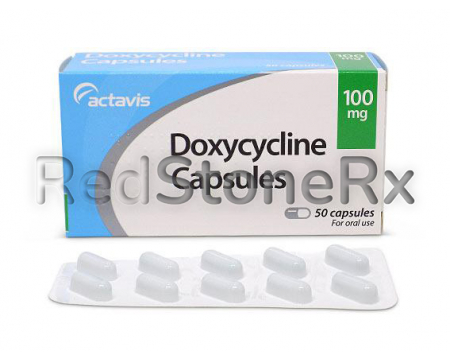


Three important doxycycline warnings:
- Oesophageal ulceration: Doxycycline capsules/tablets that lodge in the oesophagus cause direct chemical burns. Always take with a full glass of water (250mL+) and remain upright for at least 30 minutes after taking.
- Photosensitivity — mandatory sun protection in Australia: Doxycycline significantly increases UV skin sensitivity. SPF50+ sunscreen is not optional during treatment in Australian UV conditions.
- Pregnancy and children under 8 — contraindicated: Australian Category D in pregnancy. Causes permanent dental staining and may impair bone growth in children under 8.

How Doxycycline Works — 30S Ribosomal Inhibition Explained
Doxycycline's mechanism is distinct from all other antibiotics in this category and explains both its broad spectrum and its specific advantages over beta-lactams (amoxicillin, cephalexin) for intracellular infections:
Two Strengths — 50mg and 100mg: When to Use Each
Doxycycline for Acne — The Complete Australian Guide
Why Doxycycline Works for Acne
Acne vulgaris is driven by three interacting factors: sebum overproduction, follicular keratinocyte proliferation, and Cutibacterium acnes (C. acnes) colonisation of the follicle — triggering inflammation. Doxycycline addresses acne through two mechanisms:
- Antibacterial: inhibits C. acnes protein synthesis, reducing the bacterial load that drives follicular inflammation
- Anti-inflammatory: tetracyclines have intrinsic anti-inflammatory properties independent of antibacterial activity — they inhibit matrix metalloproteinases (MMPs), reduce neutrophil chemotaxis, and decrease pro-inflammatory cytokine production. This anti-inflammatory effect is why sub-antimicrobial doxycycline (below the minimum inhibitory concentration for bacteria) still helps rosacea and acne
Acne Dose and Duration
| Acne severity | Dose | Duration | Combined with |
|---|---|---|---|
| Mild-moderate inflammatory | 50–100mg daily | 3–6 months | Topical benzoyl peroxide essential — prevents C. acnes resistance |
| Moderate-severe inflammatory | 100mg BD (twice daily) | 3–6 months max | Topical retinoid (adapalene) + benzoyl peroxide |
| Rosacea maintenance | 50mg daily | Long-term | Topical metronidazole or azelaic acid for rosacea |
How Long Does Doxycycline Take to Work for Acne — Week-by-Week Timeline
What Happens When You Stop Doxycycline for Acne
This is one of the most searched questions by Australian acne patients — and the answer is important to understand before stopping:
- Rebound acne flare: When doxycycline is stopped without a transition to maintenance topical therapy, C. acnes bacterial counts recover to pre-treatment levels within 4–8 weeks. Inflammatory acne often returns — sometimes as severely as before treatment
- Rebound is preventable: The key is transitioning to a topical regimen before stopping doxycycline — not after. Start topical benzoyl peroxide and/or adapalene at least 4 weeks before planned doxycycline cessation. This pre-establishes topical control so that when the antibiotic is removed, the topical agents are already working
- What to expect if you stop without transition: Acne may not return immediately — there is typically a "grace period" of 4–8 weeks. If acne returns, restart topical therapy rather than automatically restarting doxycycline. Repeated antibiotic courses without topical maintenance increase resistance risk
- If acne is severe or unresponsive to topical maintenance: Discuss referral to a dermatologist. Isotretinoin (Roaccutane) is the only treatment that can produce long-term remission — unlike antibiotics which only suppress acne during treatment
From Dr. Sarah Collins, MPharm, AHPRA #PHY0012345: The acne consultation I have most often is the patient who has been on doxycycline for 12+ months, sometimes 2+ years, and whose GP continues renewing it because "it's working." Prolonged oral antibiotic use for acne drives C. acnes resistance globally and in Australia — and doxycycline-resistant C. acnes does not respond to any tetracycline. Australian dermatology guidelines are clear: limit oral antibiotics to 3–6 months, always combine with topical benzoyl peroxide, and have an exit plan. The goal of oral antibiotics in acne is to achieve initial control, not to provide indefinite suppression.

Doxycycline for Malaria Prophylaxis — Australian Traveller Guide
Doxycycline 100mg daily is one of three antimalarial prophylaxis options recommended by Australian travel medicine guidelines (alongside mefloquine and atovaquone-proguanil). It is the preferred option for many destinations due to its broad coverage, cost-effectiveness, and established safety profile:
| Parameter | Doxycycline 100mg daily | Atovaquone-Proguanil (Malarone) | Mefloquine (Lariam) |
|---|---|---|---|
| When to start | 1–2 days before entering area | 1–2 days before | 2–3 weeks before |
| Continue after return | 4 weeks after leaving area | 7 days after | 4 weeks after |
| Cost (approximate) | Low — ~AU$1–2 per day | High — ~AU$5–8 per day | Moderate |
| Key advantage | Also treats other infections (bonus antibiotic cover) | Shortest post-travel course (7 days) | Weekly dosing — convenient for long trips |
| Key limitation | Photosensitivity (critical in tropical sun); 4 weeks post-travel; not in pregnancy | Cost | Neuropsychiatric side effects; not in psychiatric history |
| Preferred for: | Sub-Saharan Africa, Papua New Guinea, long-term travel, budget-conscious travellers | Short-trip travellers; pregnancy (consult doctor); those with sun sensitivity | Very long trips (months); remote areas without daily dosing reliability |
Critical for Australian travellers on doxycycline malaria prophylaxis: The 4-week post-return course is essential — not optional. Plasmodium falciparum (the most dangerous malaria species, dominant in sub-Saharan Africa and Papua New Guinea) has a pre-erythrocytic stage in the liver lasting up to 4 weeks. Stopping doxycycline the day you land in Australia leaves this liver stage unprotected. Many malaria deaths in returning Australian travellers occur because prophylaxis was stopped too early. Continue taking doxycycline 100mg daily for exactly 4 weeks (28 days) after leaving the malaria area — even if you feel well.
Doxycycline for Chlamydia — Australian STI Context
Chlamydia trachomatis is the most commonly notified sexually transmitted infection in Australia — with over 100,000 notifications annually to the National Notifiable Diseases Surveillance System (NNDSS). Doxycycline is the preferred first-line treatment for chlamydia in current Australian sexual health guidelines:
Doxycycline — Preferred First-Line (Australian Guidelines)
- Dose: 100mg twice daily
- Duration: 7 days
- Efficacy: ~97–98% cure rate
- Must be taken consistently — missing doses significantly reduces efficacy
- Preferred over azithromycin based on 2021 WHO/ISSTDR guidance showing higher cure rates particularly for rectal chlamydia
- Sex partners from the past 60 days should be notified and treated
Azithromycin — Alternative (Single Dose)
- Dose: 1g single oral dose
- Efficacy: ~90–95% (lower than doxycycline, particularly for rectal chlamydia)
- Use when adherence to 7-day course is a concern
- Not preferred where compliance with 7 days is achievable
- Recent data shows azithromycin failure rates higher than historical estimates
After chlamydia treatment, avoid sex for 7 days (until course completed and partner treated). Test of cure is not routinely recommended for uncomplicated chlamydia in Australian guidelines — but retest at 3 months (high reinfection rates). If symptoms persist after 7-day doxycycline course — seek GP review for possible alternative diagnosis or treatment failure.
Doxycycline for Chest Infections — When It Works and When It Doesn't
Doxycycline is specifically indicated for atypical pneumonia — infections caused by organisms that do not respond to beta-lactam antibiotics because they lack a conventional cell wall or are intracellular:
| Organism | Why beta-lactams fail | Doxycycline dose | Duration |
|---|---|---|---|
| Mycoplasma pneumoniae | No cell wall — penicillins have no target | 100mg BD | 10–14 days |
| Chlamydophila pneumoniae | Intracellular — beta-lactams cannot penetrate | 100mg BD | 10–14 days |
| Legionella pneumophila | Intracellular — requires drug with intracellular penetration | 100mg BD | 14–21 days |
| Coxiella burnetii (Q fever — rural AU) | Obligate intracellular — common in rural/agricultural Australia | 100mg BD | 14 days (acute); months for chronic |
Q fever (Coxiella burnetii) in Australia: Q fever is a significant occupational hazard in rural Australia — particularly for abattoir workers, farmers, and veterinarians who handle sheep, cattle, and goats. Q fever vaccination (Q-VAX) is available and recommended for at-risk workers in Australia. Doxycycline 100mg twice daily for 14 days is the treatment for acute Q fever.
Dosage for chest infection (community-acquired pneumonia) in Australian adults: 100mg twice daily for 7–14 days depending on severity and organism. If Streptococcus pneumoniae is also possible (typical pneumonia presentation), amoxicillin may be added or may be the sole agent — doxycycline alone has moderate activity against S. pneumoniae and does not cover highly penicillin-resistant strains as reliably as amoxicillin.
How to Take Doxycycline — The Oesophageal Ulceration Risk
Doxycycline is one of the most common causes of medication-induced oesophageal injury ("pill oesophagitis") — a preventable condition that causes severe chest pain and swallowing difficulty and can occasionally lead to oesophageal stricture. The mechanism:
Food and Dairy Interaction
Unlike ciprofloxacin where dairy reduces absorption by up to 90%, doxycycline's chelation interaction with calcium is less severe — a moderate reduction in absorption of approximately 20–30% with dairy. However, taking doxycycline on an empty stomach produces significantly higher peak concentrations and is recommended for therapeutic doses. For acne (long-term, lower-dose use), taking with food to improve GI tolerability is a reasonable trade-off if nausea is problematic. Avoid taking with: calcium supplements, iron supplements, antacids (Mylanta, Gaviscon), and multivitamins containing minerals — space 2 hours before or 2 hours after doxycycline.
Doxycycline and Alcohol — The Accurate Picture
No disulfiram reaction — the myth debunked
Doxycycline does not inhibit acetaldehyde dehydrogenase and does not cause the severe disulfiram reaction of metronidazole. The "no alcohol with any antibiotic" rule is a blanket generalisation that does not apply to doxycycline. 1–2 standard drinks do not produce a dangerous direct pharmacological interaction with doxycycline.
Practical reasons to limit alcohol on doxycycline
- Worsens nausea and GI side effects
- Alcohol dehydrates — compounds photosensitivity risk in Australian sun
- Worsens oesophageal irritation when combined with insufficient water intake
- Impairs immune function during infection treatment
- Heavy drinking may reduce doxycycline half-life (induction of hepatic metabolism)
Photosensitivity — Mandatory Sun Protection in Australia
Doxycycline causes significant photosensitivity — exaggerated UV skin sensitivity that produces severe sunburn-like reactions on even brief sun exposure. The mechanism involves doxycycline absorbing UV light and generating reactive oxygen species in skin tissue, directly damaging keratinocytes.
In Australia — with some of the world's highest UV indices — this is not a minor consideration:
- Apply SPF50+ broad-spectrum sunscreen to all exposed skin, reapplied every 2 hours outdoors
- Wear protective clothing — long sleeves, broad-brim hat, UV-protective sunglasses
- Avoid direct sun 10am–3pm (peak UV hours in most Australian states)
- Be particularly careful near water, sand, snow and at altitude — all increase UV exposure through reflection/elevation
- For patients taking doxycycline for acne long-term: photosensitivity is present throughout the course — sun protection must be maintained consistently, not just during a "course"
- Phototoxic reactions with doxycycline can be severe — blistering burns after brief sun exposure in susceptible individuals
Pregnancy and Children — Contraindications
Pregnancy — Category D Australia (contraindicated)
Doxycycline is Australian Category D — evidence of foetal harm exists. Tetracyclines chelate calcium and incorporate into developing bone and teeth during the second and third trimester. This causes permanent brown-grey staining of primary teeth and may impair bone growth. Additionally, tetracyclines cause hepatotoxicity in pregnant women at high doses. Do not take doxycycline in pregnancy. Consult GP for alternatives: amoxicillin (Category A), erythromycin, or azithromycin for most infections. For malaria in pregnancy: atovaquone-proguanil with specialist advice.
Children under 8 years — contraindicated
Same mechanism as pregnancy — doxycycline incorporates into developing teeth and bones in young children. In children under 8 years, it causes permanent discolouration of permanent teeth (yellow-brown staining) and may retard bone growth. Doxycycline is generally not used in children under 8 except in specific severe infections where benefit outweighs risk (anthrax, severe tick-borne illness) and no alternative exists. For children 8 years and older, doxycycline is generally acceptable.
Drug Interactions
| Medication | Interaction | Action required |
|---|---|---|
| Retinoids (isotretinoin/Roaccutane, tretinoin) | Both retinoids AND tetracyclines independently raise intracranial pressure → pseudotumour cerebri (severe headache, vision changes). Combined: serious intracranial hypertension risk | ABSOLUTE CONTRAINDICATION — never combine doxycycline with isotretinoin or systemic retinoids |
| Warfarin | Doxycycline reduces gut flora that produce vitamin K2; elevated INR risk | Monitor INR closely during doxycycline course |
| Antacids / Dairy / Iron / Calcium / Zinc supplements | Chelation — reduces doxycycline absorption ~20–30% | Take doxycycline 2h before or 2h after these products |
| Phenytoin (epilepsy) | Phenytoin induces hepatic CYP enzymes → reduces doxycycline half-life by ~40–50% | May need to increase doxycycline dose or frequency; monitor clinical response |
| Penicillins (amoxicillin) | Bacteriostatic doxycycline may antagonise bactericidal penicillin (theoretical — static bacteria cannot be killed by bactericidal agents) | Generally avoid combining; clinically significant in severe infections where bactericidal activity is needed (e.g., meningitis) |
| Oral contraceptive pill | Historical concern of reduced OCP efficacy — largely debunked for non-rifampicin antibiotics | Current Australian guidelines: no additional contraception required with doxycycline + OCP. Discuss with GP if concerned. |
Side Effects Profile
Common — usually manageable
- Nausea and vomiting (~15–20%) — take with small amount of food if severe
- Diarrhoea (~7%)
- Photosensitivity — exaggerated sunburn (SPF50+ essential)
- Oesophageal irritation — if not taken with sufficient water
- Vaginal thrush (candidiasis) — common in women on prolonged courses
- Headache (~5%)
Stop doxycycline — seek urgent care
- Severe headache + visual disturbances (pseudotumour cerebri — particularly with retinoid co-administration)
- Chest pain or difficulty swallowing (oesophageal ulceration)
- Severe skin reaction — blistering, mucous membrane involvement (SJS)
- Severe or bloody diarrhoea (C. difficile colitis)
- Anaphylaxis — throat swelling, difficulty breathing (call 000)
Price — Doxycycline in Australia
Doxycycline is listed on the Australian PBS for many indications, making it available at subsidised prices (AU$7–30 with PBS prescription) at Australian pharmacies. For Australian patients accessing through the TGA Personal Importation pathway, RedstoneRX offers competitive pricing for both 50mg and 100mg formulations. Given that malaria prophylaxis courses may last months and acne treatment 3–6 months, cost-effective access matters.
Ordering and Delivery
- Standard delivery: 4–9 business days to all Australian states and territories
- Packaging: plain, unmarked outer packaging — no pharmacy name or product reference
- Coverage: NSW · VIC · QLD · WA · SA · TAS · ACT · NT
TGA Personal Importation
Doxycycline is Schedule 4 in Australia. TGA Personal Importation Scheme permits a 3-month personal supply from international pharmacies. GP assessment before use is recommended, particularly for malaria prophylaxis (correct drug selection for destination), chlamydia (confirmation of diagnosis), and acne (appropriate topical combination plan). Telehealth: Eucalyptus (Pilot), Kin Health, InstantScripts.
Frequently Asked Questions — Doxycycline in Australia
How long does doxycycline take to work for acne? First visible improvement typically at 4–6 weeks; significant improvement by 8–12 weeks. If no improvement by 10 weeks, discuss with GP — dose adjustment or alternative treatment may be needed. Doxycycline works best combined with topical benzoyl peroxide. Maximum antibiotic course: 3–6 months per Australian dermatology guidelines.
Can you drink alcohol on doxycycline? Doxycycline does not cause the disulfiram reaction of metronidazole. 1–2 standard drinks do not produce a dangerous direct interaction. However, alcohol worsens GI side effects, compounds photosensitivity-related dehydration, worsens oesophageal irritation if not taken with sufficient water, and impairs immune function. Moderation is sensible.
What happens when you stop doxycycline for acne? Without a topical maintenance plan, C. acnes bacterial counts recover within 4–8 weeks and acne can rebound to pre-treatment levels. Prevention: transition to benzoyl peroxide + adapalene topical combination at least 4 weeks before stopping doxycycline. The topical agents maintain control after the antibiotic is withdrawn.
How long do I need to take doxycycline for malaria prevention? Start 1–2 days before entering the malaria area. Take 100mg daily throughout the entire stay. Continue for exactly 4 weeks after leaving the malaria area — this is essential, not optional. Stopping early exposes you to malaria from the liver stage of the parasite.
How long should I take doxycycline for a chest infection? For atypical pneumonia (Mycoplasma, Chlamydophila): 100mg twice daily for 10–14 days. For Legionella: 14–21 days. For mild chest infections where bacterial cause is confirmed: discuss 5–7 days with your GP. Do not stop early even if improving — bacteriostatic antibiotics depend on the immune system clearing bacteria that doxycycline has arrested, which takes time.
What is the doxycycline dose for Chlamydia? 100mg twice daily for 7 days — the current preferred treatment per Australian sexual health guidelines (preferred over single-dose azithromycin due to higher cure rates). Avoid sex until course is complete and partner has been treated. Retest at 3 months due to high reinfection rates.
Why does doxycycline need to be taken with a full glass of water? Doxycycline dissolves to form a strongly acidic solution. If it lodges in the oesophagus, it causes direct chemical burns — severe chest pain and swallowing difficulty (pill oesophagitis). A full glass of water (250mL+) and remaining upright for 30 minutes ensures the tablet passes quickly into the stomach. This is one of the most important instructions for doxycycline and is frequently not adequately explained at dispensing.
Can I take doxycycline with my morning coffee and dairy creamer? No — dairy (including milk in coffee) reduces doxycycline absorption by approximately 20–30% through calcium chelation. Take doxycycline at least 2 hours before or 2 hours after any dairy products. Black coffee (without milk) has a minimal chelation effect and is generally acceptable, though ideally doxycycline is taken with water rather than any beverage.

Related Products
- Amoxil (Amoxicillin) — Category A in pregnancy; streptococcal/dental infections; H. pylori
- Bactrim DS (Co-trimoxazole) — UTI first-line; CA-MRSA alternative to doxycycline
- Cipro (Ciprofloxacin) — UTI, pyelonephritis; Black Box Warning (tendon/neuropathy)
- Flagyl (Metronidazole) — bacterial vaginosis, H. pylori; alcohol ABSOLUTELY contraindicated
- Antibiotics Category — all five antibiotic classes and their mechanisms
This page is for educational purposes only and does not constitute medical advice. All content reviewed by Dr. Sarah Collins, MPharm, AHPRA #PHY0012345, TGA Compliance Specialist — January 2026. Doxycycline is contraindicated in pregnancy (Category D) and in children under 8 years. Never combine with isotretinoin/Roaccutane — intracranial hypertension risk. Always take with a full glass of water and remain upright 30 minutes. Emergency: call 000.