


Medically reviewed by Dr. Sarah Collins, RPh, Clinical Pharmacist — Updated January 2026
What Is Olumiant (Baricitinib)? — JAK-STAT Mechanism Explained
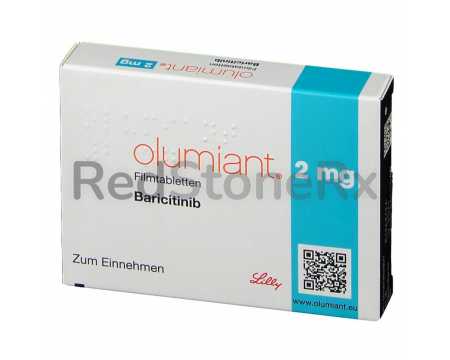
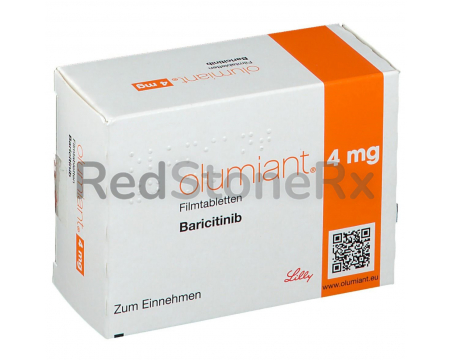
Baricitinib is an oral targeted immunomodulator that works by selectively inhibiting Janus kinase 1 (JAK1) and Janus kinase 2 (JAK2) — two intracellular tyrosine kinase enzymes that are central mediators of cytokine signalling in immune and inflammatory responses.
The JAK-STAT pathway — how inflammation works in target diseases:
- Pro-inflammatory cytokines (IL-6, IL-2, IFN-γ, GM-CSF, and others) bind to their surface receptors on immune cells, activating JAK1 and JAK2
- Activated JAKs phosphorylate STAT (Signal Transducer and Activator of Transcription) proteins
- Activated STATs enter the cell nucleus and drive gene expression of inflammatory mediators that perpetuate joint destruction (RA), skin inflammation (atopic dermatitis), and autoimmune hair follicle attack (alopecia areata)
- Baricitinib reversibly blocks JAK1 and JAK2 — interrupting this signalling cascade before it reaches the nucleus, dramatically reducing cytokine-driven inflammation
Why baricitinib vs other JAK inhibitors: Baricitinib's JAK1/2 selectivity profile differs from tofacitinib (JAK1/3) and upadacitinib (JAK1-selective), producing a distinct clinical and side effect profile. Baricitinib is also the only JAK inhibitor with an EMA and FDA COVID-19 indication — based on evidence that its additional inhibition of AAK1 and GAK kinases (which regulate viral endocytosis) may contribute to antiviral effects beyond its anti-inflammatory action.
TGA-Approved Indications in Australia
1. Rheumatoid Arthritis (RA) — PBS-listed: Baricitinib 4mg once daily is TGA-approved for moderately-to-severely active RA in adults who have had an inadequate response to one or more conventional synthetic DMARDs (csDMARDs) such as methotrexate. Baricitinib is PBS-listed for RA in Australia — meaning eligible patients pay only the PBS co-payment when prescribed by an Australian specialist. The RA-BEAM trial demonstrated baricitinib 4mg superior to adalimumab (Humira, the world's best-selling medicine at time of study) on ACR20 response and DAS28-CRP reduction at week 12 in MTX-inadequate responders — a landmark result for an oral agent. Radiographic progression (joint damage on X-ray) is also significantly inhibited by baricitinib vs placebo.
2. Atopic Dermatitis (Eczema) — TGA-registered: Baricitinib 2mg or 4mg once daily is TGA-approved for moderate-to-severe atopic dermatitis in adults and adolescents from age 2 years when systemic therapy is indicated. The BREEZE-AD clinical programme demonstrated significant improvements in EASI score (Eczema Area and Severity Index), IGA (Investigator Global Assessment), and pruritus (itch) at weeks 4–8 — with meaningful improvement in sleep quality and quality of life. Baricitinib can be used as monotherapy or in combination with topical corticosteroids.
3. Alopecia Areata — TGA-registered: Baricitinib 4mg once daily is TGA-approved for severe alopecia areata in adults — defined as loss of ≥50% of scalp hair (SALT score ≥50). The BRAVE-AA1 and BRAVE-AA2 Phase 3 trials demonstrated that at 36 weeks, 35.9% (BRAVE-AA1) and 32.6% (BRAVE-AA2) of patients achieved SALT score ≤20 (≥80% scalp hair regrowth) with baricitinib 4mg — results that had not been achieved by any previous systemic therapy for alopecia areata in controlled trials. Baricitinib represents the first medicine with robust Phase 3 evidence for severe alopecia areata in Australia.
4. Severe COVID-19 — EMA-approved (used under specialist guidance in Australia): Baricitinib holds EMA approval (2022) for hospitalised adults with COVID-19 requiring supplemental oxygen, non-invasive ventilation, invasive mechanical ventilation or ECMO — based on the ACTT-2 and COV-BARRIER RCTs demonstrating 38% mortality reduction vs placebo in the COV-BARRIER trial. This is an in-hospital indication under specialist supervision — not for self-treatment at home.

Olumiant vs Other JAK Inhibitors in Australia
| Baricitinib (Olumiant) | Tofacitinib (Xeljanz) | Upadacitinib (Rinvoq) | |
|---|---|---|---|
| JAK selectivity | JAK1/2 | JAK1/3 (also JAK2) | JAK1 (highly selective) |
| Dosing | Once daily | Twice daily (IR) or once daily (XR) | Once daily |
| TGA RA approval | Yes — 4mg/2mg | Yes — 5mg/10mg | Yes — 15mg |
| PBS listing Australia (RA) | Yes — PBS-subsidised | Yes — PBS-subsidised | Yes — PBS-subsidised |
| Atopic dermatitis (TGA) | Yes | Topical only (cream) | Yes |
| Alopecia areata (TGA) | Yes — 2022 | No (off-label only) | No |
| COVID-19 EMA-approval | Yes — unique among JAK-I | No | No |
| Head-to-head vs adalimumab (RA) | RA-BEAM — superior to adalimumab | No direct comparison | SELECT-COMPARE — superior to adalimumab |
| VTE Black Box Warning | Yes (class effect) | Yes (class effect) | Yes (class effect) |
Critical Safety Information — Black Box Warnings
Baricitinib, like all JAK inhibitors, carries important safety warnings that Australian patients must understand before and during treatment:
1. Serious Infections — increased risk: JAK inhibitors including baricitinib significantly increase the risk of serious and potentially fatal infections — bacterial infections, tuberculosis (TB), invasive fungal infections (Aspergillus, Candida), viral infections (Herpes Zoster/shingles — most common infectious complication, CMV, EBV), and opportunistic infections. Risk is higher in older patients, diabetics, patients with chronic lung disease, and those on concurrent immunosuppressants.
Mandatory pre-treatment screening for Australian patients:
- Tuberculosis: IGRA (QuantiFERON) test or tuberculin skin test (Mantoux) — latent TB must be treated before starting baricitinib. Australia's multicultural population has higher TB exposure risk than many comparable countries
- Hepatitis B (HBV): HBsAg and Anti-HBc serology — HBV reactivation can occur; prophylactic antiviral therapy may be required for HBsAg-positive patients
- Hepatitis C (HCV): Serology
- Varicella-Zoster immune status: Consider VZV vaccination before starting baricitinib if non-immune (live vaccine — give at least 4 weeks before baricitinib). Shingrix (recombinant zoster vaccine — non-live) can be given during baricitinib therapy and is preferred for patients ≥50 years
2. Malignancies — increased risk: JAK inhibitors are associated with increased risk of lymphomas (including non-Hodgkin lymphoma) and other malignancies — particularly lung cancer — especially in older patients and current or past smokers. The ORAL Surveillance study (tofacitinib vs TNF inhibitors) in patients over 50 with cardiovascular risk factors demonstrated increased malignancy risk — a warning extended to all JAK inhibitors by FDA and TGA. Baricitinib should be used with particular caution in patients with known risk factors for malignancy.
3. Venous Thromboembolism (VTE) — deep vein thrombosis and pulmonary embolism: VTE events including DVT and pulmonary embolism have been reported with baricitinib. The risk is highest in patients with existing VTE risk factors: VTE history, obesity, age over 65, immobilisation, cancer, oral contraceptive use, or inherited thrombophilia. In high-risk patients, baricitinib 2mg is preferred over 4mg. Patients should be counselled to seek immediate care for symptoms of DVT (calf swelling, redness, pain) or pulmonary embolism (sudden breathlessness, chest pain) — call 000.
4. Major Cardiovascular Events (MACE): Increased risk of MACE (myocardial infarction, stroke, cardiovascular death) in patients over 50 with established cardiovascular risk factors — based on class-level evidence from the ORAL Surveillance study. Careful patient selection is required; consider alternative therapies (biological DMARDs/anti-TNF) in high cardiovascular risk patients over 50 who smoke or have smoked.

Required Laboratory Monitoring During Baricitinib Therapy
Australian patients on baricitinib require regular laboratory monitoring — Medicare rebates apply for clinically indicated tests:
- Complete blood count (CBC/FBC): Before starting, at 4 weeks, then every 3 months. Do not start if: absolute lymphocyte count <0.5×10⁹/L, absolute neutrophil count <1.0×10⁹/L, haemoglobin <8 g/dL
- Liver function tests (LFTs): Before starting, at 4 weeks, then every 3 months
- Renal function (eGFR, creatinine): Before starting, then every 6–12 months. Dose reduction to 2mg required for eGFR 30–59 mL/min/1.73m². Contraindicated for eGFR <30 mL/min/1.73m²
- Lipid panel (cholesterol, triglycerides): Before starting, at 12 weeks, then every 6 months. Baricitinib causes lipid elevations — Australian GPs should assess cardiovascular risk and treat dyslipidaemia according to Australian cardiovascular risk guidelines (NPS MedicineWise, Heart Foundation Australia recommendations)
Dosage Guide
Rheumatoid Arthritis:
- Standard dose: 4mg once daily
- Dose reduction to 2mg for: moderate renal impairment (eGFR 30–59), patients ≥75 years, high VTE or cardiovascular risk, frequent infections
- Can be used as monotherapy or with methotrexate. Do not combine with other biological DMARDs or JAK inhibitors
- Assess response at 12–24 weeks — if no improvement, reassess with rheumatologist
Atopic Dermatitis:
- Adults with moderate-to-severe AD: 4mg once daily. If adequate response at 4mg, consider stepping down to 2mg
- Consider starting at 2mg in patients with risk factors (older age, renal impairment, high infection risk)
- Can be combined with topical corticosteroids
- Reassess at 16 weeks — if no meaningful improvement, discontinue
Alopecia Areata:
- Standard dose: 4mg once daily
- Some prescribers start at 2mg — particularly in older patients or those with risk factors
- Assess hair regrowth at 36 weeks. If no response by 36 weeks, unlikely to benefit from continued treatment
- Hair loss may recur after baricitinib discontinuation — discuss maintenance strategy with dermatologist
With or without food: Baricitinib can be taken at any time of day, with or without food. Take at the same time each day for consistent blood levels. Swallow whole — do not crush or break tablets.
PBS and Medicare Status in Australia
Baricitinib (Olumiant) has significant PBS coverage in Australia for its primary indications:
- Rheumatoid Arthritis: PBS-listed for patients with moderately-to-severely active RA who have had an inadequate response to conventional DMARDs. Requires specialist (rheumatologist) initiation and ongoing management. Australian patients pay only the PBS co-payment (currently $31.60 general/$7.70 concession) rather than the full retail price
- Atopic Dermatitis: PBS listing applies for severe AD in adults and eligible adolescents — specialist dermatologist initiation typically required
- Alopecia Areata: PBS access pathway — check current PBS Schedule with your dermatologist as listings evolve
The price listed at redstonerx-au.com reflects personal importation pricing — for Australian patients with PBS eligibility and a current prescription, obtaining baricitinib through the PBS at an Australian pharmacy is the most cost-effective option. Personal importation is relevant for patients without current prescription access or outside PBS eligibility criteria.
Contraindications
- Known hypersensitivity to baricitinib or any excipient
- Active TB or serious active infections
- Severe renal impairment (eGFR <30 mL/min/1.73m²)
- Severe hepatic impairment (Child-Pugh C)
- Absolute lymphocyte count <0.5×10⁹/L
- Absolute neutrophil count <1.0×10⁹/L
- Haemoglobin <8 g/dL
- Pregnancy — teratogenic in animal studies; reliable contraception mandatory during treatment and for at least 1 week after last dose
- Breastfeeding — avoid
- Concurrent use with other biological DMARDs (adalimumab, etanercept, tocilizumab, abatacept etc.) or other JAK inhibitors
- Live vaccines during treatment — Zostavax (live shingles vaccine) is contraindicated; Shingrix (non-live) is preferred and can be given during therapy
Key Drug Interactions
- Probenecid (strong OAT3 inhibitor) — doubles baricitinib blood levels; reduce baricitinib dose to 2mg when co-prescribed
- Live vaccines — contraindicated during baricitinib therapy; complete vaccination including Shingrix (non-live) before starting
- Immunosuppressants (azathioprine, ciclosporin, tacrolimus) — increased infection risk; concurrent use with other immunosuppressants not recommended
- Methotrexate — common combination in RA; no clinically significant pharmacokinetic interaction; regular blood count monitoring required
- Oral contraceptives — no significant interaction; however reliable contraception is mandatory during baricitinib use given teratogenic risk
Delivery to All Australian States and Territories
redstonerx-au.com ships Olumiant Generic discreetly to all Australian states and territories. Standard delivery: 4–9 business days.
New South Wales (Sydney, Newcastle, Wollongong, Central Coast) — Victoria (Melbourne, Geelong, Ballarat, Bendigo) — Queensland (Brisbane, Gold Coast, Sunshine Coast, Cairns, Townsville) — Western Australia (Perth, Fremantle, Bunbury, Mandurah) — South Australia (Adelaide, Mount Gambier, Whyalla) — Tasmania (Hobart, Launceston, Devonport) — Australian Capital Territory (Canberra) — Northern Territory (Darwin, Alice Springs).
All orders are dispatched in plain, unmarked packaging with no reference to the contents or sender. A tracking number is provided with every order.
Frequently Asked Questions — Olumiant (Baricitinib) in Australia
Is baricitinib PBS-listed in Australia? Yes — baricitinib (Olumiant) is PBS-listed for rheumatoid arthritis and atopic dermatitis in Australia for eligible patients. With a valid prescription from an Australian specialist (rheumatologist for RA, dermatologist for AD), you pay only the PBS co-payment. The pricing at redstonerx-au.com is for personal importation — relevant for patients without current prescription access or outside PBS eligibility.
How does baricitinib compare to adalimumab (Humira) for rheumatoid arthritis? In the landmark RA-BEAM trial — the first large-scale head-to-head comparison of an oral JAK inhibitor vs a biologic DMARD — baricitinib 4mg demonstrated superiority to adalimumab 40mg (then the world's best-selling medicine) on ACR20 response, DAS28-CRP, and EULAR response at week 12 in MTX-inadequate responders. Baricitinib also showed comparable or better EASI and SDAI response rates. This was a landmark result demonstrating that an oral tablet could outperform a leading injectable biologic for RA.
Can baricitinib regrow hair in alopecia areata? Yes — baricitinib 4mg is TGA-approved for severe alopecia areata (≥50% scalp hair loss) in Australia. The BRAVE-AA1 and BRAVE-AA2 Phase 3 trials showed that approximately 33–36% of patients achieved ≥80% scalp hair regrowth (SALT score ≤20) at 36 weeks — results unprecedented in controlled trials for this condition. Baricitinib is currently the treatment with the strongest controlled trial evidence for severe alopecia areata available in Australia.
Do I need regular blood tests while taking baricitinib? Yes — regular laboratory monitoring is essential and Medicare-rebatable when clinically indicated. Required tests include: complete blood count (FBC), liver function tests, renal function (eGFR), and lipid panel. Initial monitoring at 4 weeks then every 3 months for blood count and LFTs; lipids at 12 weeks then every 6 months. Your Australian specialist or GP will manage these monitoring requirements.
Is baricitinib safe during pregnancy? No — baricitinib is teratogenic in animal studies and contraindicated in pregnancy. Women of childbearing potential must use reliable contraception during treatment and for at least 1 week after the last dose. If pregnancy occurs during treatment, stop immediately and consult your healthcare provider.
How long does delivery to Australia take? Standard delivery to all Australian states and territories takes 4 to 9 business days. All orders arrive in plain, unmarked packaging with no reference to the contents or sender. Every order includes a tracking number.
All information on this page is for general informational purposes only and does not constitute medical advice. Baricitinib is a TGA-registered Schedule 4 prescription medicine in Australia — always consult a qualified Australian rheumatologist, dermatologist, or specialist before starting treatment.