
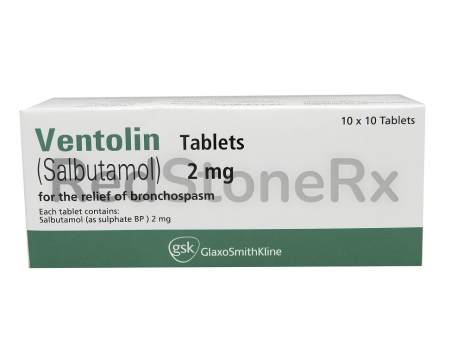
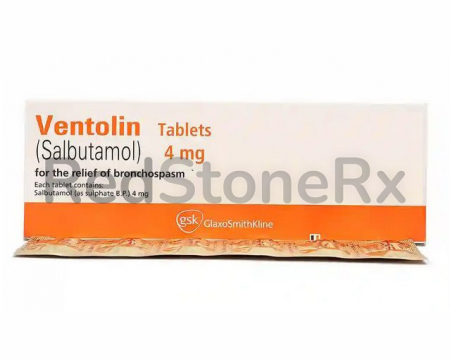



Price for Ventolin Generic (Salbutamol Tablets)
| Product | Strength | Pack | Price (AUD) |
|---|---|---|---|
| Salbutamol (Ventolin Generic) | 2mg | 30 tablets | From A$18.99 |
| Salbutamol (Ventolin Generic) | 4mg | 30 tablets | From A$22.99 |
Ventolin Generic contains salbutamol (also known internationally as albuterol) as oral tablets in 2mg and 4mg strengths. Salbutamol is a short-acting beta-2 adrenergic agonist (SABA) that relaxes bronchial smooth muscle and widens the airways. The oral tablet formulation produces systemic bronchodilation via gastrointestinal absorption, and is used in specific clinical situations where inhaled therapy is not achievable or not providing sufficient control. It is a Schedule 4 prescription-only medicine in Australia. A valid prescription from a registered Australian GP is required. With prescription, salbutamol tablets are listed on the PBS for eligible patients.

At a Glance — Key Numbers
How Salbutamol Works — Beta-2 Agonist Mechanism
Salbutamol is a selective short-acting beta-2 adrenergic agonist. Beta-2 adrenoreceptors are distributed throughout the body but are most clinically relevant in bronchial smooth muscle. When salbutamol binds to these receptors, it activates adenylyl cyclase — an enzyme that converts ATP to cyclic adenosine monophosphate (cAMP). Elevated intracellular cAMP activates protein kinase A, which phosphorylates myosin light-chain kinase and reduces intracellular calcium ion concentration. The result is relaxation of bronchial smooth muscle, widening of the airways, and improved airflow.
The tertiary butyl group in salbutamol's structure confers selectivity for beta-2 over beta-1 receptors — reducing cardiac side effects (tachycardia, palpitations) compared to non-selective beta-agonists. However, at higher oral doses, beta-1 stimulation occurs, producing the cardiac side effects that are more common with tablets than with inhaled therapy at standard doses. Oral salbutamol also produces more systemic cAMP activation in skeletal muscle (tremor) and promotes cellular potassium uptake (hypokalaemia risk).

Oral Tablets vs Inhaler — Critical Comparison
Understanding the difference between oral salbutamol tablets and the salbutamol inhaler is clinically important. They contain the same active ingredient but differ fundamentally in route, onset, appropriate indications, and safety profile.
| Parameter | Ventolin Inhaler (MDI) | Ventolin Generic Tablets |
|---|---|---|
| Route | Inhaled — direct to airways | Oral — systemic via GI tract |
| Onset | 3–5 minutes | 30–60 minutes |
| Typical dose | 100–200 mcg (1–2 puffs) | 2–4mg 3–4× daily |
| Systemic side effects | Minimal at standard doses | More prominent: tremor, tachycardia, hypokalaemia |
| Acute asthma attack | Yes — first choice always | No — too slow, not appropriate |
| When inhaler impossible | N/A | Yes — tablets appropriate here |
| TGA Schedule | S3 — emergency supply without Rx | S4 — Rx always required |
| Hypokalaemia risk | Low at standard doses | Higher — especially at 4mg doses |
| PBS subsidy | Yes (with Rx) | Yes (with Rx) |
From Dr. Sarah Collins, MPharm, AHPRA #PHY0012345: Oral salbutamol tablets have a relatively narrow clinical niche in contemporary Australian respiratory practice. The overwhelming majority of patients with asthma or COPD requiring salbutamol bronchodilation are better served by the inhaled route — faster onset, lower systemic side effects, and direct delivery to the airways at much lower doses. Oral tablets are most useful in specific situations: patients with severe hand tremor or arthritis who cannot operate a puffer even with a spacer; young children in whom inhaler technique cannot be taught; or patients requiring systemic bronchodilation as an adjunct. The 2023 update to Australian asthma guidelines reinforces that frequent SABA use of any kind — inhaled or oral — signals inadequately controlled asthma that should prompt reassessment, with preventer therapy added if symptoms are occurring more than twice weekly.
Dosage and Administration
| Indication | Starting dose | Frequency | Notes |
|---|---|---|---|
| Reversible airway obstruction — adults | 2–4mg | 3–4 times daily | Start at 2mg especially in elderly, sensitive patients or those with cardiovascular disease |
| Reversible airway obstruction — children 6–12 years | 2mg | 3–4 times daily | As directed by GP. Inhaler preferred in children when technique achievable |
| Children 2–6 years | 1–2mg | 3–4 times daily | Under specialist direction only — inhaler with spacer and mask preferred |
| Exercise prophylaxis (oral) | 2mg | 30–60 min before exercise | Allow adequate time for onset before activity |
| Elderly patients | 2mg | 3 times daily initially | Start lower — increased sensitivity to cardiovascular and metabolic effects |
- Swallow tablets whole with a glass of water — may be taken with or without food
- Do not exceed 4mg per dose or 32mg per day in adults without specialist direction
- Store below 25°C in a dry place, away from direct light
- A valid Australian prescription is required before RedstoneRX can dispense salbutamol tablets
Side Effects
Common (more frequent than with inhaler)
- Tremor (shakiness) — particularly of hands; most common side effect of oral salbutamol. Beta-2 stimulation of skeletal muscle. Usually dose-related and diminishes with continued use
- Tachycardia and palpitations — beta-1 stimulation at systemic doses
- Headache
- Dizziness
- Nausea
- Muscle cramps
Metabolic — clinically important
- Hypokalaemia (low blood potassium) — salbutamol drives potassium into cells via Na+/K+-ATPase activation. Risk increased with high doses, concurrent diuretics, corticosteroids, or digoxin. Monitor potassium in at-risk patients
- Hyperglycaemia — especially in diabetics
- Mild lactic acidosis at high doses
- Peripheral vasodilation — flushing, warmth
Metabolic effects are more pronounced with oral tablets than inhaled therapy at comparable bronchodilatory doses.
Seek immediate medical care — call 000
- Severe cardiac arrhythmia or chest pain
- Paradoxical bronchospasm — worsening wheeze immediately after taking (rare; stop and call 000)
- Signs of severe hypokalaemia — muscle weakness, cramps, arrhythmia, paralysis
- Acute asthma deterioration — do not take another oral tablet; use reliever inhaler and call 000
Drug Interactions — Important for Australian Patients
| Drug / class | Interaction | Action required |
|---|---|---|
| Beta-blockers (atenolol, metoprolol, propranolol, carvedilol) | Antagonise bronchodilatory effect of salbutamol — may precipitate bronchospasm, especially non-selective beta-blockers (propranolol) | Avoid non-selective beta-blockers. Cardioselective beta-1 blockers (atenolol, metoprolol) may be used with caution under GP supervision. Inform GP of all beta-blocker use |
| Diuretics (frusemide, thiazides) | Additive hypokalaemia — salbutamol drives K+ into cells; diuretics increase renal K+ loss | Monitor potassium levels. Maintain adequate dietary potassium. Inform GP |
| Corticosteroids (prednisolone, inhaled steroids at high doses) | Additive hypokalaemia risk at high doses | Monitor K+ in patients on both agents at high doses |
| Digoxin | Hypokalaemia from salbutamol increases digoxin toxicity risk (arrhythmias) | Monitor potassium and digoxin levels closely; inform GP |
| MAO inhibitors | May potentiate cardiovascular effects of salbutamol | Avoid concurrent use; consult GP |
| Tricyclic antidepressants | May potentiate cardiovascular effects | Use with caution; inform GP |
| Xanthines (theophylline, aminophylline) | Additive bronchodilatory effect; additive hypokalaemia risk | Monitor K+ and cardiovascular status when combining |
| Other sympathomimetics | Additive cardiovascular effects (tachycardia, hypertension) | Avoid combining; consult GP |
Contraindications and Precautions
- Known hypersensitivity to salbutamol or any tablet excipient
- Oral salbutamol is not appropriate for acute asthma attacks — onset too slow; use inhaled salbutamol and call 000 if severe
- Hypertrophic obstructive cardiomyopathy — contraindicated
- Use with caution in patients with hypertension, cardiac arrhythmias, ischaemic heart disease or heart failure — start at 2mg
- Use with caution in hyperthyroidism — increased sensitivity to sympathomimetic effects
- Use with caution in diabetes mellitus — salbutamol can raise blood glucose; monitor glycaemic control
- Use with caution in patients with pre-existing hypokalaemia or taking potassium-lowering medications
- Pregnancy: Inhaled salbutamol is generally considered safe in pregnancy for asthma management. Oral salbutamol — assess benefit vs risk with GP; uterine relaxant effects may be relevant near term
- Elderly patients: More sensitive to cardiovascular and metabolic effects — begin at 2mg dose
Getting a Prescription in Australia
Frequently Asked Questions — Salbutamol Tablets Australia
What is the difference between Ventolin tablets and the Ventolin inhaler?
Both contain salbutamol (the same active ingredient) but differ fundamentally in route, onset and appropriate use. The inhaler delivers salbutamol directly to the airways — onset is 3–5 minutes and it is the correct treatment for acute bronchospasm and asthma attacks. The tablets are swallowed and absorbed through the gastrointestinal tract — onset is 30–60 minutes and they are not appropriate for acute attacks. The inhaler is Schedule 3 (pharmacist can supply one without a prescription in an emergency); the tablets are always Schedule 4 (prescription required). Side effects are more frequent and prominent with oral tablets.
Do I need a prescription for salbutamol tablets in Australia?
Yes — always. Salbutamol oral tablets are Schedule 4 (Prescription Only Medicine) and require a valid prescription from a registered Australian GP regardless of dose. This differs from the Ventolin inhaler, where pharmacists can supply one inhaler without a prescription for emergency use in patients with known asthma or COPD. For an online prescription, telehealth services including HotDoc, InstantScripts and NowPatients can provide consultations and e-prescriptions where clinically appropriate.
Can I use salbutamol tablets for an acute asthma attack?
No — do not use oral tablets for an acute asthma attack. The 30–60 minute onset is far too slow for emergency bronchodilation. During an acute attack, use your salbutamol inhaler immediately — 4 puffs via spacer, repeated every 4 minutes. If there is no improvement after 4 puffs, call 000 immediately. Do not wait for an oral tablet to take effect in an asthma emergency.
Why do salbutamol tablets cause more tremor than the inhaler?
Oral tablets are absorbed into the bloodstream and distributed throughout the body — including to skeletal muscle, where beta-2 receptor stimulation causes the fine hand tremor that is salbutamol's most common oral side effect. Inhaled salbutamol at standard doses (100–200 mcg) acts primarily on airway smooth muscle with minimal systemic absorption, producing the same bronchodilatory effect at a much lower systemic dose. Tremor from inhaled therapy at standard doses is much less common and less pronounced than with oral tablets.
Are salbutamol tablets listed on the PBS in Australia?
Yes. Salbutamol oral tablets are listed on the Pharmaceutical Benefits Scheme (PBS) for eligible Australians. A valid prescription from a registered Australian GP is required to access the PBS-subsidised price (approximately A$31.60 for general patients, A$7.70 for concession card holders).
This product page was reviewed by Dr. Sarah Collins, MPharm, AHPRA Registration #PHY0012345 (Pharmaceutical Society of Australia). Information is for general educational purposes only. Salbutamol oral tablets are Schedule 4 Prescription Only Medicines — a valid prescription is required. Oral tablets are not appropriate for acute asthma attacks — use the inhaled reliever and call 000 if severe. If asthma symptoms are worsening, follow your Asthma Action Plan and seek medical advice. RedstoneRX complies with all TGA and Poisons Standard requirements for the supply of Schedule 4 medicines in Australia.