
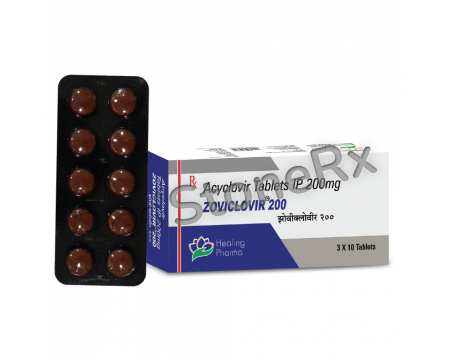
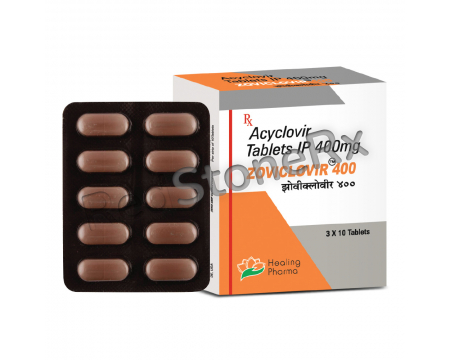
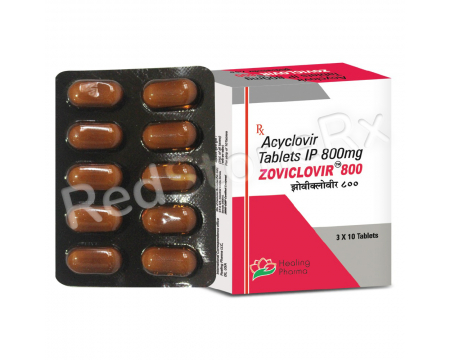


Price for Aciclovir Tablets
| Product | Strength | Pack size | Price (AUD) |
|---|---|---|---|
| Aciclovir | 200mg | 25 tablets | From A$18.99 |
| Aciclovir | 200mg | 90 tablets | From A$49.99 |
| Aciclovir | 400mg | 30 tablets | From A$24.99 |
| Aciclovir | 800mg | 35 tablets | From A$34.99 |
Aciclovir is a nucleoside analogue antiviral medication used throughout Australia for the treatment and management of infections caused by herpes simplex virus (HSV-1, HSV-2) and varicella-zoster virus (VZV). Available in three oral tablet strengths — 200mg, 400mg and 800mg — it is TGA-approved and listed on the Pharmaceutical Benefits Scheme (PBS) for eligible indications including genital herpes treatment and suppression, and herpes zoster (shingles). RedstoneRX supplies pharmaceutical-grade generic aciclovir tablets manufactured to TGA and WHO-GMP standards.

Aciclovir at a Glance — Key Clinical Numbers

What Is Aciclovir — Mechanism of Action
Aciclovir is a guanosine analogue antiviral — it mimics the structure of guanosine, a building block of DNA, to interfere with viral DNA synthesis. Its mechanism involves a clinically important selectivity: aciclovir is preferentially phosphorylated (activated) inside cells infected with herpes simplex virus (HSV) or varicella-zoster virus (VZV) by a virus-encoded enzyme called thymidine kinase. This enzyme is expressed only in virus-infected cells — meaning aciclovir's antiviral activity is largely confined to infected tissue, with minimal effects on healthy cells.
Once phosphorylated to aciclovir triphosphate, it acts as a competitive inhibitor of viral DNA polymerase and causes premature chain termination during viral DNA synthesis. The result is that the virus cannot replicate and spread. Aciclovir does not eliminate the herpes virus from the body — HSV remains latent in nerve ganglia — but it significantly reduces the severity and duration of outbreaks and, in suppressive therapy, reduces the frequency of recurrences and viral shedding between episodes.
TGA-Approved Indications and Australian Dosing
| Indication | Recommended dose | Duration | Notes |
|---|---|---|---|
| Genital herpes — first episode (HSV-2) | 200mg 5× daily or 400mg 3× daily | 5–10 days | Start as early as possible in the outbreak. PBS-listed for initial episode. |
| Genital herpes — recurrent episodic | 200mg 5× daily or 800mg 2× daily or 400mg 3× daily | 5 days | Most effective when started at prodrome (tingling/itching) before lesions appear. |
| Genital herpes — suppressive therapy (≥6 recurrences/year) | 400mg twice daily or 200mg 3–5× daily | Ongoing — review at 12 months | PBS-listed. Reduces frequency of outbreaks and viral shedding between episodes. Discuss annual review with GP. |
| Herpes zoster / shingles (VZV) — immunocompetent adults | 800mg 5× daily | 7 days | Start within 72 hours of rash onset for maximum benefit. Contact GP immediately when rash appears. |
| Herpes labialis — cold sores (systemic, recurrent) | 200mg 5× daily | 5 days | For mild cold sores, topical Aciclovir Cream 5% (unscheduled, no Rx needed) is usually first choice. |
| Chickenpox / varicella (VZV) — non-immunocompromised adults | 800mg 5× daily | 5–7 days | Start within 24 hours of rash onset. Most healthy children do not require antiviral treatment — consult GP. |
| HSV suppression — immunocompromised patients | 400mg 3× daily (or as directed) | As directed by specialist | Higher doses may be required. Under specialist supervision only. |
How to Take Aciclovir Tablets
- Swallow tablets whole with a full glass of water — tablets may be taken with or without food
- Adhere to the dosing schedule: Most aciclovir regimens require 5 doses per day (every 4 hours while awake). Setting reminders helps maintain consistent plasma levels
- Complete the full course even if symptoms improve — stopping early may allow the virus to continue replicating
- Start as early as possible: For shingles, within 72 hours of rash onset; for genital herpes episodes, at the first sign of prodrome (tingling, itching)
- Missed dose: Take as soon as you remember, unless it is close to the time of your next scheduled dose — do not double up
- Storage: Store below 25°C in a dry place, away from direct sunlight. Keep out of reach of children
From Dr. Sarah Collins, MPharm, AHPRA #PHY0012345: The single most important clinical point about aciclovir is timing. For shingles, the evidence strongly shows that treatment started within 72 hours of rash onset produces substantially better outcomes — shorter duration, reduced severity, and lower risk of post-herpetic neuralgia — compared with treatment started later. I advise all patients who have had shingles previously or are at higher risk (over 50, immunocompromised) to contact their GP immediately when a characteristic unilateral rash appears, without waiting to see whether it resolves. For genital herpes, starting episodic therapy at the first tingling or itching — before any visible lesion — is far more effective than waiting for blisters to appear. Patients experiencing 6 or more outbreaks per year should discuss suppressive daily therapy with their GP — it substantially reduces outbreak frequency and, importantly, the risk of transmitting the virus to partners.
Side Effects
Common — generally mild
- Nausea — taking with food can help
- Diarrhoea
- Headache
- Dizziness
- Fatigue
- Abdominal discomfort
These effects are usually mild and resolve with continued therapy. Taking aciclovir with food or a glass of milk may help with gastrointestinal symptoms.
Less common — monitor
- Rash or photosensitivity
- Hair loss (reversible)
- Elevated liver enzymes (transient)
- Decreased urine output — may indicate crystalluria; increase fluid intake
- Agitation or confusion — more common in elderly or renal impairment
Seek medical attention — call 000 if severe
- Severe allergic reaction — facial swelling, difficulty breathing, hives
- Kidney problems — significantly reduced urine output, flank pain
- Neurological symptoms — confusion, seizures, hallucinations, tremors (more common at high doses or in renal impairment)
- Severe skin reactions — blistering, peeling rash
Drug Interactions
| Drug / substance | Interaction | Action required |
|---|---|---|
| Probenecid | Reduces renal clearance of aciclovir — increases plasma levels and prolongs half-life | Monitor for aciclovir toxicity; GP may adjust dose |
| Cimetidine | Reduces renal tubular secretion of aciclovir — modestly increases aciclovir exposure | Clinical significance is generally low; inform GP |
| Nephrotoxic drugs (ciclosporin, tacrolimus, NSAIDs at high doses, amphotericin B) | Additive risk of renal impairment and aciclovir accumulation | Use with caution; monitor renal function; inform GP |
| Mycophenolate mofetil | Competitive inhibition of renal tubular secretion — both aciclovir and mycophenolate glucuronide levels may rise | Monitor renal function; specialist supervision usually required |
| Valaciclovir (prodrug of aciclovir) | Valaciclovir converts to aciclovir — do not take simultaneously | Use one or the other — not both concurrently |
| Alcohol | No direct pharmacokinetic interaction; alcohol may worsen fatigue and headache side effects | Moderate alcohol intake; not contraindicated |
Aciclovir has relatively few clinically significant drug interactions compared with many other antivirals. The most important consideration is renal function — any drug that reduces kidney clearance can increase aciclovir exposure and toxicity risk. Always inform your GP and pharmacist of all current medications.
Contraindications
- Known hypersensitivity to aciclovir, valaciclovir, or any tablet excipient (including lactose — aciclovir tablets contain lactose)
- Galactose intolerance, Lapp lactase deficiency or glucose-galactose malabsorption — aciclovir tablets contain lactose
- Severe renal impairment (eGFR <10 mL/min): standard dosing is contraindicated — dose adjustment mandatory; specialist guidance required
- Not for the topical treatment of genital herpes — use oral tablets; aciclovir cream is only for herpes labialis on lips and face
Use with caution in: Pregnancy (discuss benefit-risk with GP — aciclovir is sometimes used in pregnancy under medical supervision); breastfeeding (aciclovir is excreted in breast milk — consult GP); elderly patients (increased risk of neurological side effects and renal accumulation); patients with pre-existing renal impairment.
Aciclovir vs Valaciclovir — Which Is Right for You?
| Parameter | Aciclovir | Valaciclovir |
|---|---|---|
| Active drug | Aciclovir (direct) | Converted to aciclovir in body |
| Bioavailability | ~15–30% | ~55% (3–5× higher) |
| Dosing frequency — suppression | 400mg twice daily | 500mg once daily |
| Dosing frequency — shingles | 800mg 5× daily | 1000mg 3× daily |
| Cost | Generally lower | Generally higher |
| Convenience | Up to 5 doses/day | 1–3 doses/day |
| Both PBS-listed? | Yes — selected indications | Yes — selected indications |
Both are equally effective clinically. Valaciclovir requires less frequent dosing and may be more convenient for patients who find 5-times-daily dosing difficult to maintain. Aciclovir is typically lower cost. Your GP will advise which is more appropriate for your situation.
Getting a Prescription in Australia
Aciclovir tablets are Schedule 4 (Prescription Only) in Australia. A valid prescription from a registered Australian GP or specialist is required. Options include:
- HotDoc (hotdoc.com.au) — book same-day or next-day telehealth GP consultations across Australia
- InstantScripts (instantscripts.com.au) — online repeat prescriptions for established patients, including aciclovir suppressive therapy
- NowPatients — online GP consultation with e-prescription
- Your regular GP — request an e-prescription (electronic script token) for online dispensing at RedstoneRX
Frequently Asked Questions — Aciclovir Australia
Do I need a prescription for aciclovir tablets in Australia?
Yes. Aciclovir tablets (200mg, 400mg, 800mg) are classified as Schedule 4 (Prescription Only Medicine) under Australia's Poisons Standard. A valid prescription from a registered Australian medical practitioner is required. Aciclovir Cream 5% for cold sores on the lips is unscheduled and available without a prescription — see our Aciclovir Cream 5% product page.
Is aciclovir available on the PBS in Australia?
Yes. Aciclovir 200mg tablets are PBS-listed for the treatment of first-episode and recurrent genital herpes, for suppressive therapy in patients with frequent recurrences, and for herpes zoster (shingles) in immunocompromised patients. Eligible Australians with a Medicare card pay the standard PBS co-payment — approximately A$31.60 for general patients and A$7.70 for concession card holders. Ask your GP to prescribe as PBS-subsidised where eligible.
How quickly does aciclovir work for shingles?
Aciclovir does not cure shingles but significantly reduces the severity and duration of the outbreak when started within 72 hours of rash onset. Most patients begin to see the rash stabilise within 2–3 days of starting treatment and full resolution typically occurs within 7–14 days. Starting treatment early also reduces the risk of post-herpetic neuralgia — persistent nerve pain that can last weeks to months after the rash resolves. If you suspect shingles, contact your GP urgently.
What is the difference between aciclovir 200mg, 400mg and 800mg?
All three contain the same active ingredient — aciclovir — at different doses for different indications. 200mg tablets are used for genital herpes treatment and suppression (taken multiple times daily). 400mg tablets are also used for suppressive therapy (twice daily) and recurrent episodes. 800mg tablets are used for shingles and chickenpox treatment (five times daily for 7 days). Your GP will prescribe the appropriate strength and frequency for your specific condition.
Can I drink alcohol while taking aciclovir?
There is no direct pharmacokinetic interaction between aciclovir and alcohol. However, alcohol may worsen side effects such as headache, dizziness and fatigue. Moderate alcohol consumption is not contraindicated, but staying well hydrated — particularly important during aciclovir therapy to protect kidney function — is more difficult when consuming alcohol. Limit alcohol intake during treatment.
How is aciclovir different from aciclovir cream?
Aciclovir tablets are oral systemic treatments for herpes infections throughout the body — genital herpes, shingles, chickenpox, severe or recurrent cold sores. Aciclovir Cream 5% is a topical product applied directly to cold sores on the lips or face (herpes labialis). The cream acts locally at the site of application and is unscheduled (no prescription required). Tablets are required when systemic antiviral coverage is needed.
This product page was reviewed by Dr. Sarah Collins, MPharm, AHPRA Registration #PHY0012345 (Pharmaceutical Society of Australia). Information is for general educational purposes only and does not constitute personalised medical advice. Aciclovir tablets are Schedule 4 prescription-only medicines in Australia under the Poisons Standard — a valid prescription is required. Always read the label and product information. If symptoms persist, worsen, or you experience severe side effects, seek immediate medical attention. In an emergency, call 000. RedstoneRX complies with all TGA requirements and the Therapeutic Goods Act 1989 (Cth) for the supply of pharmaceutical medicines in Australia.