


Medically reviewed by Dr. Sarah Collins, RPh, Clinical Pharmacist — Updated April 2026
What Is Stromectol (Ivermectin)? — Nobel Prize-Winning Antiparasitic
Stromectol is the Merck brand name for oral ivermectin — a semisynthetic macrocyclic lactone derived from avermectin B1, a fermentation product of the soil bacterium Streptomyces avermitilis isolated by Satoshi Ōmura in Japan in 1974. The antiparasitic potential was recognised and developed by William Campbell at Merck — first for veterinary use, then for human medicine from 1987. The 2015 Nobel Prize awarded to Campbell and Ōmura acknowledged ivermectin's extraordinary impact: over 300 million people receive ivermectin annually through WHO mass drug administration programmes.
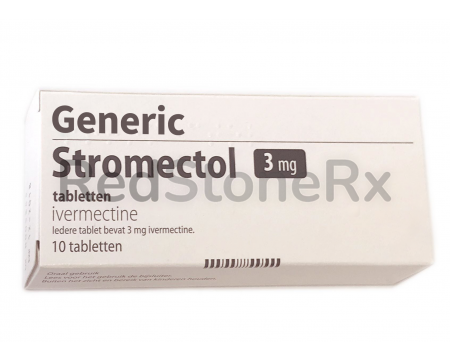
Ivermectin generics — bioequivalent products with identical active ingredient and efficacy — are therapeutically equivalent to Stromectol brand. Products available at redstonerx-au.com are sourced from WHO-GMP certified manufacturers.

Mechanism of Action — GluCl Channels
Ivermectin works through highly selective binding to glutamate-gated chloride ion channels (GluCl channels) — receptors found exclusively in nerve and muscle cells of invertebrates (parasites) and absent from mammalian cells. This selectivity is the basis of ivermectin's remarkable safety profile in humans:
- Ivermectin binds with high affinity to GluCl subunits in parasite nerve membranes and musculature
- Binding causes irreversible increase in chloride ion permeability of the cell membrane
- The resulting hyperpolarisation leads to tonic paralysis of parasite musculature — the parasite cannot move, feed or reproduce
- In microfilariae (larvae of filarial worms): immobilisation and enhanced phagocytosis by the host immune system
- Ivermectin also inhibits acetylcholinesterase activity in parasites — amplifying the neurotoxic effect
Why ivermectin is safe for humans: GluCl channels are exclusive to invertebrates — mammals have no homologous receptor. Under normal circumstances, ivermectin does not cross the human blood-brain barrier significantly (P-glycoprotein-mediated efflux). The rare exception is individuals with MDR1/ABCB1 gene mutations (P-glycoprotein deficiency) who have increased CNS penetration risk — an important consideration discussed in the safety section below.
Australian-Specific Context — Why Stromectol Matters in Australia
Scabies — a significant and increasing Australian public health issue:
- Remote and rural Indigenous communities: Scabies has historically been hyperendemic in many remote Aboriginal and Torres Strait Islander communities — with prevalence rates in some communities reaching 50% or higher in children. The burden of scabies in these communities is associated with secondary bacterial infections (impetigo), post-streptococcal glomerulonephritis, and rheumatic fever/rheumatic heart disease. Mass drug administration with oral ivermectin has been a key strategy in scabies elimination programmes in remote Australian communities, coordinated through organisations including the Fred Hollows Foundation, NT Department of Health, and WA Country Health Service
- Aged care facilities: Scabies outbreaks in Australian residential aged care facilities are a significant ongoing challenge — particularly crusted scabies in immunocompromised residents that can affect entire facilities. The 2018–2019 Royal Commission into Aged Care Quality and Safety highlighted inadequate infection control including scabies management. Oral ivermectin is essential for outbreak control in aged care settings where topical treatment of all residents and staff simultaneously is impractical
- Correctional facilities: Australian prisons and detention centres experience periodic scabies outbreaks requiring coordinated oral ivermectin treatment programmes
- Hospital and healthcare settings: Healthcare workers exposed to patients with unrecognised crusted scabies require prophylactic treatment; oral ivermectin simplifies mass treatment logistics
Strongyloidiasis — underdiagnosed in Australia: Strongyloides stercoralis is chronically underdiagnosed in Australia. Key at-risk populations include: migrants and refugees from Southeast Asia, Pacific Islands, Sub-Saharan Africa, and Latin America (where Strongyloides is endemic); older Australians who lived or worked in endemic regions (including WWII veterans who may have acquired infection decades ago); and immunocompromised patients of any background where undetected chronic Strongyloides can progress to potentially fatal hyperinfection syndrome when immunosuppression is initiated. Australian GPs should screen for Strongyloides serology before starting immunosuppressive therapy in patients from or who have lived in endemic regions.
Indications — Detailed Australian Clinical Guide
1. Scabies (Sarcoptes scabiei) — primary Australian indication:
Scabies is caused by the microscopic mite Sarcoptes scabiei var. hominis that burrows into the skin causing intense itching (typically worse at night), characteristic burrow tracks, and papular rash. It spreads through close skin-to-skin contact and is highly contagious within households and institutional settings.
Classic scabies:
- Ivermectin 200 µg/kg as single oral dose — repeat after 7 to 14 days (second dose essential as ivermectin has no ovicidal activity — eggs present at first treatment hatch 4–10 days later)
- First-line therapy in Australian guidelines is topical permethrin 5% cream — ivermectin is recommended as an alternative (when topical therapy is impractical or preferred by patient) or in combination with permethrin for more severe cases
- All household contacts and sexual partners must be treated simultaneously — even if asymptomatic — to prevent reinfection
- Bedding, clothing, and towels must be washed at ≥60°C or sealed in plastic bags for at least 72 hours on the same day of treatment
Crusted (Norwegian) Scabies — most severe form, requires combined therapy:
- Crusted scabies occurs in immunocompromised individuals (HIV/AIDS, HTLV-1 infection which is prevalent in some remote Indigenous communities, organ transplant recipients, frail elderly) and those unable to mount an inflammatory response to the mite infestation
- Characterised by hyperkeratotic plaques containing thousands to millions of mites (vs typical 10–15 mites in classic scabies) — extremely contagious
- Treatment: Oral ivermectin 200 µg/kg on Days 1, 2, 8, 9, 15 (minimum 5 doses) PLUS topical permethrin 5% applied daily for 7 days then twice weekly until cure — combined therapy is mandatory, topical alone is inadequate
- Ivermectin is the cornerstone of crusted scabies management in Australian guidelines
- Isolation precautions required for hospitalised patients; all contacts require simultaneous treatment
- The Australasian College of Dermatologists and infectious disease guidelines specifically recommend ivermectin combination therapy for crusted scabies
Ivermectin vs Permethrin for Scabies — Australian Comparison:
| Ivermectin Oral (Stromectol) | Permethrin 5% Cream (Lyclear/Infectoscab) | |
|---|---|---|
| Route | Oral — simple tablet | Topical — whole-body application |
| Application | 2 tablets for most adults — very simple | Leave on skin 8–14 hours — complex application, errors common |
| Compliance in outbreaks | Higher — oral treatment of many contacts practical | Lower — topical errors frequently lead to treatment failure |
| Efficacy (standard scabies) | ~70–80% after one dose; ~95%+ after two doses | ~90–95% after correct application |
| Crusted scabies | Essential — combination with permethrin mandatory | Insufficient alone for crusted scabies |
| Ovicidal activity | No — second dose 7–14 days later essential | Partial — second application still recommended |
| Use in pregnancy | Contraindicated (1st trimester); caution 2nd/3rd | Preferred in pregnancy |
| Use in children <15kg | Contraindicated | Can be used from 2 months of age |
| Australian first-line guideline | Alternative / combination for severe/outbreak | First-line for uncomplicated scabies |
2. Strongyloidiasis — first-line treatment: Strongyloides stercoralis is an intestinal roundworm capable of autoinfection — it can self-replicate within the human host and persist for decades without external reinfection. Chronic infection is typically asymptomatic or causes mild GI symptoms. When the host becomes immunocompromised (corticosteroids, biologics, haematological malignancy, HTLV-1), Strongyloides can cause hyperinfection syndrome — massive larval dissemination to lungs, liver, CNS, and other organs — with mortality exceeding 50% untreated. Early treatment of asymptomatic strongyloidiasis in at-risk patients before immunosuppression is initiated is critical.
Ivermectin 200 µg/kg as single oral dose is first-line therapy for strongyloidiasis per Australian and international guidelines — superior to albendazole (which achieves only ~40% cure rate vs >90% for ivermectin). Confirm treatment efficacy with stool examination (Baermann method) 4 weeks after therapy. Repeat dosing may be required for immunocompromised patients.
3. Onchocerciasis (River Blindness): Onchocerca volvulus is a filarial worm transmitted by Simulium blackflies in endemic tropical regions — Sub-Saharan Africa, Yemen, and parts of Latin America. Chronic infection causes skin nodules, severe dermatitis, and — through microfilariae migrating into the cornea — irreversible blindness. Ivermectin 150 µg/kg annually is the cornerstone of the WHO's African Programme for Onchocerciasis Control (APOC) — treatment of >300 million people annually. In Australia, onchocerciasis is relevant for travellers and migrants from endemic regions with diagnosed infection.
Dosage Weight-Based Guide
Ivermectin 200 µg/kg (Strongyloidiasis and Scabies):
| Body weight | Dose (µg) | Number of 3mg tablets |
|---|---|---|
| 15–24 kg | 3,000–4,800 µg | 1 tablet (3mg) |
| 25–35 kg | 5,000–7,000 µg | 2 tablets (6mg) |
| 36–50 kg | 7,200–10,000 µg | 3 tablets (9mg) |
| 51–65 kg | 10,200–13,000 µg | 4 tablets (12mg) |
| 66–79 kg | 13,200–15,800 µg | 5 tablets (15mg) |
| 80–89 kg | 16,000–17,800 µg | 5–6 tablets (15–18mg) |
| 90–99 kg | 18,000–19,800 µg | 6 tablets (18mg) |
| ≥100 kg | Calculated at 200 µg/kg | As calculated |
Ivermectin 150 µg/kg (Onchocerciasis): Calculate dose as 150 µg/kg body weight — doses slightly lower than the table above.
Empty stomach rule — critical: Ivermectin must be taken on an empty stomach — at least 2 hours before or after eating. High-fat meals increase ivermectin absorption by up to 2.5-fold, potentially increasing side effect risk. This is not optional — take strictly fasting with a full glass of water.
Second dose timing for scabies: Always repeat the dose 7 to 14 days after the first — ivermectin has no ovicidal activity, meaning it does not kill eggs. The second dose eliminates larvae that hatch from eggs present at first treatment before they mature to adult mites.
Loa Loa Warning — Critical for Patients from Central Africa
This is the most important safety warning for ivermectin and must not be overlooked for patients from Central African countries:
Loa loa is a filarial worm endemic in Cameroon, Nigeria, Gabon, Central African Republic, Democratic Republic of Congo, Equatorial Guinea, Republic of Congo, and Chad. In patients with high Loa loa microfilaraemia (over 30,000 microfilariae/mL blood), ivermectin can trigger a severe, potentially fatal neurological reaction (encephalopathy) — caused by massive simultaneous death of microfilariae in the CNS.
Clinical implication for Australia: Before treating any patient from Loa loa-endemic countries with ivermectin (even for scabies or strongyloidiasis), Loa loa microfilaraemia must be ruled out with a daytime blood film with quantification (Loa loa has diurnal periodicity — peak in blood during the day). If Loa loa microfilaraemia exceeds 30,000/mL, ivermectin is contraindicated — alternative strategies must be discussed with a tropical medicine specialist. Australian tropical medicine centres (Menzies School of Health Research Darwin, QIMR Berghofer, Peter Doherty Institute Melbourne) can provide specialist guidance.
COVID-19 and Ivermectin — The Australian Context
Ivermectin became one of the most controversial COVID-19 topics in Australia — leading to the TGA taking the unprecedented step in September 2021 of prohibiting general practitioners from prescribing ivermectin for COVID-19 outside of clinical trials. This specific regulatory action reflected serious concerns about harm from inappropriate ivermectin use for COVID-19 — including overdose from veterinary formulations and delay in seeking effective COVID-19 treatment.
The scientific evidence on which this regulatory position is based is clear:
- WHO SOLIDARITY Trial: No significant benefit on mortality or ventilation in hospitalised COVID-19 patients
- TOGETHER Trial (Brazil, N=1,500): No benefit on COVID-19 hospitalisation or extended emergency care in high-risk ambulatory patients — the most methodologically rigorous outpatient COVID-19 ivermectin trial
- ACTIV-6 Trial (USA, NIAID): No meaningful difference in time to recovery
- PRINCIPLE Trial (UK): No significant difference in COVID-19 recovery time or hospitalisation
The TGA, WHO, Australian Department of Health, and ATAGI do not recommend ivermectin for COVID-19. The September 2021 TGA regulatory action specifically prohibited GP prescribing for COVID-19 — it did not affect ivermectin's legitimate use for its approved parasitic indications (scabies, strongyloidiasis, onchocerciasis) which remain appropriate and important clinical applications.
Side Effects
Mazzotti Reaction — specific to onchocerciasis and filariasis treatment: When treating onchocerciasis or other filariases, the simultaneous death of large numbers of microfilariae can trigger a systemic inflammatory reaction — the Mazzotti reaction. Symptoms: fever, itching, skin rash, oedema, lymphadenopathy, tachycardia, hypotension, musculoskeletal pain. Generally self-limiting and paradoxically indicates the drug is working. Management: antihistamines, corticosteroids, supportive care for severe reactions.
Common side effects (all indications):
- Nausea
- Diarrhoea
- Dizziness
- Headache
- Fatigue
- Itching and skin rash — may be part of Mazzotti reaction or direct drug effect
Rare but serious — seek immediate medical attention, call 000:
- Neurological reactions: Confusion, altered consciousness, tremor, ataxia, somnolence, coma — particularly in Loa loa co-infected patients with high microfilaraemia (see Loa loa warning above). Also possible in patients with MDR1/ABCB1 gene mutation causing impaired P-glycoprotein function and increased CNS ivermectin penetration
- Severe hypotension: Loss of consciousness, fainting
- Severe anaphylaxis: Angioedema, urticaria, bronchospasm, circulatory collapse
- Hepatotoxicity: Rare; monitor LFTs in pre-existing liver disease
Contraindications
- Known hypersensitivity to ivermectin or any excipient
- Children under 15kg body weight — blood-brain barrier not fully mature; safety not established
- Pregnancy (first trimester) — teratogenic potential in animal studies; contraindicated in first trimester. Second and third trimester — use only after careful risk-benefit assessment with specialist. Topical permethrin is preferred for scabies in pregnancy
- Breastfeeding — ivermectin passes into breast milk; suspend breastfeeding during treatment or defer treatment
- Severe hepatic impairment — impaired ivermectin metabolism; increased toxicity risk
- High Loa loa microfilaraemia (≥30,000/mL) — contraindicated due to encephalopathy risk (see Loa loa warning)
- MDR1/ABCB1 gene mutation (P-glycoprotein deficiency) — increased CNS penetration risk; genetic testing warranted if suspected
Key Drug Interactions
- Warfarin (and other vitamin K antagonists): Ivermectin inhibits CYP3A4 and can increase warfarin effect — elevated INR and bleeding risk. Frequent INR monitoring is mandatory when ivermectin is given to warfarin-treated patients. This is the most clinically significant drug interaction for Australian patients where warfarin use is common in older populations
- Strong CYP3A4 inhibitors (ketoconazole, ritonavir): Increase ivermectin blood levels — dose reduction may be required
- Barbiturates, benzodiazepines, valproate: Additive CNS depressant effects — use with caution
- High-fat food: Increases ivermectin absorption 2.5-fold — always take fasting (see dosage section)
TGA Regulatory Status in Australia
Ivermectin (Stromectol) is a Schedule 4 (prescription only) medicine in Australia. The TGA's September 2021 regulatory instrument specifically prohibited GP prescribing of ivermectin for COVID-19 outside of clinical trials — it did not restrict prescribing for approved parasitic indications. Australian GPs and infectious disease/dermatology specialists can and do prescribe ivermectin for scabies (including crusted scabies outbreak management), strongyloidiasis, and onchocerciasis.
Personal importation under the TGA Personal Importation Scheme (Section 19(1) Therapeutic Goods Act 1989) permits Australian residents to import up to a 3-month personal supply of therapeutic goods for personal therapeutic use.
Delivery to All Australian States and Territories
redstonerx-au.com ships Stromectol Generic discreetly to all Australian states and territories. Standard delivery: 4–9 business days.
New South Wales (Sydney, Newcastle, Wollongong, Central Coast) — Victoria (Melbourne, Geelong, Ballarat, Bendigo) — Queensland (Brisbane, Gold Coast, Sunshine Coast, Cairns, Townsville) — Western Australia (Perth, Fremantle, Bunbury, Mandurah) — South Australia (Adelaide, Mount Gambier, Whyalla) — Tasmania (Hobart, Launceston, Devonport) — Australian Capital Territory (Canberra) — Northern Territory (Darwin, Alice Springs).
All orders are dispatched in plain, unmarked packaging with no reference to the contents or sender. A tracking number is provided with every order.
Frequently Asked Questions — Stromectol (Ivermectin) in Australia
What is ivermectin (Stromectol) used for in Australia? The primary clinical applications in Australia are: scabies treatment (particularly crusted/Norwegian scabies and outbreak management in aged care facilities, remote communities and correctional facilities); strongyloidiasis (Strongyloides stercoralis intestinal infection in travellers and migrants from endemic regions); and onchocerciasis (river blindness in patients from endemic regions). These are the TGA-approved parasitic indications — ivermectin is not approved or recommended for COVID-19 in Australia.
Why must ivermectin be taken on an empty stomach? High-fat meals increase ivermectin gastrointestinal absorption by up to 2.5-fold compared to fasting. While increased absorption might theoretically enhance antiparasitic efficacy, it also significantly increases the risk of adverse effects — particularly neurological side effects and CNS toxicity. Clinical dosing guidelines are calibrated for fasting administration. Always take ivermectin at least 2 hours before or after eating, with a full glass of water.
Why do I need a second dose for scabies? Ivermectin kills mites and larvae but has no ovicidal activity — it does not kill scabies eggs. Eggs present at the time of first treatment will hatch 4 to 10 days later. The second dose at 7 to 14 days eliminates these newly hatched larvae before they can mature into egg-laying adult mites. Without the second dose, reinfestation from surviving eggs is virtually certain. For crusted scabies, multiple doses (minimum 5 doses in the first 2 weeks) are required due to the enormous mite burden.
What is the Loa loa warning and who does it affect? Loa loa is a filarial worm endemic in Central Africa (Cameroon, Nigeria, Gabon, DRC, etc.). Patients with high Loa loa microfilaraemia can develop severe, potentially fatal encephalopathy when treated with ivermectin — caused by massive parasite death in the CNS. This warning affects only patients from Loa loa-endemic regions. Before treating any patient from these countries with ivermectin, a daytime blood test to quantify Loa loa microfilariae is mandatory. Contact a tropical medicine specialist in Australia if this applies to your patient.
Is ivermectin effective for COVID-19? No — large-scale randomised controlled trials including WHO SOLIDARITY, TOGETHER (Brazil), ACTIV-6 (USA), and PRINCIPLE (UK) have consistently demonstrated no meaningful clinical benefit of ivermectin in COVID-19. The TGA, WHO, and Australian Department of Health do not recommend ivermectin for COVID-19. If you have COVID-19 and are at high risk, contact your Australian GP about TGA-approved antivirals (Paxlovid, Lagevrio) that are PBS-subsidised for eligible Australians.
How long does delivery to Australia take? Standard delivery to all Australian states and territories takes 4 to 9 business days. All orders arrive in plain, unmarked packaging with no reference to the contents or sender. Every order includes a tracking number.
All information on this page is for general informational purposes only and does not constitute medical advice. Ivermectin is a Schedule 4 prescription medicine in Australia — always consult a qualified Australian GP, dermatologist, or infectious disease specialist before use. For scabies management advice contact the Australasian College of Dermatologists or your state health department. For tropical/parasitic disease advice contact your nearest tropical medicine centre.