
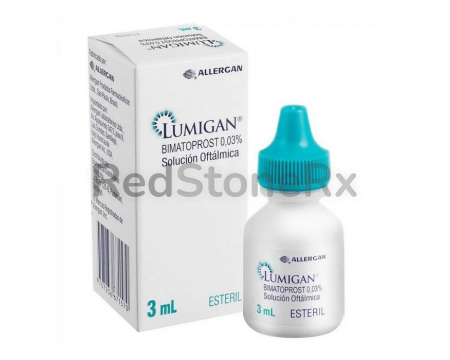


Medically reviewed by Dr. Sarah Collins, RPh, Clinical Pharmacist — Updated January 2026
Lumigan — Two Distinct Applications for Two Different Australian Audiences
Lumigan vs Bimat vs Careprost vs Latisse — The Complete Australian Guide
| Lumigan 0.03% | Bimat 0.03% | Careprost 0.03% | Latisse 0.03% | |
|---|---|---|---|---|
| Active ingredient | Bimatoprost 0.03% | Bimatoprost 0.03% | Bimatoprost 0.03% | Bimatoprost 0.03% |
| Manufacturer | Allergan / AbbVie (USA) — Originator | Sun Pharmaceutical (India) | Sun Pharmaceutical (India) | Allergan / AbbVie (USA) |
| TGA registration in Australia | Yes — TGA-registered for glaucoma | No — personal import | No — personal import | No — not TGA-registered |
| PBS listing (Australia) | Yes — PBS-subsidised for glaucoma | No | No | No |
| Primary intended use | Glaucoma / IOP reduction | Eyelash growth + glaucoma | Eyelash growth (primary) | Eyelash growth only |
| Eyelash applicators included | No (glaucoma product) | Yes | Yes | Yes — Allergan branded |
| Eyelash growth efficacy | Identical (same molecule) | Identical (same molecule) | Identical (same molecule) | Originator — pivotal trial data |
| IOP reduction efficacy | Reference standard — 8–9 mmHg reduction | Bioequivalent | Bioequivalent | Bioequivalent |
| Australian price | From $82.85/bottle | From $49/bottle | From $54/bottle | $150–200+/bottle (imported) |
| Best for | Glaucoma patients (PBS-eligible); those preferring Allergan brand; dual glaucoma + eyelash use | Cosmetic eyelash growth — best value | Cosmetic eyelash growth — popular choice | Those specifically seeking Allergan brand for lashes |
Lumigan for Glaucoma — Clinical Evidence
Mechanism of IOP reduction: Bimatoprost reduces intraocular pressure by increasing aqueous humour outflow through two complementary pathways — the conventional trabecular meshwork pathway and the uveoscleral pathway. This dual mechanism produces greater IOP reduction than agents that work through only one pathway (such as timolol, which reduces aqueous production). Bimatoprost's prostaglandin F2α receptor agonism relaxes the ciliary muscle and adjacent tissue, increasing the hydraulic conductance of the uveoscleral pathway and the trabecular meshwork.
Key clinical trial data — Lumigan vs comparators:
- vs Timolol (beta-blocker — previously most prescribed glaucoma drop): Multiple randomised controlled trials demonstrated Lumigan produces greater mean IOP reduction than timolol 0.5% — approximately 8–9 mmHg reduction from baseline for Lumigan vs 6–7 mmHg for timolol. The proportion of patients achieving IOP ≤18 mmHg (a common treatment target in Australian glaucoma management) was significantly higher with bimatoprost. Lumigan is now preferred over timolol as first-line monotherapy by many Australian ophthalmologists
- vs Latanoprost (Xalatan — another prostaglandin analogue): Head-to-head studies show comparable or marginally superior IOP reduction with bimatoprost vs latanoprost in some trials. Bimatoprost and latanoprost are considered similarly effective first-line prostaglandin analogues — choice often depends on individual patient response and tolerability
- vs Travoprost (Travatan): Another prostaglandin analogue with comparable efficacy to bimatoprost — individual patient variation in response means some patients respond better to one over another
Lumigan 0.01% vs 0.03% — which is available in Australia? Allergan produces two concentrations of bimatoprost: Lumigan 0.03% (the original formulation) and Lumigan 0.01% (a reformulation with lower bimatoprost concentration but modified vehicle designed to reduce conjunctival hyperaemia/eye redness while maintaining comparable IOP efficacy). Both are available in Australia. Lumigan 0.01% was developed specifically to address patient complaints of eye redness — a common reason for discontinuation of the 0.03% formulation. Both concentrations are TGA-registered in Australia.

Glaucoma in Australia — Why IOP Management Matters
Glaucoma is the leading cause of irreversible blindness in Australia — affecting approximately 300,000 Australians with an additional 1 in 9 Australians at risk due to elevated IOP (ocular hypertension). The Glaucoma Australia national registry data shows that glaucoma disproportionately affects older Australians, with prevalence increasing sharply after age 50 — and with first-degree relatives of glaucoma patients at significantly elevated risk.
Open-angle glaucoma is the most common form — typically asymptomatic in early stages, with patients unaware of progressive optic nerve damage and peripheral vision loss until the disease is moderately advanced. This is why Australian ophthalmologists and optometrists recommend regular IOP screening for at-risk individuals — early treatment with IOP-lowering agents like Lumigan can halt or significantly slow progression.
IOP treatment targets in Australia: Glaucoma Australia guidelines recommend individualised IOP targets based on baseline IOP, severity of optic nerve damage, and rate of progression — typically targeting a 20–30% reduction from untreated baseline IOP. For most patients, this means achieving IOP in the range of 12–18 mmHg. Lumigan's 8–9 mmHg mean reduction frequently achieves this target as monotherapy.
Lumigan for Eyelash Growth — Application Guide
Lumigan is used off-label for eyelash growth — applied to the upper lash LINE, not instilled into the eye. This is the same bimatoprost molecule that Allergan commercialised separately as Latisse for the US market. In Australia, Latisse is not TGA-registered, making Lumigan (the TGA-registered glaucoma drop containing identical bimatoprost 0.03%) a commonly accessed alternative for Australian women seeking bimatoprost eyelash treatment.
Step-by-step eyelash application with Lumigan:
- Remove contact lenses — Lumigan contains benzalkonium chloride (BAK) which absorbs into soft contact lenses. Remove lenses before application and wait 15 minutes before reinserting
- Remove all eye make-up and cleanse the eye area thoroughly
- Note: Lumigan does not come with a dedicated eyelash applicator brush — you will need a clean, fine eyeliner brush or sterile cotton-tipped applicator for lash-line application
- Place one drop of Lumigan onto the clean applicator brush
- Apply carefully along the skin at the base of the upper eyelashes — from inner to outer corner, as if applying liquid eyeliner. The goal is to contact the lash follicle base, not coat the lash shaft
- Do not apply to the lower lash line — product will migrate naturally downward to lower lashes. Direct lower-lash application increases skin darkening and unwanted hair growth risk
- Blot excess with a tissue immediately — prevent excess product from running onto the skin below the eye
- Apply once nightly — consistent nightly application is essential for results
Expected results timeline:
- Weeks 4–6: First noticeable improvement in length and fullness
- Weeks 8–12: Significant improvement visible — most users see clear results
- Week 16: Full clinical effect — maximum length (+25%), thickness (+106%), darkness (+18%) per Allergan pivotal trial data
- Maintenance: Reduce to 3–4 nights per week once desired results achieved. Results gradually reverse within 4–8 weeks of complete cessation
Critical Safety Information
Iris pigmentation — permanent colour change risk: Bimatoprost can permanently darken the iris (coloured part of the eye) through stimulation of melanin production in iris melanocytes. This risk is primarily associated with direct ophthalmic use (into the eye for glaucoma) — particularly in patients with hazel, blue-brown, green-brown, or grey-brown irises where the contrast of darkening is most visible. With lash-line cosmetic application, the risk is lower but not zero — any excess product that enters the eye carries this potential. The change appears to be permanent and does not reverse upon discontinuation. Patients with mixed-colour irises should be informed of this risk before starting bimatoprost glaucoma therapy.
Periorbital skin darkening: Bimatoprost can cause darkening of the eyelid skin and periorbital area. This is more pronounced with excess solution contacting skin. For lash-line application users, blotting excess immediately minimises this effect. Periorbital pigmentation is largely (though not always fully) reversible upon discontinuation.
Macular oedema warning: Bimatoprost has been associated with macular oedema (swelling of the central retina) — causing blurred or distorted central vision. This is particularly a risk in aphakic patients (those without a natural lens — including most post-cataract surgery patients who have not received an intraocular lens) and pseudophakic patients with a torn posterior lens capsule. Patients who have had cataract surgery should inform their ophthalmologist before starting Lumigan. Any sudden change in central vision during Lumigan therapy requires urgent ophthalmological assessment.
Side Effects
Very common (affecting more than 1 in 10 users — ophthalmic use):
- Conjunctival hyperaemia (eye redness) — most common reason for discontinuation; caused by prostaglandin vasodilation. Lumigan 0.01% was specifically developed to reduce this effect. Redness typically diminishes over weeks with continued use
- Increased eyelash length, thickness, darkness (desired cosmetically; incidental in glaucoma patients)
- Iris pigmentation changes (see critical safety information above)
Common (affecting up to 1 in 10 users):
- Eye pruritus (itching) and irritation
- Dry eyes
- Foreign body sensation
- Punctate keratitis
- Periorbital skin darkening
- Headache
Rare but serious — seek urgent ophthalmological review:
- Macular oedema — blurred or distorted central vision. Stop Lumigan and seek urgent review
- Iritis/uveitis — eye pain, photophobia, decreased vision
- Severe unexpected vision change — call 000 or present to emergency
Contraindications and Precautions
- Known hypersensitivity to bimatoprost or benzalkonium chloride
- Pregnancy — bimatoprost carries risk of premature labour through prostaglandin effects. Avoid during pregnancy and when planning to conceive. Use effective contraception during treatment
- Breastfeeding — unknown if bimatoprost passes into breast milk; avoid during breastfeeding
- Aphakia and pseudophakia with torn posterior capsule — increased macular oedema risk; use with caution and discuss with ophthalmologist
- Active intraocular inflammation (uveitis, iritis) — bimatoprost may exacerbate inflammation
- Contact lens use — remove before instillation; reinsert after 15 minutes
- Paediatric use — safety and efficacy not established in patients under 18 years
- Do not use concomitantly with other prostaglandin analogues (latanoprost, travoprost, tafluprost) — no added IOP benefit and additive side effects
PBS and TGA Status in Australia
Lumigan holds a unique position among bimatoprost products in Australia — it is the only bimatoprost product that is:
- TGA-registered in Australia (for open-angle glaucoma and ocular hypertension)
- PBS-listed — Lumigan is on the Pharmaceutical Benefits Scheme, meaning eligible glaucoma patients pay only the PBS co-payment (currently $31.60 general/$7.70 concession per script) rather than the full retail price
- Prescribable by Australian ophthalmologists and optometrists (optometrists in Australia can prescribe Schedule 4 eye preparations including Lumigan under their practice authority)
Bimat and Careprost (generic bimatoprost products available through personal importation) are not TGA-registered and are not PBS-listed — they are used under the TGA Personal Importation Scheme for personal therapeutic use.
For glaucoma patients: If you have an Australian prescription for Lumigan from your ophthalmologist or optometrist, PBS dispensing at an Australian pharmacy is the most cost-effective option — with significant subsidy. The price listed here at redstonerx-au.com represents the non-PBS personal importation price which may be relevant for patients without current Australian coverage or for international visitors.
Delivery to All Australian States and Territories
redstonerx-au.com ships Lumigan discreetly to all Australian states and territories. Standard delivery: 4–9 business days.
New South Wales (Sydney, Newcastle, Wollongong, Central Coast) — Victoria (Melbourne, Geelong, Ballarat, Bendigo) — Queensland (Brisbane, Gold Coast, Sunshine Coast, Cairns, Townsville) — Western Australia (Perth, Fremantle, Bunbury, Mandurah) — South Australia (Adelaide, Mount Gambier, Whyalla) — Tasmania (Hobart, Launceston, Devonport) — Australian Capital Territory (Canberra) — Northern Territory (Darwin, Alice Springs).
All orders are dispatched in plain, unmarked packaging with no reference to the contents or sender. A tracking number is provided with every order.
Frequently Asked Questions — Lumigan in Australia
What is the difference between Lumigan and Careprost/Bimat? All three contain bimatoprost 0.03% — the identical active molecule in the same concentration. They produce clinically identical results for both glaucoma IOP reduction and eyelash growth. Lumigan is manufactured by Allergan/AbbVie (the originator), is TGA-registered and PBS-listed in Australia for glaucoma. Bimat and Careprost are manufactured by Sun Pharmaceutical (India) — bioequivalent generics available at lower cost through personal importation. For cosmetic eyelash growth, Bimat and Careprost offer identical results at lower price. For glaucoma, Lumigan has the advantage of PBS subsidy when prescribed by an Australian specialist.
Is Lumigan covered by PBS in Australia? Yes — Lumigan is PBS-listed for open-angle glaucoma and ocular hypertension in Australia. With a valid prescription from an Australian ophthalmologist or optometrist, you pay only the PBS co-payment. The price listed at redstonerx-au.com is for personal importation without PBS subsidy — relevant for those without current Australian coverage or without an active prescription.
Can Lumigan be used to grow eyelashes? Yes — this is a well-established off-label use. The eyelash-growing properties of bimatoprost were discovered when glaucoma patients using Lumigan reported noticeably longer, thicker, and darker eyelashes. Allergan subsequently developed Latisse (bimatoprost 0.03% for lashes) specifically for this application — approved by the US FDA but not TGA-registered in Australia. When used for eyelash growth, Lumigan is applied along the upper lash base with an applicator brush — not instilled into the eye. Results: +25% longer, +106% thicker, +18% darker after 16 weeks per Allergan trials.
Can Lumigan permanently change my eye colour? Yes — with direct ophthalmic use (into the eye for glaucoma), bimatoprost can cause permanent iris darkening over years of use, particularly in patients with mixed-colour irises. This effect is not reversible when the drug is discontinued. For cosmetic lash-line application only, the risk is significantly lower as the drug is not directly instilled into the eye — but any excess that enters the eye carries the potential. Patients with hazel, blue-brown, or green-brown irises should be informed of this risk by their ophthalmologist before starting glaucoma therapy.
What is the difference between Lumigan 0.01% and 0.03%? Lumigan 0.03% is the original bimatoprost concentration. Lumigan 0.01% is a reformulation with lower bimatoprost concentration (0.01%) but a modified vehicle — designed to reduce conjunctival hyperaemia (eye redness), the most common reason patients discontinue bimatoprost, while maintaining comparable IOP efficacy. Both concentrations are TGA-registered in Australia. Your ophthalmologist will prescribe based on your individual response and tolerability.
How long does delivery to Australia take? Standard delivery to all Australian states and territories takes 4 to 9 business days. All orders arrive in plain, unmarked packaging with no reference to the contents or sender. Every order includes a tracking number.
All information on this page is for general informational purposes only and does not constitute medical advice. Lumigan is a TGA-registered Schedule 4 prescription medicine — always consult a qualified Australian ophthalmologist or optometrist for glaucoma management. Cosmetic eyelash use should be discussed with a dermatologist, cosmetic physician, or ophthalmologist.