


Medically reviewed by Dr. Sarah Collins, RPh, Clinical Pharmacist — Updated January 2026
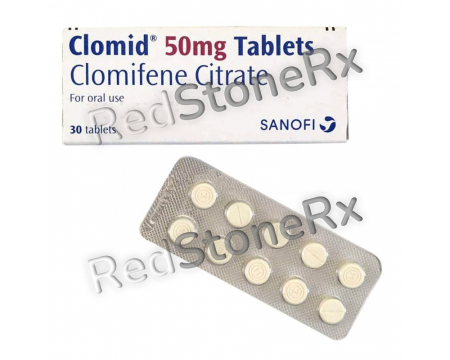
What Is Clomid (Clomiphene Citrate)? — Mechanism of Action
Clomiphene citrate is a non-steroidal SERM — a compound that selectively blocks oestrogen receptors in specific tissues while activating them in others. Its ovulation-inducing mechanism operates through the hypothalamic-pituitary-ovarian (HPO) axis:
- Step 1 — Oestrogen receptor blockade in the hypothalamus: Clomiphene competitively binds to oestrogen receptors in the hypothalamus, preventing endogenous oestrogen from exerting its normal negative feedback. The hypothalamus perceives an artificially low-oestrogen environment
- Step 2 — Increased GnRH pulsatility: In response to perceived low oestrogen, the hypothalamus increases the frequency and amplitude of gonadotropin-releasing hormone (GnRH) pulses
- Step 3 — Elevated FSH and LH: Increased GnRH stimulation causes the pituitary gland to release more follicle-stimulating hormone (FSH) and luteinising hormone (LH)
- Step 4 — Follicular development: Elevated FSH stimulates the ovaries to develop one or more follicles. As follicles mature, they produce increasing oestrogen levels
- Step 5 — LH surge and ovulation: Rising oestrogen from the maturing follicle(s) eventually triggers a positive feedback LH surge — triggering ovulation typically 5 to 10 days after the last clomiphene tablet
This mechanism restores or induces ovulation in women who are not ovulating naturally due to hypothalamic or pituitary dysfunction — the most common of which, in Australia, is PCOS.
Indications — Who Uses Clomid in Australia?
1. Polycystic Ovary Syndrome (PCOS) — primary Australian indication: PCOS is the most common endocrine disorder in women of reproductive age, affecting approximately 1 in 10 Australian women — and the most common cause of anovulatory infertility in Australia. Women with PCOS typically have irregular or absent periods due to chronic oligo/anovulation driven by elevated androgens, insulin resistance, and disrupted HPO axis signalling. Clomiphene is the PBS-listed first-line ovulation induction agent for PCOS in Australia, recommended by Jean Hailes for Women's Health, the Endocrine Society of Australia, and the Fertility Society of Australia guidelines.
2. Hypothalamic amenorrhoea: Absent periods due to hypothalamic suppression — including exercise-associated amenorrhoea (common in Australian recreational and elite athletes), weight-related amenorrhoea, and functional hypothalamic amenorrhoea from psychological stress. Clomiphene can restore ovulatory cycles when the HPO axis is intact but suppressed.
3. Unexplained infertility: For couples with no identified cause of infertility after standard investigation — clomiphene with timed intercourse or intrauterine insemination (IUI) can improve conception rates. However, in Australia, letrozole has increasingly replaced clomiphene for unexplained infertility in fertility clinic settings.
4. Luteal phase defect: Inadequate progesterone production in the post-ovulatory phase — clomiphene improves follicular development and consequent luteal progesterone support.
5. Off-label — Male infertility and hypogonadism: Clomiphene is used off-label in men with secondary hypogonadism (low testosterone due to inadequate pituitary stimulation) and male factor infertility. By blocking oestrogen negative feedback in men's hypothalamus, clomiphene increases LH and FSH — stimulating testicular testosterone production and spermatogenesis. This preserves fertility (unlike testosterone replacement therapy which suppresses sperm production). Typical men's dosing: 25–50mg daily or every other day. This use requires a men's health specialist or urologist in Australia.

Clomid vs Letrozole — The Critical Australian Comparison
Australian women researching fertility treatment will frequently encounter both clomiphene (Clomid) and letrozole (Femara) as ovulation induction options. Understanding the difference is essential:
| Clomiphene (Clomid) | Letrozole (Femara) | |
|---|---|---|
| Drug class | Selective oestrogen receptor modulator (SERM) | Aromatase inhibitor (AI) |
| TGA registration in Australia | Yes — PBS-listed for ovulation induction | TGA-registered for breast cancer; off-label for fertility |
| PBS subsidy (Australia) | Yes — PBS-listed for anovulatory infertility | No — not PBS-listed for fertility (must pay full price) |
| Mechanism | Blocks hypothalamic oestrogen receptors → ↑ FSH/LH | Inhibits oestrogen production → ↑ FSH |
| Half-life | 5–7 days (long — anti-oestrogenic effect persists) | ~45 hours (shorter — clears before ovulation) |
| Effect on endometrium | Anti-oestrogenic — can thin endometrium (reduces implantation) | Pro-oestrogenic — better endometrial lining |
| Effect on cervical mucus | Anti-oestrogenic — can reduce cervical mucus quality | Better cervical mucus |
| Live birth rate in PCOS (Legro et al. NEJM 2014) | 27.5% | 27.5% vs 19.1% for clomiphene — Letrozole superior |
| Twin/multiple pregnancy rate | 8–10% twins | 3–5% twins (safer) |
| Cost in Australia | Lower — PBS-listed | Higher — not PBS-listed for fertility |
| First-line in Australian fertility clinics (PCOS) | Historically first-line; now some debate | Increasingly preferred in specialist clinics |
Practical Australian guidance: If you are seeing an Australian GP or early-stage fertility specialist, clomiphene (Clomid) is the PBS-subsidised, accessible first-line option. If you are seeing a fertility specialist at a private IVF clinic, letrozole may be preferred for PCOS based on the Legro et al. 2014 NEJM evidence showing higher live birth rates. Both are clinically appropriate — discuss with your healthcare provider which is right for your specific situation.
Dosage and Treatment Protocol
Standard Australian protocol for women:
- Cycle Day 2 or 3: Begin clomiphene — most Australian protocols start on Day 2 or 3 of the menstrual cycle (Day 1 = first day of full bleeding)
- Duration: 5 consecutive days (e.g. Day 2–6, Day 3–7)
- Starting dose: 50mg daily. If no ovulation confirmed after 2 cycles, increase to 100mg daily. If no ovulation at 100mg, 150mg may be considered — but doses above 100mg are less commonly used in Australia
- Ovulation timing: Typically occurs 5 to 10 days after the last tablet — approximately Day 14–21 depending on starting cycle day and individual response
- Maximum treatment duration: 6 ovulatory cycles at the minimum effective dose per Australian fertility guidelines. Beyond 6 cycles, specialist review is warranted
With or without food: Clomiphene can be taken with or without food. Taking with food may reduce nausea. Take at the same time each day.
Missed dose: Take as soon as you remember unless it is close to the time of your next dose. Do not double dose to make up for a missed one.
Men's off-label dosing: 25–50mg daily or 3 times per week — individual prescribing by a men's health specialist or urologist. Duration and monitoring differ significantly from female fertility protocols.
Ultrasound Monitoring — Why It Matters in Australia
Ultrasound monitoring during clomiphene cycles is strongly recommended and routinely performed by Australian fertility specialists and increasingly by GPs initiating clomiphene:
- Follicle tracking (transvaginal ultrasound, Day 10–14): Confirms follicular development is occurring, identifies the dominant follicle size (mature follicle typically 18–25mm), and predicts optimal timing for intercourse or IUI
- Over-response detection: Identifies cycles with too many mature follicles (3 or more) — where cycle cancellation is recommended to reduce multiple pregnancy risk (triplets or higher)
- Endometrial thickness assessment: Confirms adequate endometrial lining for implantation — thin endometrium (<7mm) may indicate anti-oestrogenic effect of clomiphene and signal need to switch to letrozole
- OHSS early detection: Identifies ovarian enlargement before Ovarian Hyperstimulation Syndrome develops
In Australia, transvaginal ultrasound is Medicare-rebatable when clinically indicated for fertility monitoring — making monitoring affordable for most Australian women.
Ovarian Hyperstimulation Syndrome (OHSS) — Important Safety Warning
Ovarian Hyperstimulation Syndrome (OHSS) is the most serious potential complication of ovulation induction with clomiphene. OHSS occurs when the ovaries over-respond to hormonal stimulation — producing multiple large follicles and excessive fluid accumulation.
Mild OHSS: Abdominal bloating, mild discomfort, nausea — self-limiting; rest, adequate hydration, and monitoring
Moderate OHSS: More significant abdominal distension, nausea, vomiting, ultrasound evidence of ascites — requires medical review
Severe OHSS — medical emergency: Rapid weight gain (>1kg in 24 hours), severe abdominal pain, difficulty breathing, decreased urine output, dizziness, or fainting. Call 000 immediately or present to emergency department. Severe OHSS with clomiphene is less common than with injectable gonadotrophins (FSH injections) used in IVF, but can occur.
Risk factors for OHSS: PCOS (particularly lean PCOS with high antral follicle count), young age, previous OHSS, high baseline AMH (anti-Müllerian hormone). Women with known PCOS should start at 50mg and have ultrasound monitoring.
Side Effects
Very common (affecting more than 1 in 10 women):
- Hot flushes — caused by the anti-oestrogenic effect; similar to menopausal hot flushes; typically mild and transient
- Abdominal bloating and pelvic discomfort — from ovarian stimulation
- Mood changes — irritability, tearfulness; common and related to oestrogen receptor blockade effects on brain
- Breast tenderness
Common (affecting up to 1 in 10 women):
- Nausea — take with food to minimise
- Headache
- Cervical mucus changes — reduced quantity or quality of fertile mucus (anti-oestrogenic effect)
- Vaginal dryness
- Visual disturbances — blurred vision, floaters, light sensitivity. If these occur: stop clomiphene and seek medical review. Do not drive while experiencing visual disturbances
Serious — seek immediate medical attention:
- Severe pelvic pain (possible ovarian cyst or OHSS)
- Sudden severe visual disturbance (rare — stop immediately and call your doctor)
- Symptoms of severe OHSS (see above — call 000)
- Severe allergic reaction — swelling of face, lips, tongue; breathing difficulty; call 000
Contraindications
- Known or suspected pregnancy — clomiphene must not be taken during pregnancy
- Liver disease or history of hepatic dysfunction
- Uncontrolled thyroid or adrenal dysfunction — these must be corrected before ovulation induction
- Ovarian cysts or ovarian enlargement not related to PCOS — risk of further enlargement
- Abnormal uterine bleeding of undetermined origin — exclude malignancy before commencing
- Oestrogen-dependent tumours (e.g. oestrogen-receptor positive breast cancer)
- Known hypersensitivity to clomiphene or any excipient
- Breastfeeding — clomiphene may reduce milk production
PBS Status and Medicare in Australia
Clomiphene (Clomid) is listed on the Australian Pharmaceutical Benefits Scheme (PBS) under the indication: Treatment of female infertility due to anovulation. This means:
- When prescribed by an Australian GP or specialist for an eligible indication, the PBS subsidises the cost — significantly reducing out-of-pocket cost for Australian patients with a Medicare card
- The PBS listing requires a valid Australian prescription for dispensing at Australian pharmacies
- Clomiphene is one of the few fertility medicines with PBS subsidy — making it more accessible than injectable gonadotrophins which can cost hundreds to thousands of dollars per cycle without subsidy
Our recommendation for Australian patients: If you have a Medicare card and an Australian GP or fertility specialist willing to prescribe, obtaining clomiphene through the PBS at an Australian pharmacy is the most cost-effective option. For those without current access to a GP prescription, Australian telehealth platforms including Monash IVF Online, Vera Women's Wellness, and Kin Fertility offer fertility consultations and may be able to facilitate prescriptions.
Delivery to All Australian States and Territories
redstonerx-au.com ships Clomid Generic discreetly to all Australian states and territories. Standard delivery: 4–9 business days.
New South Wales (Sydney, Newcastle, Wollongong, Central Coast) — Victoria (Melbourne, Geelong, Ballarat, Bendigo) — Queensland (Brisbane, Gold Coast, Sunshine Coast, Cairns, Townsville) — Western Australia (Perth, Fremantle, Bunbury, Mandurah) — South Australia (Adelaide, Mount Gambier, Whyalla) — Tasmania (Hobart, Launceston, Devonport) — Australian Capital Territory (Canberra) — Northern Territory (Darwin, Alice Springs).
All orders are dispatched in plain, unmarked packaging with no reference to the contents or sender. A tracking number is provided with every order.
Frequently Asked Questions — Clomid in Australia
How long does it take for Clomid to work? Ovulation typically occurs 5 to 10 days after the last clomiphene tablet — around cycle Day 14 to 21 depending on the starting day and individual response. If you are tracking ovulation with LH urine tests (ovulation predictor kits / OPKs), begin testing from Day 10 onwards. If ultrasound monitoring is arranged, your clinician will advise timing. Conception, if it occurs, typically happens within 3 to 6 treatment cycles.
What is the success rate of Clomid for PCOS in Australia? Clomiphene induces ovulation in approximately 70–85% of women with PCOS-related anovulation. The cumulative pregnancy rate over 6 cycles is approximately 30–40%. The landmark Legro et al. (NEJM 2014) trial showed a live birth rate of 19.1% with clomiphene vs 27.5% with letrozole in women with PCOS — supporting letrozole as potentially superior. Discuss with your fertility specialist which option is most appropriate for your situation.
Is Clomid safe to take without medical supervision? We strongly advise against using clomiphene without medical guidance. Key reasons: (1) The underlying cause of infertility must be diagnosed before treatment — clomiphene only works for anovulatory infertility and is not appropriate for all causes. (2) Ovarian monitoring is needed to detect OHSS and multiple follicle development. (3) Dosing needs to be individualised. (4) Maximum 6 cycles is the recommended limit. Australian GPs and fertility specialists can prescribe and monitor clomiphene — telehealth makes this accessible Australia-wide.
Can Clomid help men? Yes — clomiphene is used off-label in men with secondary hypogonadism (where low testosterone results from inadequate pituitary stimulation rather than testicular failure). By blocking hypothalamic oestrogen receptors in men, clomiphene increases LH and FSH — stimulating testicular testosterone production and sperm production. This is valuable because, unlike testosterone replacement therapy, clomiphene does not suppress sperm production. Men's use requires assessment and prescription by a men's health specialist, urologist, or endocrinologist in Australia.
Is Clomid covered by Medicare in Australia? Yes — clomiphene is PBS-listed for treatment of female infertility due to anovulation. When prescribed by an Australian GP or specialist, the PBS subsidy applies, significantly reducing cost. This requires a valid Australian prescription and a Medicare card.
How long does delivery to Australia take? Standard delivery to all Australian states and territories takes 4 to 9 business days. All orders arrive in plain, unmarked packaging with no reference to the contents or sender. Every order includes a tracking number.
All information on this page is for general informational purposes only and does not constitute medical advice. Clomiphene is a prescription medicine — always consult an Australian qualified healthcare provider before starting fertility treatment.