


Medically reviewed by Dr. Sarah Collins, MPharm, AHPRA Registered Pharmacist — Updated January 2026
What Is Rapamycin? — Two Applications in Australia
Rapamycin (chemical name: Sirolimus) was originally discovered in soil bacteria from Easter Island (Rapa Nui — hence the name) and developed as an immunosuppressant for organ transplantation. Over the past two decades, it has become one of the most intensively studied compounds in longevity science globally.
In Australia, Rapamycin has two distinct contexts of use:
| Approved (TGA-registered) Use | Off-Label Longevity Use | |
|---|---|---|
| Indication | Prophylaxis of kidney transplant rejection | Healthy ageing, longevity, age-related disease prevention |
| TGA approval | Yes — Schedule 4, ARTG registered as Rapamune | No — off-label use. Legal under Australian law when prescribed by a doctor |
| Typical dose | 2–5 mg daily with therapeutic drug monitoring | 2–6 mg once per week (intermittent low-dose protocol) |
| PBS subsidy | Yes — PBS-listed for transplant indication | No — off-label use is not PBS-subsidised |
| Blood monitoring required | Yes — mandatory therapeutic drug monitoring | Yes — baseline and periodic blood work recommended |
| Prescribing context | Transplant physician | Longevity physician, GP with interest in ageing medicine |
This page focuses primarily on the off-label longevity use of Rapamycin — the context in which most Australian adults without transplant history are seeking Sirolimus. If you are a transplant patient, your dosing, monitoring, and prescription management is handled by your transplant team.
Rapamune Brand vs Rapamycin Generic — Comparison
| Rapamune Brand (Pfizer) | Rapamycin Generic (Sirolimus) | |
|---|---|---|
| Active ingredient | Sirolimus | Sirolimus (identical) |
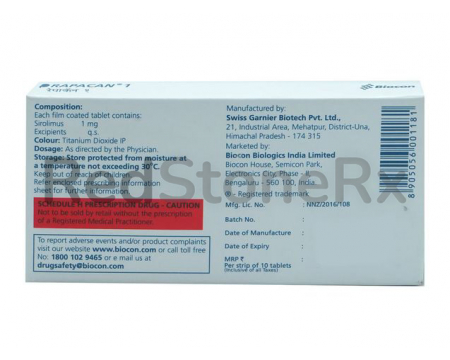
| Available dosages | 0.5 mg, 1 mg, 2 mg tablets; 1 mg/mL solution | 1 mg tablets |
| TGA registration in Australia | Yes — ARTG registered as Rapamune | Not individually ARTG-registered — purchased under Personal Importation Scheme |
| PBS availability | Yes — for transplant indication | No — not PBS-listed |
| Manufacturer | Pfizer | GMP-certified generic manufacturers |
| Price per 1 mg pill (Australian chemist) | AU$8–15 (without PBS, private prescription) | — |
| Price per 1 mg pill (redstonerx-au.com) | — | From A$5.24 |
For longevity use specifically, PBS subsidy is not available for either brand Rapamune or generic Sirolimus — making the cost comparison between brand and generic directly relevant to most Australian longevity users. Generic Sirolimus at RedstoneRX provides the same active molecule at significantly lower cost than private-prescription Rapamune at an Australian chemist.
How Does Rapamycin Work? — mTOR Inhibition and Ageing
Rapamycin's mechanism of action in longevity is fundamentally different from any other medication on this site. It is not a symptom treatment — it operates at the level of a core cellular ageing pathway.
The mTOR pathway: mTOR (mechanistic target of rapamycin) is an evolutionarily conserved protein kinase that acts as the master regulator of cell growth, protein synthesis, autophagy, and metabolism. mTOR Complex 1 (mTORC1) is activated by nutrient signals — particularly amino acids, glucose, and growth factors — and promotes cellular growth and protein production.
Why mTOR activity matters for ageing: mTORC1 activity increases with age. Chronic elevated mTORC1 signalling drives cellular senescence, suppresses autophagy (the cellular cleaning process), promotes inflammation, and contributes to many age-related diseases including cancer, cardiovascular disease, diabetes, and neurodegeneration. Caloric restriction — the most reproducible intervention for lifespan extension across species — works largely by reducing mTORC1 activity.
How Rapamycin inhibits mTOR: Rapamycin binds to the intracellular protein FKBP12, and this complex allosterically inhibits mTORC1 — reducing protein synthesis, activating autophagy, reducing cellular senescence markers, and modulating the ageing immune system (a process called immunorejuvenation rather than immunosuppression at low intermittent doses).
Why once-weekly dosing is used for longevity: Continuous daily Rapamycin (as used in transplantation) suppresses both mTORC1 and, over time, mTORC2 — the latter associated with immunosuppression and metabolic side effects. Intermittent once-weekly dosing inhibits mTORC1 effectively while allowing mTORC2 to recover between doses, substantially reducing immunosuppressive side effects while preserving the longevity signal. This is the pharmacological rationale behind the once-weekly low-dose longevity protocol.

The Scientific Evidence for Rapamycin in Longevity
Rapamycin has one of the most robust pre-clinical longevity evidence bases of any compound. The human evidence, while more limited, is growing rapidly.
Animal studies — lifespan extension: In 2009, the National Institute on Ageing's Interventions Testing Program (a rigorous, multi-site programme) demonstrated that Rapamycin extended median lifespan in genetically heterogeneous mice by 9–14% even when started late in life (equivalent to starting in a 60-year-old human). Subsequent studies have shown lifespan extension in normal mice, yeast, worms, flies, and other model organisms — across laboratories worldwide. Lifespan extension by Rapamycin is one of the most reproducible findings in geroscience.
Healthspan benefits in mammals: Beyond lifespan extension, Rapamycin has demonstrated improvements in cardiac function, cognitive performance, physical strength, immune rejuvenation, and cancer incidence in aged mice — even when started in mid- to late life. These healthspan benefits may be as important as the lifespan effects for human translation.
Dogs: The Dog Aging Project (University of Washington) has conducted the first randomised controlled trial of Rapamycin for longevity in companion animals. Preliminary results showed improvements in cardiac function in middle-aged dogs. This research is highly relevant to Australian pet owners — Rapamycin for dogs is a growing area of interest.
Human evidence: The most cited human longevity study (Mannick et al., 2014, Science Translational Medicine) showed that a Rapamycin analogue (RAD001/everolimus) at low weekly doses improved immune function in elderly adults — specifically improving responses to influenza vaccination by 20% compared to placebo. This immunorejuvenation effect, rather than immunosuppression, is the mechanistic basis for optimism about Rapamycin in human ageing.
Important caveat: There are no completed long-term randomised controlled trials of Rapamycin for lifespan extension in healthy humans. The evidence remains primarily pre-clinical and mechanistic, with observational data and small human studies. Any Australian considering Rapamycin for longevity should do so under medical supervision with full understanding that human longevity evidence is preliminary.
Off-Label Longevity Use in Australia — What Australian Doctors Are Prescribing
Rapamycin for longevity is a growing off-label practice in Australia, driven by Australian longevity physicians, geriatricians with interest in ageing medicine, and GPs who follow the geroscience literature. It is legal under Australian law for a doctor to prescribe any registered medication off-label when they judge it appropriate for a specific patient — including Rapamycin for longevity purposes.
The standard off-label longevity protocol (used by most Australian longevity physicians):
- Starting dose: 2 mg once per week
- Titration: Gradual increase over 3 months to target dose of 4–6 mg once per week, at the prescriber's discretion based on tolerance and blood work
- Frequency: Once weekly — not daily. Weekly intermittent dosing is the longevity protocol; daily dosing is the transplant protocol
- Blood work required: Baseline full blood count, liver function, kidney function, lipid panel, and fasting glucose before starting. Repeat at 3 months and then every 6 months
- Duration: Long-term ongoing use — the longevity hypothesis requires sustained mTOR modulation over years
- Who is an appropriate candidate: Generally adults over 40 in relatively good health with no active infections, no planned surgery, no active immunocompromising conditions, and not taking medications with significant CYP3A4 interactions
Australian longevity physicians and clinics offering Rapamycin consultations include practitioners affiliated with the Australian Longevity Institute and individual GPs and specialists with training in ageing medicine. Virtual consultations are available through some Australian telehealth platforms.
Dosage Guide — Rapamycin Generic in Australia
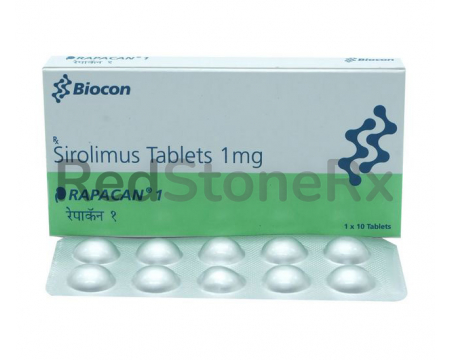
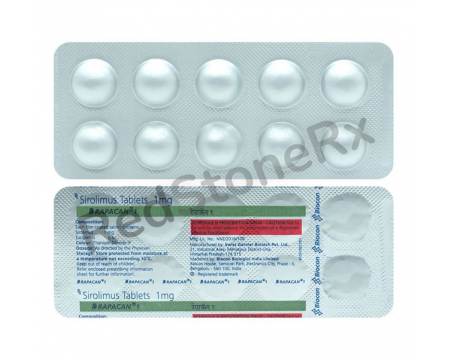
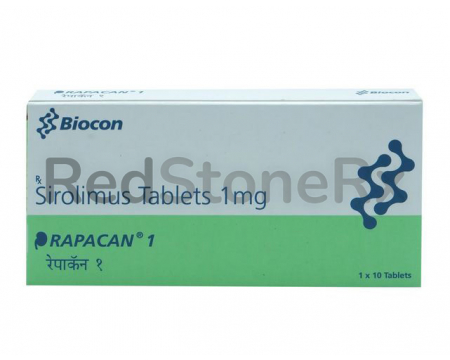
Available formulation at RedstoneRX: 1 mg tablets — the standard generic Sirolimus tablet size. For the standard longevity starting dose of 2 mg per week, you would take two 1 mg tablets once per week. For a 6 mg per week dose, six tablets once per week.
Longevity dosing (off-label):
- Week 1–4: 2 mg once per week (two 1 mg tablets)
- Week 5–8: 3–4 mg once per week
- Week 9–12: 4–6 mg once per week (at prescriber's discretion)
- Maintenance: 4–6 mg once per week ongoing
With or without food: Sirolimus absorption is significantly affected by food. Consistency is more important than the fed/fasted state — take your weekly dose at the same time and under the same food conditions each week to maintain predictable blood levels. High-fat meals can increase Sirolimus absorption by approximately 35% compared to fasted state.
Grapefruit juice: Avoid completely during Rapamycin use. Grapefruit inhibits CYP3A4 and can dramatically increase Sirolimus blood levels unpredictably.
Missed dose: If you miss your weekly dose, take it as soon as you remember within 24 hours. Do not take a double dose the following week.
Price Comparison — Rapamycin Generic vs Rapamune Brand in Australia
| Rapamune Brand Pfizer (private prescription, Australian chemist) | Rapamycin Generic (redstonerx-au.com) | |
|---|---|---|
| 1 mg per tablet | AU$8–15 per tablet | From A$5.24 per tablet |
| Monthly cost (4 mg/week longevity protocol) | AU$140–260 per month | From AU$84 per month |
| Annual cost (4 mg/week) | AU$1,680–3,120 | From AU$1,008 |
For Australian longevity users who are not PBS-eligible for Sirolimus (i.e., all off-label longevity users), the annual cost difference between brand Rapamune and generic Sirolimus at RedstoneRX is several hundred to over a thousand Australian dollars — with identical therapeutic molecule.
Legal Status in Australia — TGA Schedule 4 and Personal Importation
TGA registered use: Rapamune (Sirolimus) is TGA-registered in Australia as a Schedule 4 prescription-only medicine for kidney transplant rejection prophylaxis. It is PBS-listed for this indication only.
Off-label prescription: Australian doctors may legally prescribe Rapamune or generic Sirolimus off-label for longevity purposes at their clinical discretion. This is consistent with standard Australian medical practice regarding off-label prescribing.
TGA Personal Importation Scheme: The TGA Personal Importation Scheme permits Australian residents to import up to a 3-month personal supply of most Schedule 4 medications for personal use from international sources without an Australian prescription. Generic Sirolimus falls within this scheme for personal-use quantities. Australian Border Force may inspect incoming parcels — enforcement against personal-use quantities from reputable sources is rare.
Our strong recommendation: Unlike ED medications, Rapamycin for longevity requires medical supervision, baseline blood work, and ongoing monitoring. The potential benefits are significant — but so are the drug interaction risks and the importance of correct dosing. We strongly encourage all Australian men and women considering Rapamycin for longevity to do so under the care of a doctor familiar with its longevity application. Australian longevity telehealth platforms and functional medicine practitioners can provide appropriate guidance.

Drug Interactions — Critical Information for Rapamycin Users
Rapamycin (Sirolimus) is metabolised primarily by CYP3A4 and P-glycoprotein (P-gp) — the same metabolic pathway as many common medications. Drug interactions with Rapamycin can be clinically significant, causing either dramatically elevated Sirolimus levels (toxicity risk) or dramatically reduced levels (loss of efficacy). This is one of the most important reasons medical supervision is essential.
Medications that significantly increase Sirolimus levels (CYP3A4 inhibitors) — use with extreme caution or avoid:
- Antifungals: ketoconazole, itraconazole, voriconazole, fluconazole — can increase Sirolimus levels 4–20 fold
- Antibiotics: clarithromycin, erythromycin — significant increases
- HIV medications: ritonavir, lopinavir, saquinavir, indinavir — large increases
- Calcium channel blockers: diltiazem, verapamil — moderate increases
- Grapefruit juice: unpredictable and significant increase — avoid completely
Medications that significantly decrease Sirolimus levels (CYP3A4 inducers) — may render Rapamycin ineffective:
- Antiepileptics: rifampicin, carbamazepine, phenytoin, phenobarbital
- St John's Wort (Hypericum perforatum): popular supplement in Australia — can dramatically reduce Sirolimus levels. Avoid during Rapamycin use.
Immunosuppressants and other mTOR inhibitors:
- Cyclosporine: increases Sirolimus levels — used together in transplant with dose adjustment
- Tacrolimus: combination use in transplant only, under specialist supervision
- Everolimus: another mTOR inhibitor — do not combine
Vaccines: Live vaccines (including live attenuated influenza vaccine, yellow fever, typhoid oral vaccine, chickenpox vaccine) should not be administered during continuous Rapamycin use at immunosuppressive doses. At low intermittent longevity doses, vaccination response may actually be enhanced (as demonstrated in the Mannick et al. study) — discuss timing with your doctor.
Side Effects of Rapamycin (Sirolimus)
At low intermittent longevity doses (2–6 mg once weekly) — generally well tolerated:
- Mouth ulcers (aphthous stomatitis) — the most common side effect at longevity doses. Usually mild and manageable. Reducing dose or frequency typically resolves them
- Mild fatigue in the day or two after the weekly dose
- Mild gastrointestinal symptoms (nausea, diarrhoea) — often transient
- Mild elevation in triglycerides or cholesterol — monitor with blood work
- Acne or skin changes — reported by some users
At higher continuous doses (transplant protocol) — more significant:
- Immunosuppression — increased susceptibility to infections
- Impaired wound healing — important consideration before surgery
- Interstitial lung disease — rare but serious
- Hyperlipidaemia — elevated cholesterol and triglycerides
- Anaemia, thrombocytopenia — bone marrow effects at high doses
- Peripheral oedema
Fertility note: Sirolimus is associated with reversible impairment of male fertility (reduced sperm count and motility) at continuous therapeutic doses. This effect appears reversible upon discontinuation. Australian men planning to conceive should discuss this with their doctor before starting Rapamycin.
Who Should Not Take Rapamycin
Rapamycin is contraindicated or requires specialist supervision in:
- Active infections — Sirolimus impairs immune response and can worsen infections
- Planned surgery within 4–6 weeks — impairs wound healing
- Active malignancy being treated — unless under oncologist supervision (Sirolimus has anti-cancer properties but complex interactions with cancer treatment)
- Severe hepatic impairment — significantly prolongs Sirolimus half-life
- Hypersensitivity to Sirolimus or excipients
- Pregnancy or breastfeeding — embryotoxic in animal studies
- Children and adolescents — not indicated for longevity use
- Anyone taking strong CYP3A4 inhibitors that cannot be discontinued
Where to Buy Rapamycin Generic in Australia
Brand Rapamune (Sirolimus by Pfizer) is available at Australian chemists on prescription. For PBS-eligible transplant patients, it is subsidised. For off-label longevity use, it must be purchased on a private prescription at full cost.
At redstonerx-au.com you can order Rapamycin Generic (Sirolimus 1 mg tablets) starting from A$5.24 per pill — with discreet delivery to all Australian states and territories in 4 to 9 business days. All orders are shipped in plain, unmarked packaging with no reference to the contents or sender. A tracking number is provided with every order.
Delivery to All Australian States and Territories
RedstoneRX ships discreetly to all Australian states and territories. Standard delivery: 4–9 business days.
New South Wales (Sydney, Newcastle, Wollongong, Central Coast) — Victoria (Melbourne, Geelong, Ballarat, Bendigo) — Queensland (Brisbane, Gold Coast, Sunshine Coast, Cairns, Townsville) — Western Australia (Perth, Fremantle, Mandurah, Bunbury) — South Australia (Adelaide, Mount Gambier, Whyalla) — Tasmania (Hobart, Launceston, Devonport) — Australian Capital Territory (Canberra) — Northern Territory (Darwin, Alice Springs).
Frequently Asked Questions — Rapamycin in Australia
What is Rapamycin used for in Australia? In Australia, Rapamycin (Sirolimus) is TGA-registered as Rapamune for prophylaxis of kidney transplant rejection. It is increasingly used off-label by Australian doctors for longevity and healthy ageing — typically at low doses of 2–6 mg once weekly, a protocol supported by robust pre-clinical evidence and growing human data. Off-label prescribing by Australian doctors is legal.
Is Rapamycin available in Australia? Yes. Brand Rapamune (Sirolimus by Pfizer) is TGA-registered and available at Australian chemists on prescription. Generic Sirolimus is available through the TGA Personal Importation Scheme from international online pharmacies including redstonerx-au.com.
What is the longevity dose of Rapamycin in Australia? Australian longevity physicians typically use an intermittent once-weekly protocol starting at 2 mg per week and titrating to 4–6 mg per week over 3 months, based on tolerance and blood work. This is significantly lower than transplant doses (2–5 mg daily) and the weekly intermittent schedule is specifically designed to maximise mTOR inhibition benefits while minimising immunosuppressive side effects.
Is Rapamycin the same as Rapamune in Australia? Rapamune is the brand name for Sirolimus made by Pfizer, TGA-registered in Australia. Generic Rapamycin tablets contain the same active molecule — Sirolimus — at the same dosage. The therapeutic effect is identical. Rapamune has Australian TGA registration; generic Sirolimus is purchased under the Personal Importation Scheme.
Does Rapamycin require a prescription in Australia? Sirolimus (Rapamune) is Schedule 4 — prescription only — at Australian chemists. Under the TGA Personal Importation Scheme, Australian residents can import up to a 3-month personal supply from international online pharmacies. However, we strongly recommend medical supervision for Rapamycin use due to its drug interaction complexity and the need for blood monitoring.
Is Rapamycin safe for anti-aging in Australia? The pre-clinical safety profile is well-established — Rapamycin has been used safely in humans for transplantation for decades. At low intermittent longevity doses (2–6 mg once weekly), side effects are generally mild (most commonly mouth ulcers). The long-term safety of low-dose intermittent Rapamycin specifically for longevity in healthy adults has not been established in large randomised controlled trials. Medical supervision and regular blood work monitoring are strongly recommended.
Can Rapamycin be used for dogs in Australia? Yes — Rapamycin for canine longevity is an active research area. The Dog Aging Project (University of Washington) has shown preliminary cardiac benefits in middle-aged dogs. Some Australian veterinarians and pet owners are exploring Rapamycin for dogs under veterinary supervision. This is an off-label use and should only be undertaken with veterinary guidance.
How long does delivery of Rapamycin to Australia take? Standard delivery to all Australian states and territories takes 4 to 9 business days. Express shipping is also available. All orders are delivered in plain, unmarked packaging with a tracking number.
Will Rapamycin be stopped at Australian customs? Shipments from international sources carry a risk of inspection by Australian Border Force. Under the TGA Personal Importation Scheme, personal-use quantities (up to 3 months' supply) are generally permitted. All shipments from RedstoneRX are sent in plain, unmarked packaging with no reference to the contents. A tracking number is included with every order.