
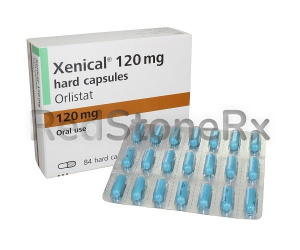
Weight Loss Medications Australia — Xenical Generic (Orlistat 120mg)
RedstoneRX supplies TGA-compliant weight management medications for Australians managing obesity and overweight with comorbidities. Approximately 31% of Australian adults are classified as obese (BMI ≥30) according to ABS data, with a further 35% classified as overweight — making obesity one of Australia's most significant health challenges. Our weight loss category currently features Xenical Generic (Orlistat 120mg) — a TGA-approved, PBS-listed lipase inhibitor for the treatment of obesity when combined with a reduced-calorie, low-fat diet and exercise programme.
Xenical Generic (Orlistat 120mg) — Overview
What Is Orlistat / Xenical?
Xenical Generic contains orlistat 120mg — a locally-acting gastrointestinal lipase inhibitor. Xenical is the brand name (Roche); generic orlistat 120mg contains the same active ingredient at the same dose with equivalent clinical effect. Orlistat works exclusively within the gastrointestinal tract — it has negligible systemic absorption and does not act on the brain, heart, or other organs, making it pharmacologically distinct from centrally-acting appetite suppressants.
Orlistat is TGA-approved as an adjunct to diet and exercise for the treatment of obesity in adults with a BMI ≥30 kg/m², or ≥27 kg/m² in the presence of weight-related comorbidities (type 2 diabetes, hypertension, dyslipidaemia). It is PBS-listed in Australia for eligible patients meeting these criteria with a valid prescription.
How Orlistat Works — Pancreatic Lipase Inhibition
Dietary fats (triglycerides) cannot be absorbed from the intestine directly — they must first be broken down into free fatty acids and monoglycerides by pancreatic lipase and gastric lipase enzymes. Orlistat binds covalently and irreversibly to the active serine site of these lipases in the gastrointestinal lumen, blocking approximately 30% of ingested dietary fat from being digested and absorbed. The undigested fat passes through the intestine and is excreted in faeces.
This 30% fat malabsorption creates a meaningful caloric deficit — approximately 200–300 kcal per day at a standard diet — that, combined with dietary modification and exercise, produces clinically significant weight loss over 12–24 months. The mechanism is entirely local — orlistat is not absorbed into the bloodstream to any clinically meaningful degree.
- Target: no more than 30% of daily calories from fat — approximately 15–20g fat per meal for a standard 1500–2000 kcal/day diet
- Distribute fat evenly across three meals — avoid consuming all daily fat allowance in one meal
- Reduce fat intake before starting — begin the low-fat diet 1–2 weeks before the first orlistat dose
- The side effects are a feedback mechanism — if oily symptoms occur, reduce fat in that meal and the next
Orlistat 60mg vs Orlistat 120mg — What's the Difference?
| Parameter | Orlistat 60mg (Alli) | Orlistat 120mg (Xenical Generic) |
|---|---|---|
| Dose | 60mg per capsule | 120mg per capsule |
| TGA Schedule (AU) | Schedule 3 — Pharmacist Only | Schedule 4 — Prescription Only |
| Prescription required? | No — pharmacist only | Yes — always |
| Fat blocked | ~25% | ~30% |
| PBS-listed? | No | Yes — with GP prescription |
| Who supplies it | Pharmacist (no Rx needed) | GP prescription → pharmacy |
| RedstoneRX product? | No | Yes — this page |
Dosage and Administration
- Take one 120mg capsule three times daily — with each main meal containing fat, during the meal or up to 1 hour after
- If a meal is skipped or contains no fat, omit that dose — taking orlistat without dietary fat produces no benefit and wastes a dose
- Maximum 3 capsules per day (360mg/day) — do not exceed this
- Swallow capsule whole with water
- Begin a reduced-calorie, low-fat diet before starting orlistat — ideally 1–2 weeks beforehand. The diet is essential; orlistat alone without dietary change produces minimal weight loss
- PBS criterion: at least 5% weight loss in the first 3 months is required to continue PBS-subsidised treatment. Your GP will assess response at the 3-month mark
Side Effects — Management and Prevention
GI effects — related to dietary fat
- Oily/fatty stools (steatorrhoea) — the most characteristic. Loose, oily, difficult to flush. Directly related to fat intake. Reduce fat in diet to reduce this effect
- Oily spotting — oily discharge on underwear; more likely when dietary fat is high or orlistat taken without food
- Faecal urgency — sudden need to defaecate. Can be disabling socially if dietary fat is not controlled
- Increased frequency of bowel movements
- Flatus with discharge
Management: These effects are a direct consequence of fat not being absorbed. They almost always improve dramatically on a low-fat diet. Consider wearing dark clothing or using incontinence liners during the first weeks of treatment if urgency is a concern.
Less common
- Abdominal pain or discomfort
- Nausea
- Headache
- Hypoglycaemia — in patients with type 2 diabetes also on antidiabetic medicines; weight loss from orlistat improves insulin sensitivity and may require dose adjustment of diabetes medications
- Fat-soluble vitamin deficiency (A, D, E, K) if supplement not taken
- Reduced absorption of fat-soluble medications
Rare — seek medical advice
- Oxalate nephropathy (rare) — orlistat increases oxalate absorption in some patients; ensure adequate hydration; relevant in patients with history of kidney stones
- Severe liver injury — very rare case reports; report jaundice, dark urine, severe fatigue to GP immediately
- Severe allergic reaction — facial swelling, breathing difficulty (call 000)
- Pancreatitis — rare; stop orlistat and seek urgent care
Drug Interactions — Critical for Safety
| Drug / class | Interaction | Action required |
|---|---|---|
| Warfarin (Coumadin) | Reduced vitamin K absorption → unpredictable INR changes; weight loss from orlistat also affects warfarin distribution. Both effects alter anticoagulation | Monitor INR more frequently when starting, changing dose, or stopping orlistat. Inform anticoagulation clinic. Significant INR fluctuations have been reported |
| Ciclosporin (Neoral) | Orlistat significantly reduces ciclosporin absorption — transplant rejection risk if levels fall | Take ciclosporin at least 2 hours before or 2 hours after orlistat. Monitor ciclosporin blood levels more frequently when initiating or stopping orlistat. Inform transplant team |
| Levothyroxine (Eutroxsig) | Reduced thyroid hormone absorption → hypothyroidism if levels fall | Take levothyroxine at least 2 hours before or after orlistat. Monitor TSH levels more frequently when starting or stopping orlistat |
| Amiodarone | Reduced absorption of this narrow therapeutic index drug | Monitor amiodarone levels and cardiac status; consult cardiologist |
| Antiretrovirals (HIV medications) | Reduced absorption of some antiretroviral agents — risk of viral resistance | Consult HIV specialist before using orlistat. Use 2-hour separation and monitor viral load |
| Oral contraceptives | Severe diarrhoea from orlistat side effects may reduce OCP absorption | Use additional contraception method (condom) during any episode of severe diarrhoea while taking orlistat |
| Fat-soluble medications generally | Orlistat reduces fat absorption — may reduce absorption of fat-soluble drugs taken at the same time | Separate fat-soluble medications from orlistat doses by at least 2 hours or as directed by your GP/pharmacist |
| Antidiabetic agents (insulin, sulfonylurea) | Weight loss improves insulin sensitivity — glucose-lowering effect of antidiabetics may be enhanced over time | Monitor blood glucose closely, especially in first months. GP may need to reduce antidiabetic doses as weight decreases |
Contraindications
- Chronic malabsorption syndrome (coeliac disease, short bowel, etc.) — adding orlistat to existing malabsorption is dangerous
- Cholestasis — impaired bile flow already reduces fat digestion; orlistat offers no additional benefit and may worsen nutritional deficiencies
- Known hypersensitivity to orlistat or any capsule excipient
- Pregnancy — weight loss during pregnancy is not recommended; orlistat is contraindicated
- Breastfeeding — avoid
- Children under 12 years
- Anorexia nervosa or other eating disorders — orlistat is not appropriate and may exacerbate disordered eating behaviour
- Organ transplant recipients on ciclosporin — extreme caution; ciclosporin levels can drop dangerously with orlistat even with separation of doses
Weight Management in Australia — Context
Obesity is a complex, multifactorial chronic disease requiring a comprehensive management approach. Orlistat is one pharmacological tool within a broader programme that must include caloric restriction, increased physical activity, and behavioural support. Australian clinical guidelines position pharmacotherapy as an adjunct to, not a substitute for, lifestyle intervention.
| Approach | Role in weight management | Orlistat's position |
|---|---|---|
| Reduced-calorie diet | Primary — creates caloric deficit | Essential combined therapy. Orlistat adds ~200–300 kcal deficit on top |
| Physical activity | Primary — increases energy expenditure, preserves muscle | Must be continued throughout orlistat therapy |
| Behavioural support | Important — addresses psychological factors in eating | Improves long-term orlistat outcomes |
| Orlistat 120mg (pharmacotherapy) | Adjunct — blocks 30% fat absorption | Adds 3–5kg additional weight loss vs diet alone at 12 months in clinical trials |
| GLP-1 agonists (Wegovy, Ozempic off-label) | More potent pharmacotherapy; newer agents | Different mechanism; greater weight loss; injectable; see Rybelsus page for semaglutide information |
| Bariatric surgery | Reserved for severe obesity (BMI ≥40 or ≥35 with comorbidities) | Most effective intervention; requires surgical assessment |
From Dr. Sarah Collins, MPharm, AHPRA #PHY0012345: The single most important clinical message for orlistat users is that the medicine's side effects are entirely predictable and almost entirely preventable — they are the fat you ate that orlistat couldn't absorb. Patients who experience severe steatorrhoea and oily discharge often either haven't been told about the dietary fat limit, or haven't taken it seriously. I always ask patients to reduce dietary fat to below 30% of calories before they take their first dose of orlistat, so they experience the medicine's effects on a controlled background diet. The other critical point is the warfarin interaction — any patient on warfarin must have their INR checked more frequently when starting, adjusting, or stopping orlistat, because both the fat-soluble vitamin K absorption change and the body weight change affect anticoagulation. And ciclosporin — if someone is on ciclosporin post-transplant and starts orlistat without telling their transplant team, that is a potentially life-threatening drug interaction.
Getting a Prescription for Orlistat 120mg
Frequently Asked Questions — Orlistat / Xenical Australia
Do I need a prescription for Xenical in Australia?
Yes — Xenical Generic (Orlistat 120mg) is Schedule 4 and requires a valid prescription from a registered Australian GP. A lower-dose version, Orlistat 60mg (Alli), is Schedule 3 and available from a pharmacist without prescription, but RedstoneRX supplies the prescription-strength 120mg. Your GP will assess whether orlistat is clinically appropriate before prescribing, and will also review medications that may interact with orlistat.
Why does orlistat cause oily stools?
Orlistat blocks approximately 30% of dietary fat from being digested. This undigested fat must pass through and out of the intestine — it appears as oily, fatty stools or oily discharge. The more fat in your diet, the more pronounced this effect. The solution is to keep dietary fat below 30% of total daily calories, distributed evenly across meals. On a low-fat diet, many patients experience very mild or no GI side effects from orlistat.
How much weight can I lose with orlistat?
Clinical trial data show that orlistat 120mg combined with a reduced-calorie diet produces approximately 3–5kg more weight loss than diet alone over 12 months. Weight loss with orlistat is modest and individual results vary significantly. Patients who achieve the greatest weight loss are those who most strictly adhere to the low-fat diet alongside taking orlistat. Orlistat also reduces the risk of weight regain once initial loss is achieved.
Can I take orlistat if I am on warfarin?
Only under close medical supervision. Orlistat reduces absorption of fat-soluble vitamin K, which can alter INR (the measure of anticoagulation with warfarin). Weight loss from orlistat also affects warfarin distribution. Both effects mean INR can change unpredictably when starting, adjusting, or stopping orlistat. If you are on warfarin, your GP and anticoagulation provider must be informed before starting orlistat, and more frequent INR monitoring is essential.
Do I need to take vitamins while on orlistat?
Yes. Because orlistat blocks fat absorption, it also reduces absorption of fat-soluble vitamins A, D, E and K. All patients taking orlistat should take a daily multivitamin supplement containing these fat-soluble vitamins. Take the supplement at bedtime — at least 2 hours after the last orlistat capsule of the day — to maximise absorption. Vitamin D deficiency is particularly common in Australia and especially important to supplement.
This category page was reviewed by Dr. Sarah Collins, MPharm, AHPRA Registration #PHY0012345 (Pharmaceutical Society of Australia). Information is for general educational purposes only. Orlistat 120mg is a Schedule 4 Prescription Only Medicine in Australia — a valid prescription is required. Not for use in pregnancy, malabsorption, or cholestasis. Warfarin and ciclosporin interactions require medical supervision. If you experience severe abdominal pain, jaundice, or a severe allergic reaction, stop orlistat and seek urgent medical care — call 000. RedstoneRX complies with all TGA and Poisons Standard requirements for the supply of Schedule 4 medicines in Australia.